
How to Identify the 1 Hwan
A collector's checklist for the late-Joseon Korean 1 Hwan: recognizing its struck bronze form, chrysanthemum-and-dragon devices, inscriptions and look-alikes.
Read the full 1 Hwan encyclopedia entry →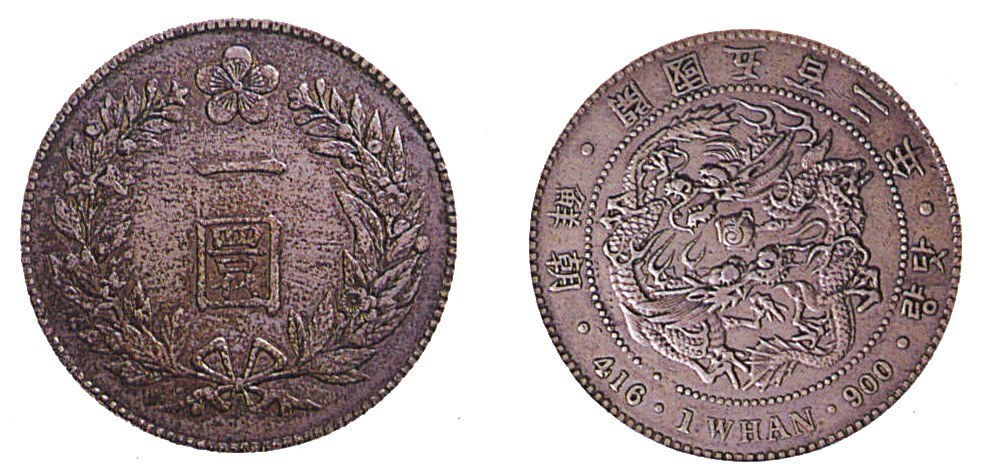
Begin with form and metal, the fastest diagnostics. The 1 Hwan is a round, machine-struck bronze coin with raised relief and no central hole. Expect a warm brown bronze color and crisp struck detail. If you have a holed, softly cast disc, you are looking at older Korean cash coinage, not this reform-era piece.
Read the obverse carefully. It should show a heraldic arrangement of chrysanthemum flowers surrounding a central square cartouche — a small framed panel at the coin's center rather than plain lettering. This floral-and-cartouche layout, combined with taegeuk-era styling, is a key marker of late-Joseon official coinage and helps distinguish it from plain tokens or trade pieces.
Turn to the reverse, which carries a traditional dragon motif accompanied by East Asian characters. The characters state the denomination (one hwan) and the issuing authority; note them precisely, since the exact wording separates this coin from neighboring dragon coins. Match the inscription against a specialized Korean catalog rather than assuming a single date, because the reform coinage came in several denominations and revisions.
Separate it from look-alikes. The late-nineteenth and early-twentieth-century East Asian region produced many dragon coins in China, Japan and Korea, and they can appear superficially similar. Distinguish the Korean 1 Hwan by its chrysanthemum-and-cartouche obverse, its specific Korean/Chinese-character legends and taegeuk symbolism, and by its bronze color and size. A silver piece, a different floral emblem, or Japanese or Chinese legends point to a different coin.
Apply authentication caution. Early Korean and East Asian dragon coins have been widely reproduced, so watch for soft or mushy characters, incorrect dragon proportions, casting bubbles or seams on a coin that should be struck, and a weight or feel that is off for bronze. Genuine pieces show sharp struck detail and honest wear. For a valuable or uncertain example, seek third-party grading and compare directly with documented specimens before buying or selling.
Frequently asked questions
What is the quickest way to recognize a 1 Hwan?
Look for a round struck bronze coin with no central hole, a chrysanthemum-and-square-cartouche design on one side, and a dragon with East Asian characters on the other. That combination points to the late-Joseon Korean 1 Hwan rather than older holed cash.
How do I tell it apart from Chinese or Japanese dragon coins?
Compare the inscriptions and emblems. The Korean 1 Hwan pairs its dragon with a chrysanthemum-and-cartouche obverse, taegeuk symbolism and specific Korean-context character legends. Different floral emblems or Japanese/Chinese legends indicate a coin from those countries instead.
Can I read an exact year off the coin?
Not simply. It belongs to the taegeuk-era reform coinage of the late 1800s, a period of frequent monetary change. The precise issue is identified from the coin's specific inscriptions and symbols, checked against a specialized Korean reference.
How can I spot a fake?
Watch for blurry or misshapen characters, wrong dragon proportions, casting seams or bubbles on a coin that should be struck, and an incorrect weight for bronze. Genuine examples show crisp detail and natural wear; for higher-value pieces use professional grading and compare with documented specimens.