How to Identify the 1 Euro Coin
The 1 Euro coin is a bi-metallic coin used across the Eurozone, with a gold-colored outer ring, silver-colored center, and a national design on one face that varies by issuing country.
Read the full 1 Euro Coin encyclopedia entry →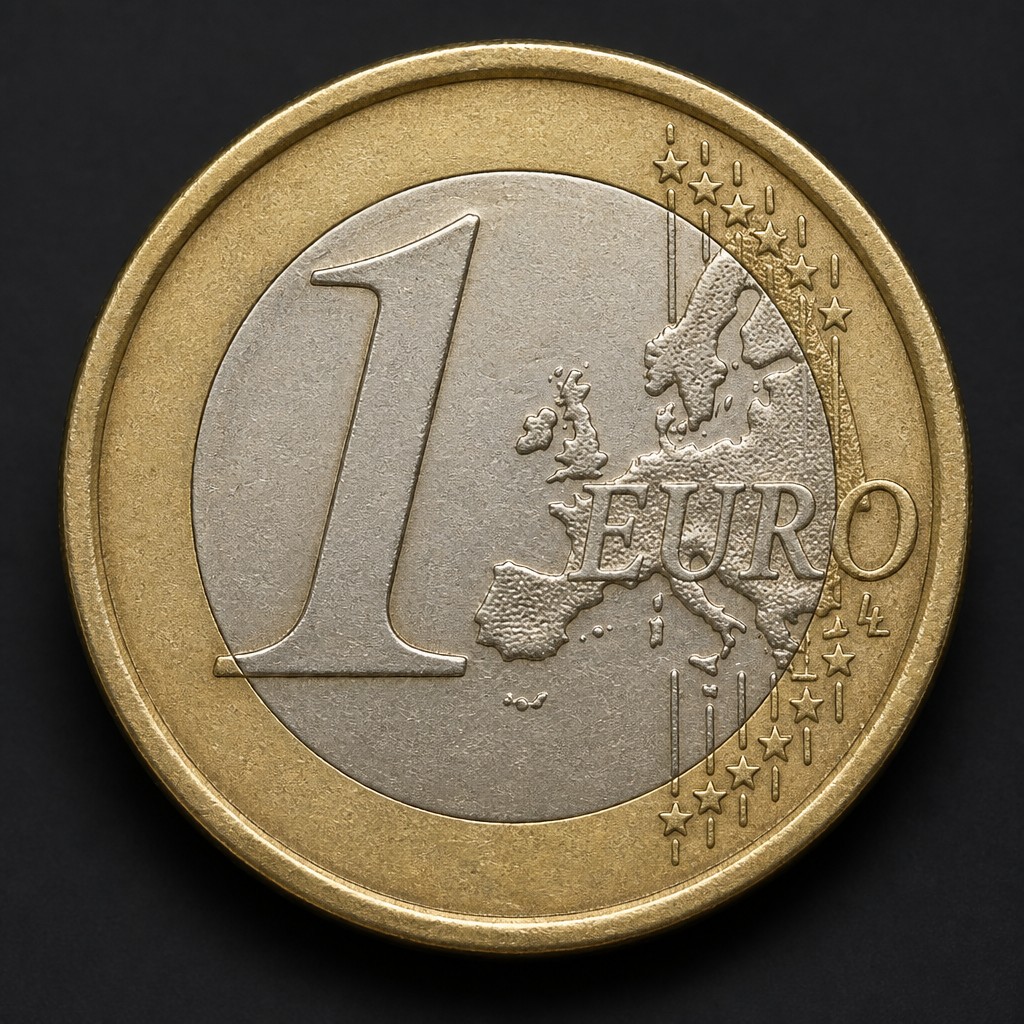
What It Is
The 1 Euro coin is a standard circulating denomination used throughout the Eurozone since 2002. Like other mid-value euro coins, it uses a bi-metallic construction to deter counterfeiting and features a shared "common" design on one side and a country-specific design on the other. It is one of the most widely handled coins in the world, given that dozens of European countries and territories use it as everyday currency.
Obverse/Common Side Design
The common side (usually treated as the reverse in official terminology, though many collectors call it the "front") shows a map of Europe with the denomination "1 EURO" prominently displayed, along with the twelve stars of the European Union encircling the design. Since a 2007 update, the map extends to show the enlarged EU rather than just the original member states.
National Side Design
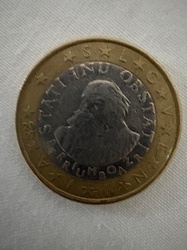
The other face carries a design chosen by the issuing country, which can range from national symbols, monarchs' portraits, or historical figures to abstract heraldic devices. Every design still includes the twelve small EU stars around the border, regardless of the national motif, ensuring the coin is instantly recognizable as a euro despite differing imagery.
Size, Weight & Metal
The 1 Euro coin measures 23.25mm in diameter and weighs 7.5 grams. It is bi-metallic: an outer ring of nickel-brass (giving it a gold-yellow color) surrounding an inner core of copper-nickel (giving it a silvery-white color).
Mint Marks and Where to Find Them
Because each Eurozone country strikes its own national side, a small mint mark or mint director's mark often appears in the design field near the date or edge on the national side, following that country's own numismatic conventions (for example, small letters or symbols used by the specific national mint).
Telling It Apart from Similar Coins
The 1 Euro coin's two-tone gold-and-silver appearance is similar to some other bi-metallic coins worldwide, but the "1 EURO" denomination text and the ring of twelve stars are unique identifiers. Be careful not to confuse it with the 2 Euro coin, which reverses the metal placement (silver-colored outer ring, gold-colored center) and is larger and heavier.
Judging Condition at a Glance
Because these are common circulating coins rather than collectible bullion, condition mainly matters for uncirculated sets or coins with printing/striking errors. Look for sharp definition in the map lines and stars on the common side, and check the national side's fine details (like facial features on a portrait) for wear consistent with normal circulation.
Authenticity Red Flags
Genuine 1 Euro coins have a precise, consistent bi-metallic join between the two metals with no visible gaps, glue lines, or color bleeding between the ring and center. Fakes may show a poorly fitted center disc, incorrect coloring, magnetic properties inconsistent with the genuine alloy, or an inaccurate diameter and weight. Also check that the edge milling pattern, which alternates smooth and reeded sections on the genuine coin, matches the expected design, since this fine edge detail is another feature counterfeiters frequently get wrong.
Frequently asked questions
Why does the 1 Euro coin have two different colors?
It is bi-metallic by design, combining a nickel-brass outer ring and a copper-nickel inner core, both for anti-counterfeiting purposes and visual distinctiveness.
Do all 1 Euro coins look the same?
The common European side (map and stars) is identical across countries, but the opposite national side varies by issuing country while still including the ring of twelve stars.
How do I tell a 1 Euro coin from a 2 Euro coin?
Check the metal placement and size: the 1 Euro has a gold-colored outer ring with a silver-colored center, while the 2 Euro reverses this and is larger and heavier.
Where can I find the issuing country on the coin?
The national side of the coin identifies the issuing country through its unique design, often alongside the country's name or an abbreviation.
Are older 1 Euro coins (before 2007) different from newer ones?
Yes, coins minted before 2007 show only the original 15 EU member states on the map side, while coins from 2007 onward show an enlarged map reflecting EU expansion.
1 Euro Coin identified by the community
Recent 1 Euro Coin coins identified with Coin Identifier.