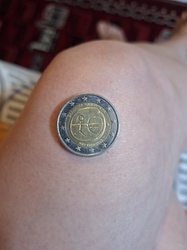
How to Identify the 1 Euro (10 Years EMU)
A collector's guide to confirming the Netherlands 10 Years EMU 1 Euro by its twin 1999/2009 dates, integration imagery, star border, and bi-metallic build.
Read the full 1 Euro (10 Years EMU) encyclopedia entry →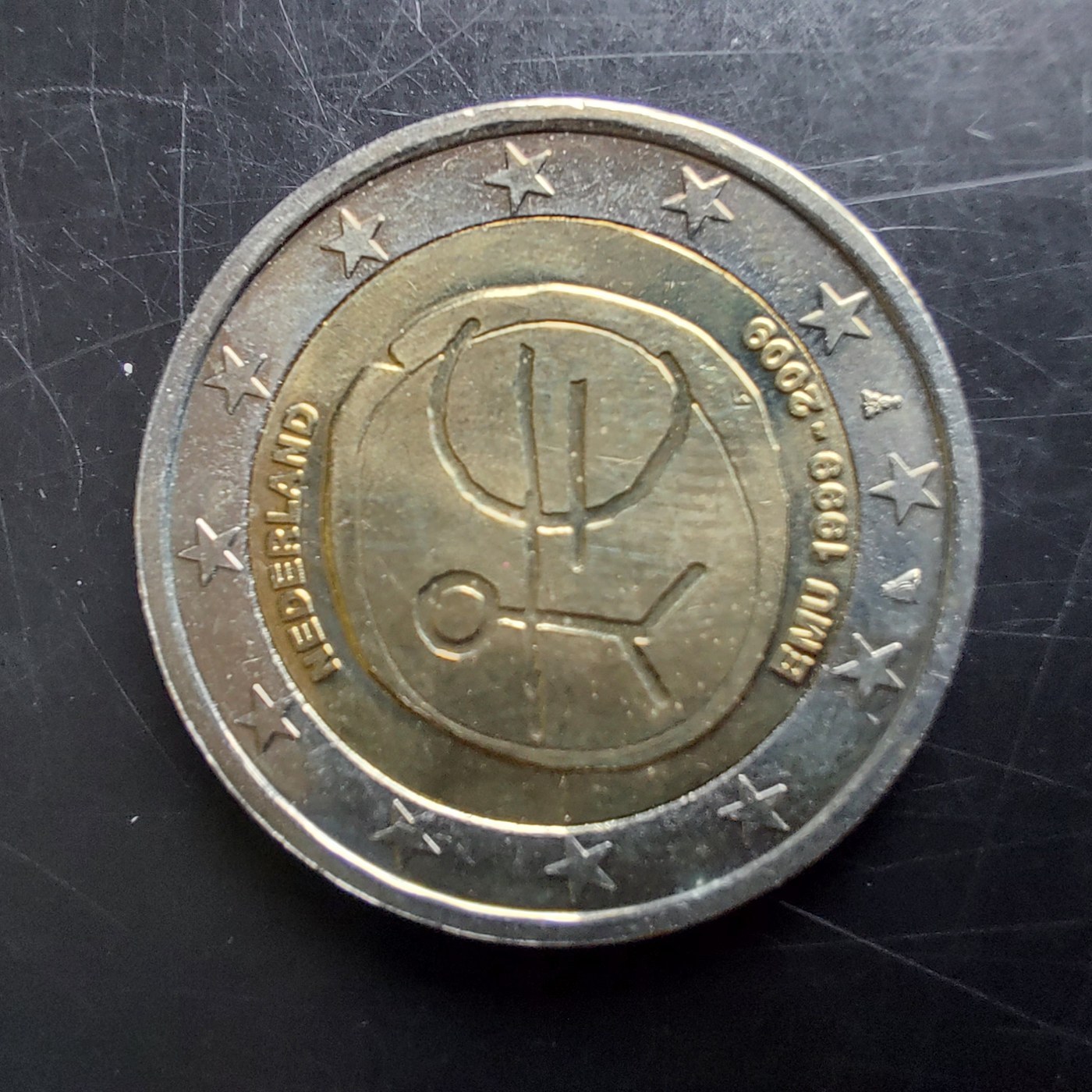
Start With the Dates and Theme
The fastest confirmation is the pair of dates 1999 and 2009 together with imagery of European integration and monetary union. Standard circulating euro coins carry a single year and a national portrait or emblem; the twin dates and the explicit EMU-anniversary theme mark this out as a commemorative rather than an everyday coin.
Read Both Faces
One face shows a stylized map and abstract symbols of European integration and monetary union, an emblematic composition rather than a monarch's bust. The other face frames the design with the circle of European stars around its border and states the 1 Euro value. If you see a royal portrait in place of the integration imagery, you are likely looking at an ordinary Dutch euro circulation coin, not this anniversary type.
Confirm the Format and Metal
This is a bi-metallic coin: an outer ring of one alloy surrounds an inner disc of a contrasting color, in the format of a 1 Euro or 2 Euro type piece. It is base metal (copper-nickel and nickel-brass), so it should feel light for its size and show no silver ring or heft. A single-color, precious-metal, or magnetic-steel piece of this design would be inconsistent with a genuine euro commemorative.
Rule Out Look-Alikes
Several eurozone countries issued EMU or European-integration anniversary coins in the same period, so check the attribution to the Netherlands and the exact design rather than assuming from the theme alone. Ordinary Dutch euro coins share the star border and bi-metallic build but lack the 1999/2009 anniversary dates and integration map. Match the dates, the imagery, the stated 1 Euro value, and the country before concluding.
Authentication Notes
Because this is an affordable modern base-metal issue, high-value counterfeiting is uncommon, but condition and packaging still matter. Prefer coins with original luster and, where present, the mint's folder, set, or certificate, which support both identity and grade. Avoid cleaning: wiped or polished surfaces reduce collector value, and original, undisturbed surfaces are the most reliable sign of an unaltered piece.
Frequently asked questions
How do I quickly tell this from a normal Dutch euro coin?
Look for the twin dates 1999 and 2009 and the European-integration imagery. Regular Dutch euro coins show a single date and a royal portrait rather than the EMU-anniversary design.
What size and construction should it have?
It is a bi-metallic coin with a contrasting outer ring and inner disc, in the format of a higher-value euro type piece. It is base metal, so it feels light and shows no precious-metal heft.
Do other countries have a similar EMU anniversary coin?
Yes. Several eurozone states issued EMU or integration-anniversary coins around 2009, so confirm the Netherlands attribution and the exact design rather than relying on the theme alone.
Does packaging affect identification and value?
It can. Original mint folders, sets, or certificates help confirm the issue and support the grade, and uncirculated packaged pieces are worth more than worn coins from circulation.
1 Euro (10 Years EMU) identified by the community
Recent 1 Euro (10 Years EMU) coins identified with Coin Identifier.