
How to Identify the 1 Bu Gin
A collector's checklist for the Japanese ichibu gin: recognizing its rectangular silver format, beaded border, Ginza characters and common look-alikes.
Read the full 1 Bu Gin encyclopedia entry →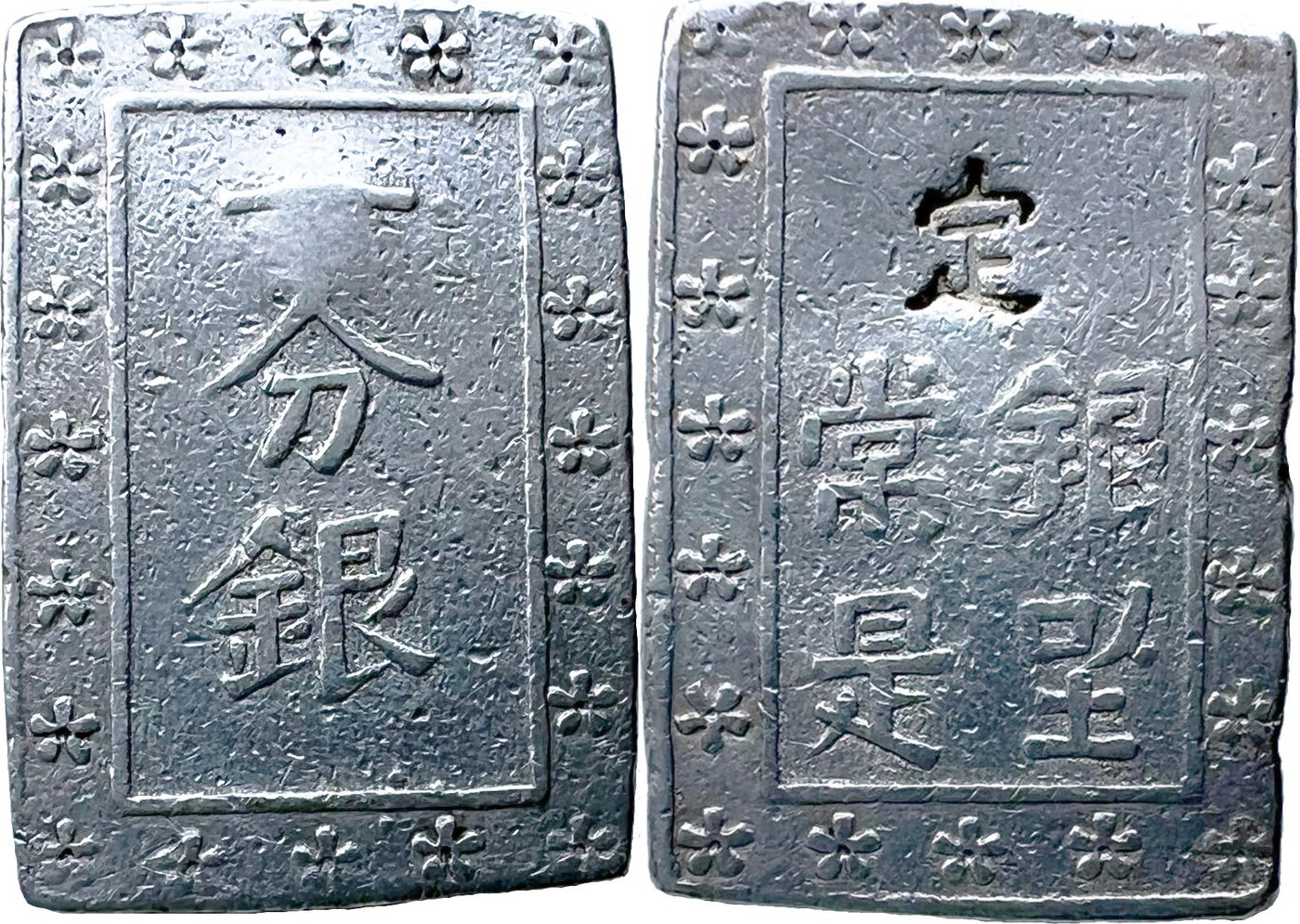
Start with the shape and material, the fastest diagnostics. The 1 Bu Gin is a small rectangular bar of silver, not a round coin. Expect squared corners, a flat stamped surface, and a silvery-gray tone, with the piece only a couple of centimeters across its long axis. Any round coin, or a piece in gold or copper color, is not an ichibu gin.
Read the two faces separately. The obverse in hand should show a geometric or hatched field enclosed by a raised beaded (dotted) border — an ornamental ground rather than lettering. The opposite face carries vertical Japanese characters naming the denomination and mint, framed by crest and floral motifs (a paulownia-style crest and foliate devices). Together these confirm an official Ginza silver issue rather than a plain token or a private stamp.
Confirm the denomination and mint marks. The character group should read as ichibu gin (one-bu silver), and small stamps referencing the Ginza silver authority appear as part of the design. Because the type was made in several series, the exact sub-type and era are told by the precise characters and marks; note them carefully and match against a specialized Japanese coin reference rather than assuming a single date.
Separate it from look-alikes. Japan issued a family of rectangular bu and shu pieces: larger silver coins such as the nishu gin and nibu gin, and smaller gold bu and shu pieces, all share the oblong format. Distinguish them by size, metal color and inscription — the ichibu gin is a mid-size silver piece reading one-bu. A larger bar, a gold-colored piece, or a different character count points to a different denomination.
Apply authentication caution. Rectangular Japanese silver has been widely reproduced, so watch for soft or mushy characters, incorrect proportions, casting bubbles or seams, and a weight or feel that is off for solid silver. Genuine pieces show crisp stamped detail and honest wear. For a valuable or uncertain example, seek third-party grading and compare directly with documented ichibu gin specimens before buying or selling.
Frequently asked questions
What is the single easiest way to recognize a 1 Bu Gin?
Its rectangular silver bar format. If you have a small flat oblong of silver with a beaded border on one side and Japanese characters with crest motifs on the other, you are almost certainly looking at an ichibu gin rather than a round coin.
How do I tell it apart from other rectangular Japanese coins?
Compare size, metal color and inscription. The ichibu gin is a mid-size silver piece reading one-bu. Larger silver bars (nishu, nibu) and the smaller gold bu and shu coins share the oblong shape but differ in dimensions, metal and characters.
What date should I expect on the coin?
These coins are attributed by inscriptions and mint marks rather than a stamped calendar year, and the type was struck across several series. A Meiji 1 attribution refers to 1868-1869; confirm the exact sub-type against a specialized reference.
How can I spot a fake?
Look for soft or blurry characters, wrong proportions, casting seams or bubbles, and an incorrect weight for silver. Genuine examples have crisp stamped detail and natural wear. For higher-value pieces, use professional grading and compare with documented specimens.