Roosevelt Dime
Country of Origin: United States of America
Year of Issue: 1965-Present
Denomination: One Dime (10 Cents)
Composition: 75% copper, 25% nickel cladding over a pure copper core
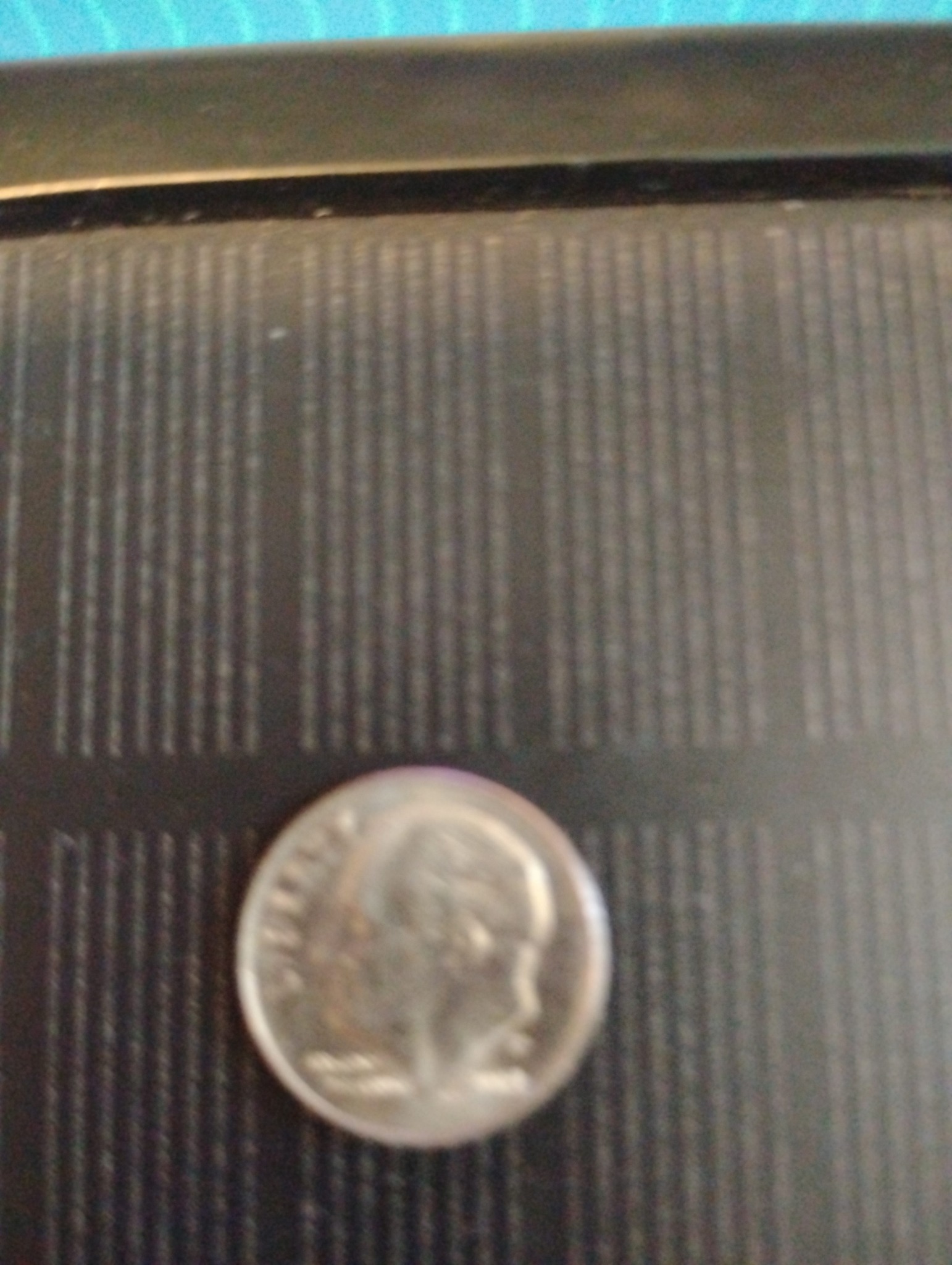
Brief Description
A small silver-colored United States coin featuring the profile of Franklin D. Roosevelt on the front and a torch flanked by branches on the back.
Historical Significance
Introduced in 1946 to honor President Franklin D. Roosevelt following his death in 1945, chosen because of his association with the March of Dimes. This specific clad composition replaced silver in 1965.
Estimated Value
$0.10 in circulated condition; $1-$5 in high uncirculated grades (MS-65+)
Care Instructions
Store in a PVC-free coin holder or album. Do not clean or polish, as this can permanently damage the surface and reduce collector value.
Mint Mark
Possible marks: D (Denver), P (Philadelphia), or S (San Francisco). Often located above the year on newer issues or near the bottom right on older ones.
Mintage & Rarity
Extremely common; billions are minted annually for circulation.
Weight & Diameter
2.27 grams; 17.91 mm
Edge
Reeded (118 reeds)
Apparent Grade
Circulated / Fine to Very Fine based on visible wear and low image resolution.
Obverse (Front)
Left-facing portrait of Franklin D. Roosevelt with the inscriptions 'LIBERTY', 'IN GOD WE TRUST', the year, and the designer's initials 'JS' (John Sinnock).
Reverse (Back)
A central torch symbolizing liberty, flanked by an olive branch (peace) and an oak branch (strength). Inscriptions: 'UNITED STATES OF AMERICA', 'E PLURIBUS UNUM', and 'ONE DIME'.
What Drives This Coin's Value
Condition (grade), mint mark, and rare error varieties (like 'Full Torch' details on the reverse) are the primary value drivers for business strikes.
Similar Coins
Mercury Dimes (pre-1946) which are smaller and made of silver; Silver Roosevelt Dimes (1946-1964) which have no visible copper line on the edge.
Authenticity & Counterfeit Red Flags
Check for the copper core layer on the edge. Clad dimes are magnetic-neutral (won't stick to a magnet). Counterfeiting is rare for modern business strikes but common for high-value silver errors.
Notable Varieties & Errors
1982 No P (missing mint mark), 1996-W (West Point issue), and various 'Double Die' obverse/reverse errors found throughout the series.
Created At: 2026-05-13T19:42:27.143065