Kuang-hsü T'ung-pao (Guangxu Tongbao)
Country of Origin: China - Qing Dynasty
Year of Issue: 1875-1908
Denomination: 1 Cash
Composition: Brass (copper-zinc alloy)
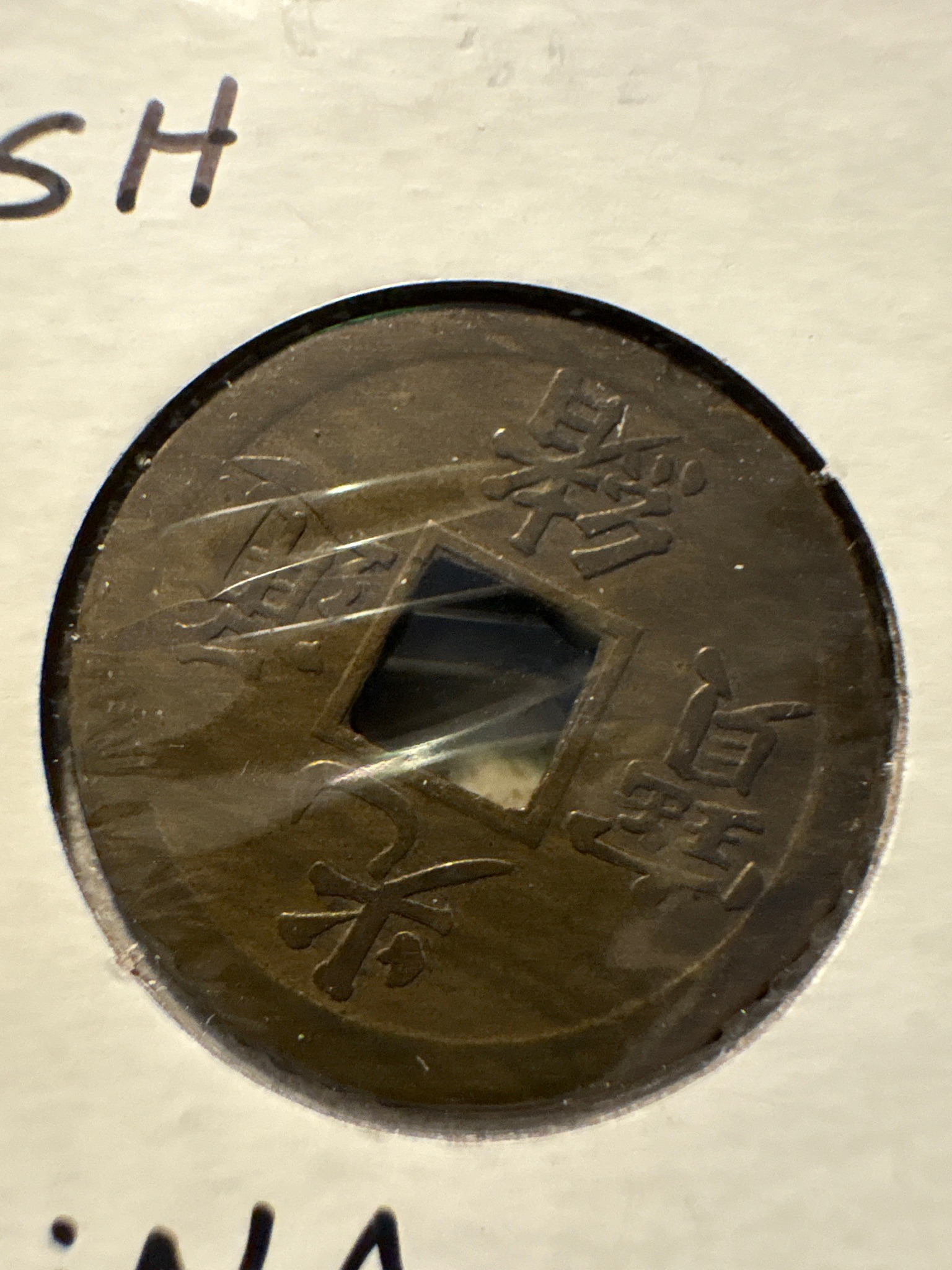
Brief Description
A cast brass machine-struck cash coin with a square central hole, featuring Manchu and Chinese characters.
Historical Significance
Issued during the reign of the Guangxu Emperor, this period marked the transition from traditional hand-cast coins to machine-struck (milled) coinage in China to combat the inflation and debasement of previous eras.
Estimated Value
$1 - $10 (Common variety, circulated), $20+ (Rare variety or uncirculated grade)
Care Instructions
Store in PVC-free flips or capsules. Do not clean or polish, as this destroys the natural patina and reduces numismatic value.
Mint Mark
Boo-Kwang (Guangzhou / Kwangtung Mint)
Mintage & Rarity
Common; many millions produced
Weight & Diameter
Approx. 2.4 - 2.8 grams; 22 - 24 mm
Edge
Plain
Apparent Grade
Very Fine or Extremely Fine (VF/XF); shows clear characters with some minor surface patina and light wear.
Obverse (Front)
Four Chinese characters read top-to-bottom, right-to-left: 'Kuang-hsü T'ung-pao' (Guangxu Currency).
Reverse (Back)
Two Manchu script characters indicating the mint: 'Boo' on the left and 'Kwang' on the right, referring to Kwangtung province.
What Drives This Coin's Value
Most common examples are inexpensive, though specific mint varieties (like machine-struck vs cast) or high grade specimens command premiums.
Similar Coins
Easily confused with other Qing dynasty cash coins (such as those of Qianlong or Kangxi); distinguished by the 'Guangxu' reign title on the obverse.
Authenticity & Counterfeit Red Flags
Check for crispness of characters and metal composition; modern replicas for feng shui or souvenirs are often crude or magnetic.
Notable Varieties & Errors
Small vs large characters, and variations in the Manchu script for the mint name.
Created At: 2026-06-03T22:02:27.969242