Byzantine Follis (Likely Anonymous Type)
Country of Origin: Byzantine Empire
Year of Issue: Approximately 9th - 11th Century AD
Denomination: Follis
Composition: Copper Alloy / Bronze
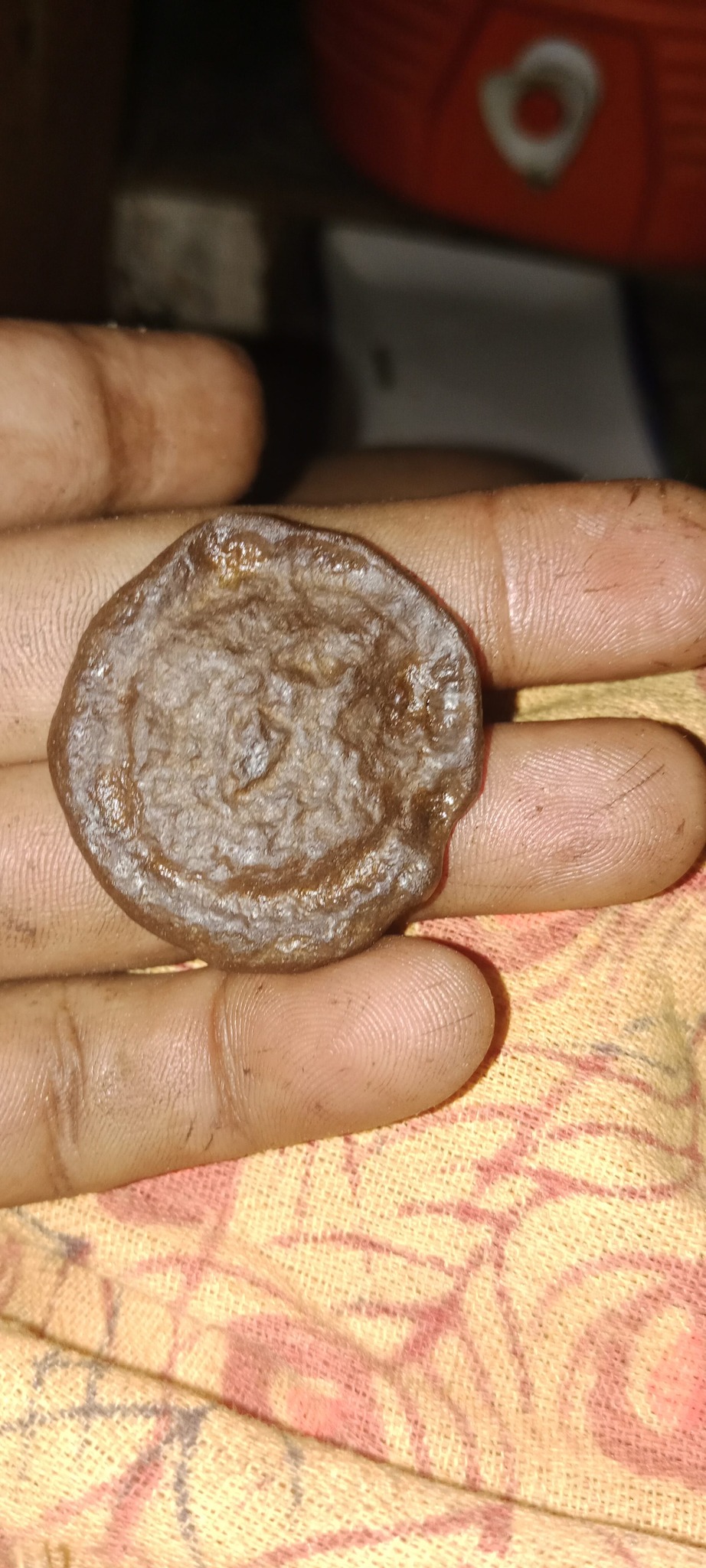
Brief Description
A crudely struck, heavily corroded and encrusted copper alloy coin with a dark brown patina. The central designs are nearly obliterated by environmental damage.
Historical Significance
Byzantine coinage of this era often featured religious iconography. Anonymous follis types, started by John I Tzimiskes, replaced the portrait of the Emperor with depictions of Christ to signify that Christ was the true ruler of the empire.
Estimated Value
$1 - $10 (Extremely poor condition and unidentifiable types have minimal market value)
Care Instructions
Do not attempt to scrape or chemically clean the surface as it is extremely fragile. Store in a dry environment to prevent further corrosion (bronze disease). Handle by edges only.
Mint Mark
Unknown / Unreadable due to wear
Mintage & Rarity
High original mintage, but condition makes this specific specimen very common and of low numismatic interest.
Weight & Diameter
Varies widely based on period; typically 5-12g and 22-30mm for this era.
Edge
Plain and Irregular
Apparent Grade
Poor (P) / Culled. The coin is heavily corroded, pitted, and details are largely unidentifiable.
Obverse (Front)
Traces of a possible bust or central figure within a circular border, though most details are lost to heavy encrustation and pitting.
Reverse (Back)
Indications of a possible cross or Greek inscription in three or four lines, which was standard for anonymous folles, but currently illegible.
What Drives This Coin's Value
Value is severely diminished due to the lack of identifiable legends, a visible ruler, or a distinct strike. Only identifiable rare types or high-condition pieces command significant value.
Similar Coins
Late Roman bronze coins, other Byzantine denominations like the half-follis, or Islamic imitative coins.
Authenticity & Counterfeit Red Flags
Authentic ancient coins usually show 'flow lines' or signs of strike. However, because of the low value of Byzantine copper in this condition, counterfeits are less common than for gold or silver types. Watch for 'casting bubbles' or seams.
Notable Varieties & Errors
Overstrikes are common in this series, where a new design was hammered over an older coin.
Created At: 2026-05-06T14:08:42.324927