Celtic Drachm (Kugelwange Type)
Country of Origin: Celtic tribes of the eastern Alps / Danubian region (Boii or Taurisci)
Year of Issue: c. 2nd Century BC
Denomination: Drachm
Composition: Silver (variable fineness, approximately 80-90% AR)
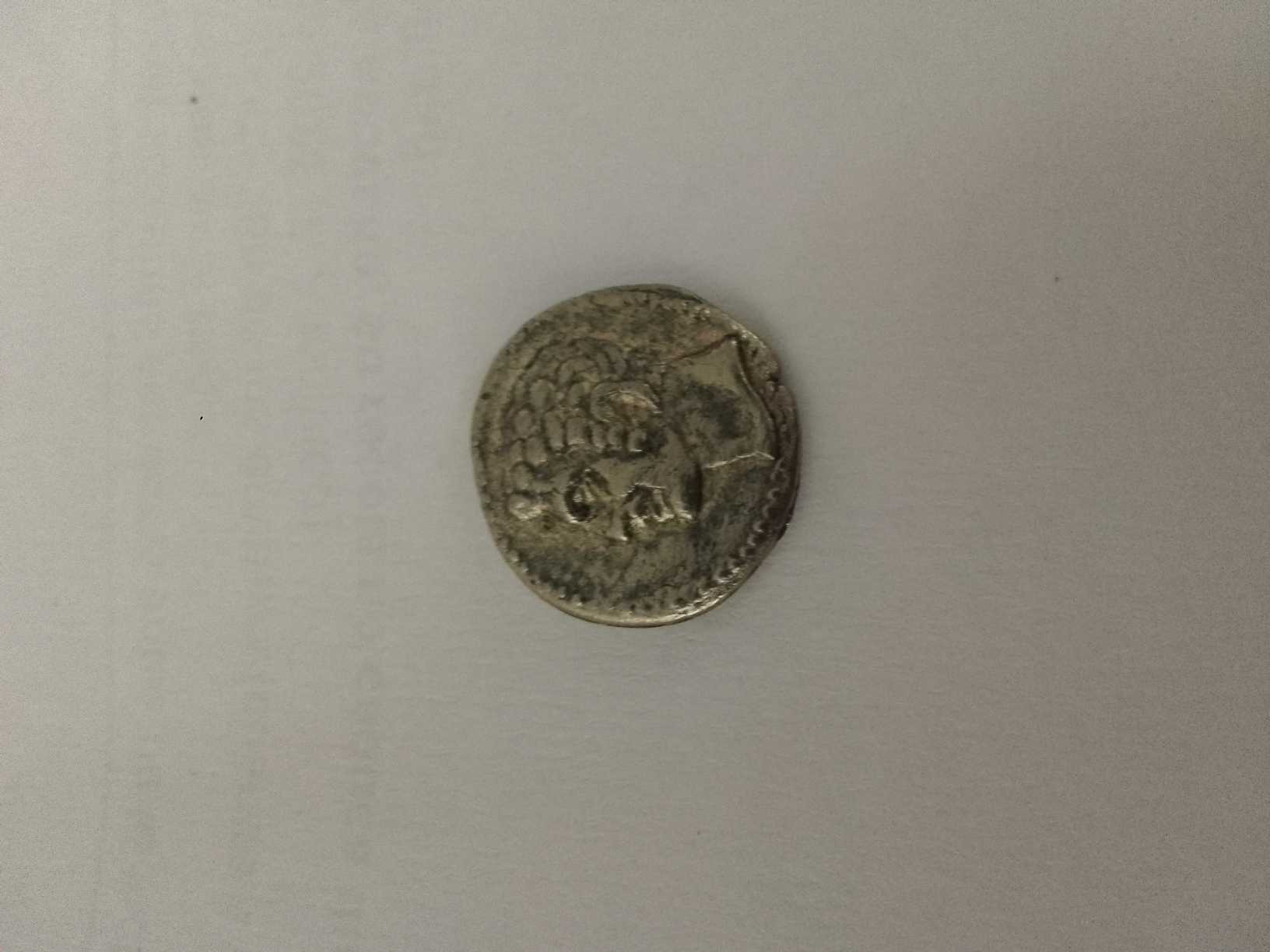
Brief Description
A crude, silver hammered coin with a highly stylized, abstract human head on the obverse and a walking horse on the reverse.
Historical Significance
These coins were minted by Celtic tribes in Central Europe. They are local imitations of Greek coinage (specifically the tetradrachms of Philip II of Macedon), which became increasingly abstract and 'Celticized' over generations of local production.
Estimated Value
$50-$150 (Note: The presence of a possible modern 'R' stamp suggests it may be a legal reproduction or replica, which would significantly lower value to $5-$10.)
Care Instructions
Avoid cleaning or polishing as it strips the ancient patina. Store in PVC-free flips or capsules to prevent environmental damage. Handle by the edges.
Mint Mark
None (Tribal production)
Mintage & Rarity
Common for the type, but specific tribal variants can be scarcer.
Weight & Diameter
Approx. 2.5 - 3.5 grams; 14 - 17 mm
Edge
Plain / Irregular
Apparent Grade
Fine to Very Fine (if authentic); surfaces appear somewhat pitted or cast.
Obverse (Front)
A highly stylized and simplified head facing right, featuring 'Kugelwange' (ball-cheek) style where the cheek is represented by a prominent sphere. The hair is rendered as a series of curves and dots.
Reverse (Back)
A stylized horse walking to the right. Note: There appears to be a modern-style 'R' in a circle on the horse's flank, which is often a mark used for 'Replica'.
What Drives This Coin's Value
Authenticity is the primary factor. Genuine ancient coins have flow lines and crystallised silver texture; a stamped 'R' usually indicates a modern COPY.
Similar Coins
Imitations of Philip II of Macedon, Noric tetradrachms, and various 'Kapostipus' type Celtic drachms.
Authenticity & Counterfeit Red Flags
The small 'R' in a circle on the reverse is a common modern hallmark denoting a museum reproduction. Authentic ancient coins do not have stamped copyright-style marks.
Notable Varieties & Errors
Variations in the number of hair locks or the presence of a 'wreath' above the horse's head.
Created At: 2026-04-21T11:51:37.067468