Greece 1 Euro (Owl of Athena)
Country of Origin: Greece (Hellenic Republic)
Year of Issue: 2002
Denomination: 1 Euro
Composition: Bi-metallic: Copper-nickel center in Nickel-brass ring
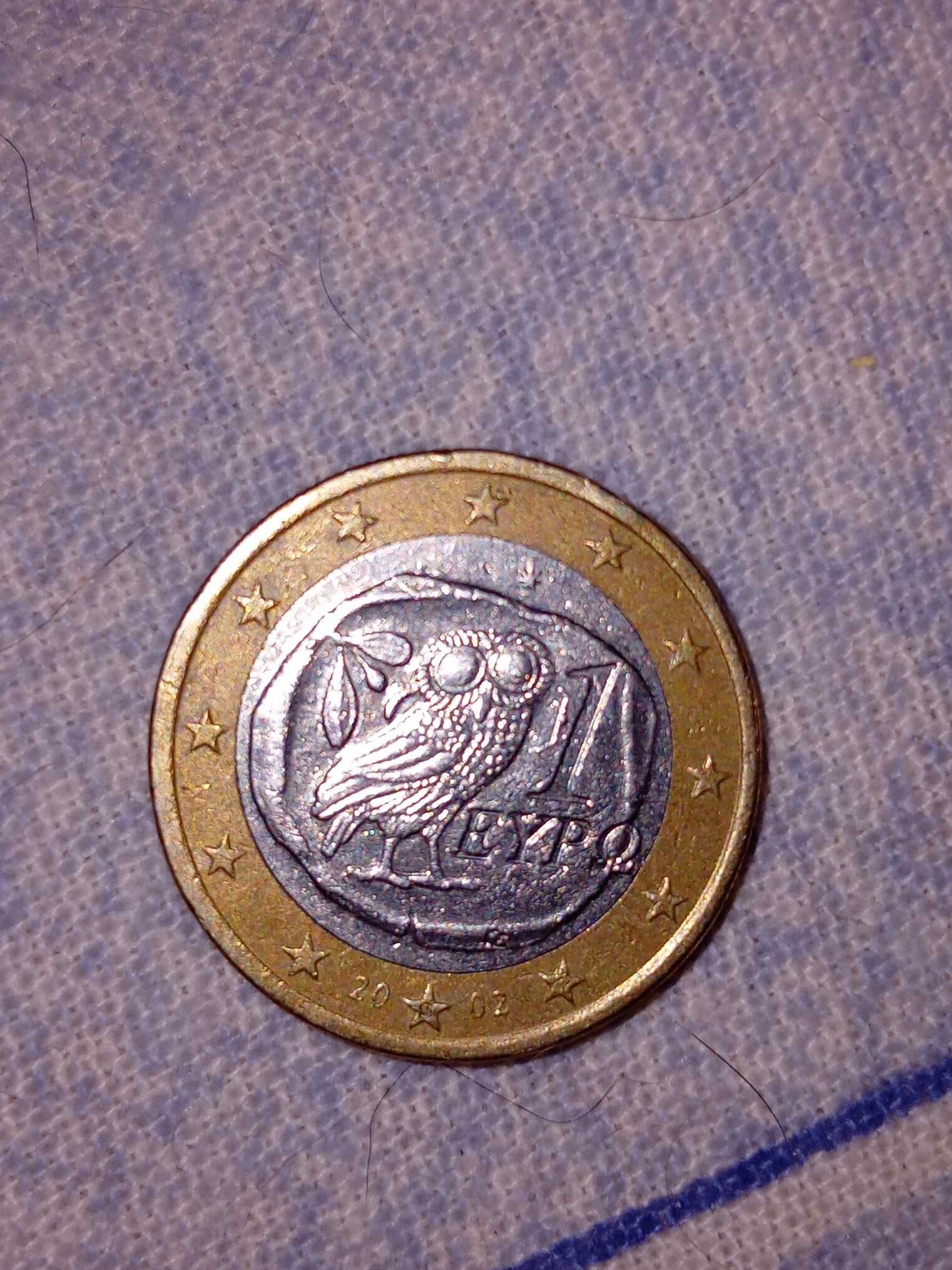
Brief Description
A bi-metallic Greek 1 Euro coin featuring a traditional owl design inspired by ancient Athenian coinage.
Historical Significance
Introduced in 2002 as part of the transition from the Drachma to the Euro. The design pays homage to the ancient Athenian tetradrachm (5th century BC), which was one of the most widely used coins in the ancient world.
Estimated Value
$1.08 - $1.50 (circulated), $3.00 - $6.00 (Uncirculated/BU)
Care Instructions
Avoid cleaning with chemicals or abrasives. Store in a PVC-free coin flip or capsule to prevent oxidation and environmental damage.
Mint Mark
S (in one of the stars at the bottom), indicating it was struck at the Mint of Finland (Vantaa) for Greece.
Mintage & Rarity
Common; Approximately 50,000,000 minted in Finland (with 'S' mark) and 61,500,000 in Greece (no 'S' mark).
Weight & Diameter
7.50 grams / 23.25 mm
Edge
Interrupted milled (discontinuous reeding)
Apparent Grade
Fine to Very Fine; shows significant wear on the raised surfaces of the owl and several surface scratches.
Obverse (Front)
An owl, an olive branch, and the numeral '1' with the word 'EYPΩ' (Euro). The design is an copy of a 4-drachma coin from ancient Athens. Surrounded by 12 stars of the EU.
Reverse (Back)
A map of Europe next to the denomination '1 EURO' and stylized lines connecting the 12 stars of the European flag (common Euro side design by Luc Luycx).
What Drives This Coin's Value
Condition/Grade is the primary factor. The 'S' mint mark variety is common and does not significantly increase value, despite many internet myths suggesting otherwise.
Similar Coins
Greek 1 Euro coins from other years (without the 'S' mark) and other Euro coins using the 'common side' design.
Authenticity & Counterfeit Red Flags
Check for crisp details on the 'S' mark in the star and ensure the bi-metallic seam is tight. Weight and diameter should be exact to specifications. Magnetic properties: the center should be slightly magnetic.
Notable Varieties & Errors
The 'S' mint mark variety (shown here) is often mistaken by novice collectors for a 'rare error,' but it is actually a standard minting from Finland to meet initial demand in 2002.
Created At: 2026-04-18T01:44:57.260525