King George V Penny
Country of Origin: United Kingdom (British Royal Mint)
Year of Issue: 1929
Denomination: One Penny (p)
Composition: Bronze (95% copper, 4% tin, 1% zinc)
Brief Description
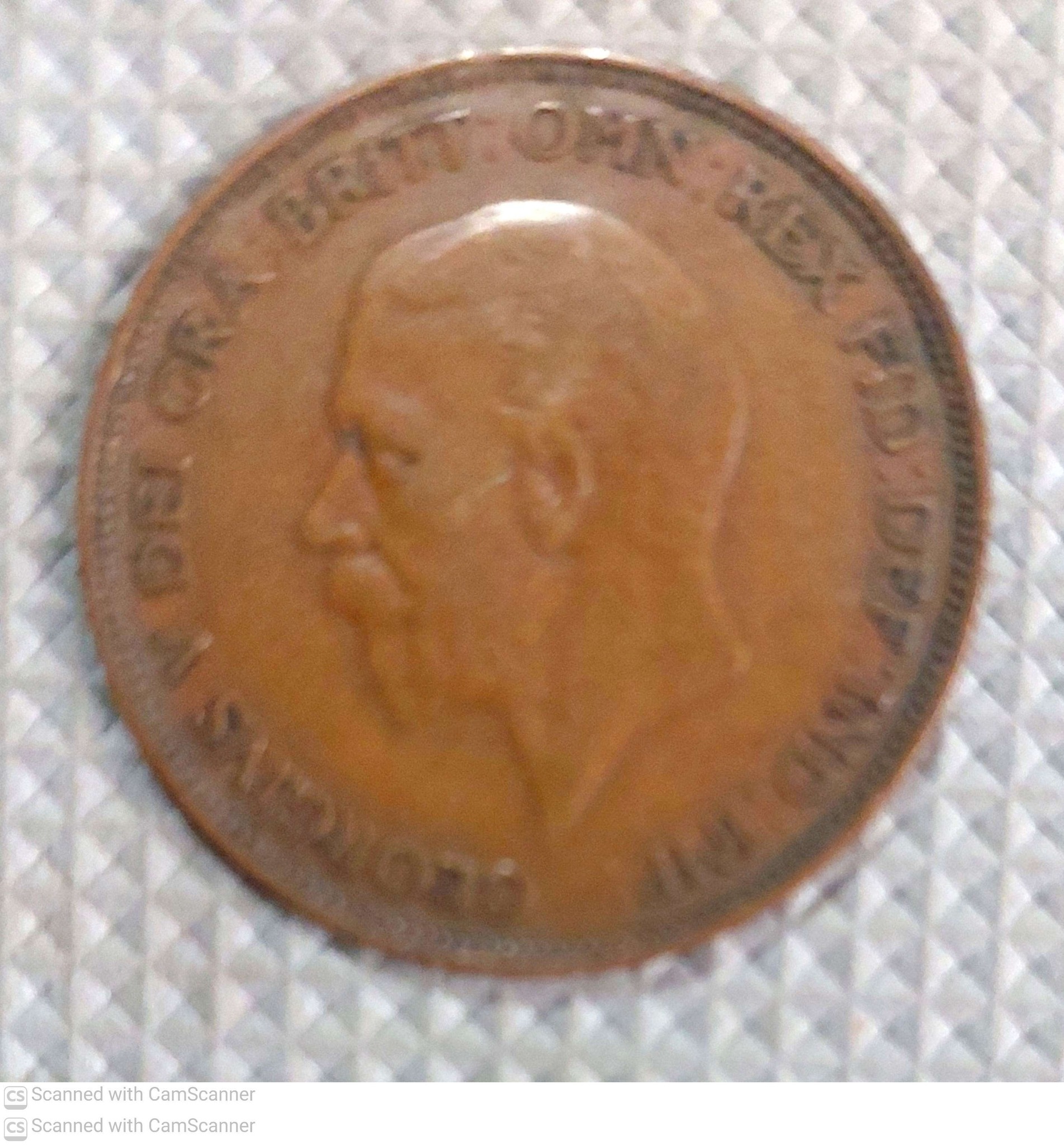
A large British bronze coin featuring the portrait of King George V and a seated figure of Britannia.
Historical Significance
Issued during the reign of King George V, this 'large' penny was a staple of British currency before decimalization in 1971. The 1929 issue is part of the 'modified head' series which began in 1928.
Estimated Value
$0.50-$2.00 in circulated condition, $10-$30 in About Uncirculated, $75+ in high Mint State (RD).
Care Instructions
Do not clean or polish, as this removes the natural patina and drastically lowers collector value. Store in a PVC-free flip or archival-safe coin holder to prevent corrosion.
Mint Mark
None (Royal Mint, London)
Mintage & Rarity
Common; mintage of approximately 49,152,000.
Weight & Diameter
9.45g, 30.8mm
Edge
Plain
Apparent Grade
Fine to Very Fine. The coin shows significant wear on the high points of the portrait and Britannia, but the legends and date remain clearly legible.
Obverse (Front)
Left-facing un-crowned portrait of King George V. Legend: 'GEORGIVS V DEI GRA: BRITT: OMN: REX FID: DEF: IND: IMP:' by Bertram Mackennal.
Reverse (Back)
Seated figure of Britannia facing right, wearing a helmet, holding a trident and resting on a shield. Legend: 'ONE PENNY' with the date '1929' in the exergue. Designed by Leonard Charles Wyon.
What Drives This Coin's Value
The primary value factors are the amount of remaining original 'mint red' luster and the degree of wear on the King's ear and Britannia's knee.
Similar Coins
Often confused with Australian or Canadian pennies of the same era; distinguish by the 'ONE PENNY' text and lack of country name.
Authenticity & Counterfeit Red Flags
Counterfeits of this specific common date are rare, but verify weight (9.45g) and diameter (30.8mm). Watch for 'cast' surfaces which appear bubbly or soft.
Notable Varieties & Errors
No major rare varieties exist for 1929, though 'ghosting' (where the obverse outline shows through to the reverse) is common for this era.
Created At: 2026-05-22T07:30:49.809709