Lincoln Wheat Cent
Country of Origin: United States
Year of Issue: 1955
Denomination: One Cent ($0.01)
Composition: 95% Copper, 5% Tin and Zinc
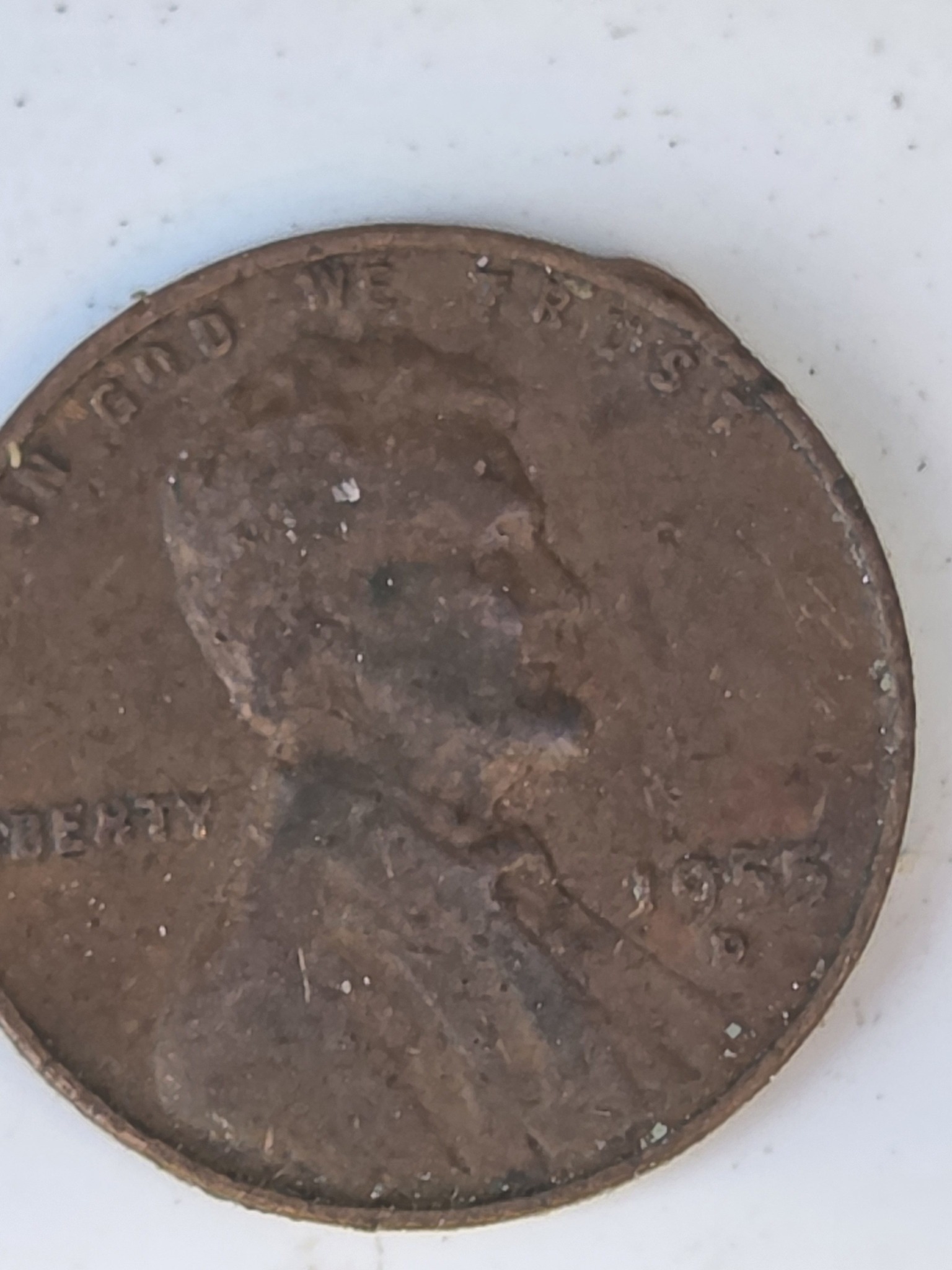
Brief Description
A copper-colored small cent featuring Abraham Lincoln on the obverse and two wheat stalks on the reverse. This particular specimen is heavily environmental-damaged and worn.
Historical Significance
The Wheat Cent was the first circulating US coin to feature a real person rather than a personification of Liberty, marking a significant shift in US numismatic design to honor the 100th anniversary of Lincoln's birth. The year 1955 is famous for a major Doubled Die Error.
Estimated Value
$0.02 - $0.05 in current damaged condition; normally $0.15 - $10.00 depending on grade.
Care Instructions
Store in a PVC-free plastic flip or acid-free paper envelope. Do not attempt to clean this coin as the surface is already compromised by environmental damage/corrosion; cleaning will only reduce technical value.
Mint Mark
D (Denver Mint)
Mintage & Rarity
911,213,400 (Common)
Weight & Diameter
3.11 grams / 19.05 mm
Edge
Plain
Apparent Grade
About Good (AG-3) details, Environmental Damage. The coin shows heavy wear and significant surface corrosion / 'road rash' type damage.
Obverse (Front)
Portrait of Abraham Lincoln facing right. Legend 'IN GOD WE TRUST' at top, 'LIBERTY' to the left, and the date '1955' with 'D' mint mark to the right. Designed by Victor David Brenner.
Reverse (Back)
Two wheat ears frame the words 'ONE CENT' and 'UNITED STATES OF AMERICA'. The motto 'E PLURIBUS UNUM' is at the top. Designed by Victor David Brenner.
What Drives This Coin's Value
Condition/Grade is the primary factor. While 1955 is common, the famous 'Doubled Die Obverse' (DDO) variety is worth thousands, but this coin does not appear to be that variety.
Similar Coins
Lincoln Memorial Cents (1959-2008) which show a building instead of wheat stalks; 1943 Steel Cents (silver in color).
Authenticity & Counterfeit Red Flags
Weight should be approximately 3.1g. Check for the 1955 Doubled Die Obverse which shows distinct, sharp doubling on the date and lettering; beware of 'Poor Man's Double Die' which is just die deterioration.
Notable Varieties & Errors
1955 Doubled Die Obverse (extremely rare/valuable); 1955 'Poor Man's' Doubled Die (common die wear).
Created At: 2026-05-08T01:44:59.020010