Larin (Fishhook Money)
Country of Origin: Coastal regions of the Indian Ocean (Persian Gulf, Maldives, Sri Lanka, India)
Year of Issue: Circa 16th to 18th Century
Denomination: Larin
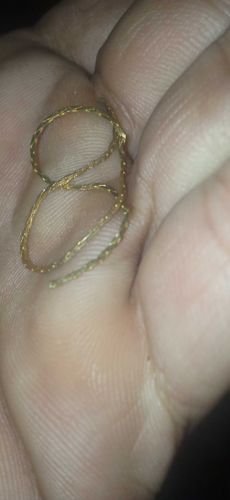
Composition: Likely silver or copper alloy (Note: The image choice appears to be a thin wire, which mimics the shape of traditional larins)
Brief Description
A piece of metal wire doubled over and twisted into a hook-like or 'J' shape, sometimes with stamped inscriptions.
Historical Significance
Larins were a unique form of currency used extensively in Indian Ocean trade. Their shape allowed them to be easily carried on wires or threaded through clothing, making them ideal for traveling merchants.
Estimated Value
$20 - $150 USD (Depends heavily on metal content and presence of readable stamps)
Care Instructions
Store in a dry, low-humidity environment. Avoid chemical cleaning; if necessary, use a soft cloth to gently remove surface dirt to preserve the patina.
Created At: 2026-02-23T01:20:32.564325