Follis (or similar small bronze coinage)
Country of Origin: Roman Empire
Year of Issue: Likely between 305 and 337 AD (based on visible lettering and style, possibly representing Constantine I or a co-emperor)
Denomination: Follis (a type of bronze coin introduced during the Tetrarchy)
Composition: Bronze
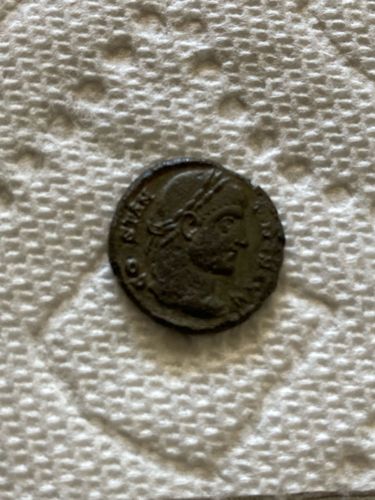
Brief Description
The coin features a profile bust of a Roman emperor, facing right, likely laureate or diademed. The visible lettering around the rim on the left side appears to be part of the emperor's name or title, possibly "CONSTANTINVS AVG" or similar, indicating Constantine I or one of his family members. The coin is heavily patinated and worn.
Historical Significance
This type of coin is from the late Roman Empire, a period of significant political, social, and religious change, including the rise of Christianity. Follis coins were a crucial part of the Roman monetary system during the Tetrarchy and Constantinian dynasty, used for everyday transactions across the vast empire. The emperor depicted would have been a central figure in Roman history.
Estimated Value
Due to its heavily worn condition and common nature of late Roman bronze coins, its value is likely modest, ranging from "$10 - $50". Better preserved examples or those with rare obverse/reverse types could fetch more. Actual value depends on specific emperor, mint mark, and condition.
Care Instructions
Handle by the edges to avoid transferring oils from skin. Store in a cool, dry environment, preferably in a non-PVC coin flip or slab to prevent further degradation. Avoid cleaning, especially aggressive methods, as this can damage the patina and significantly reduce its historical and monetary value. For conservation, consult a professional numismatist or conservator.
Created At: 2025-12-16T17:09:22.759340