Ottoman Empire Gold Kurush (Mehmed V)
Country of Origin: Ottoman Empire (Modern-day Turkey)
Year of Issue: AH 1327 (1909 AD) / Regnal Year 9 (c. 1917 AD)
Denomination: Likely 25 or 50 Kurush
Composition: Gold (.917 fineness typical)
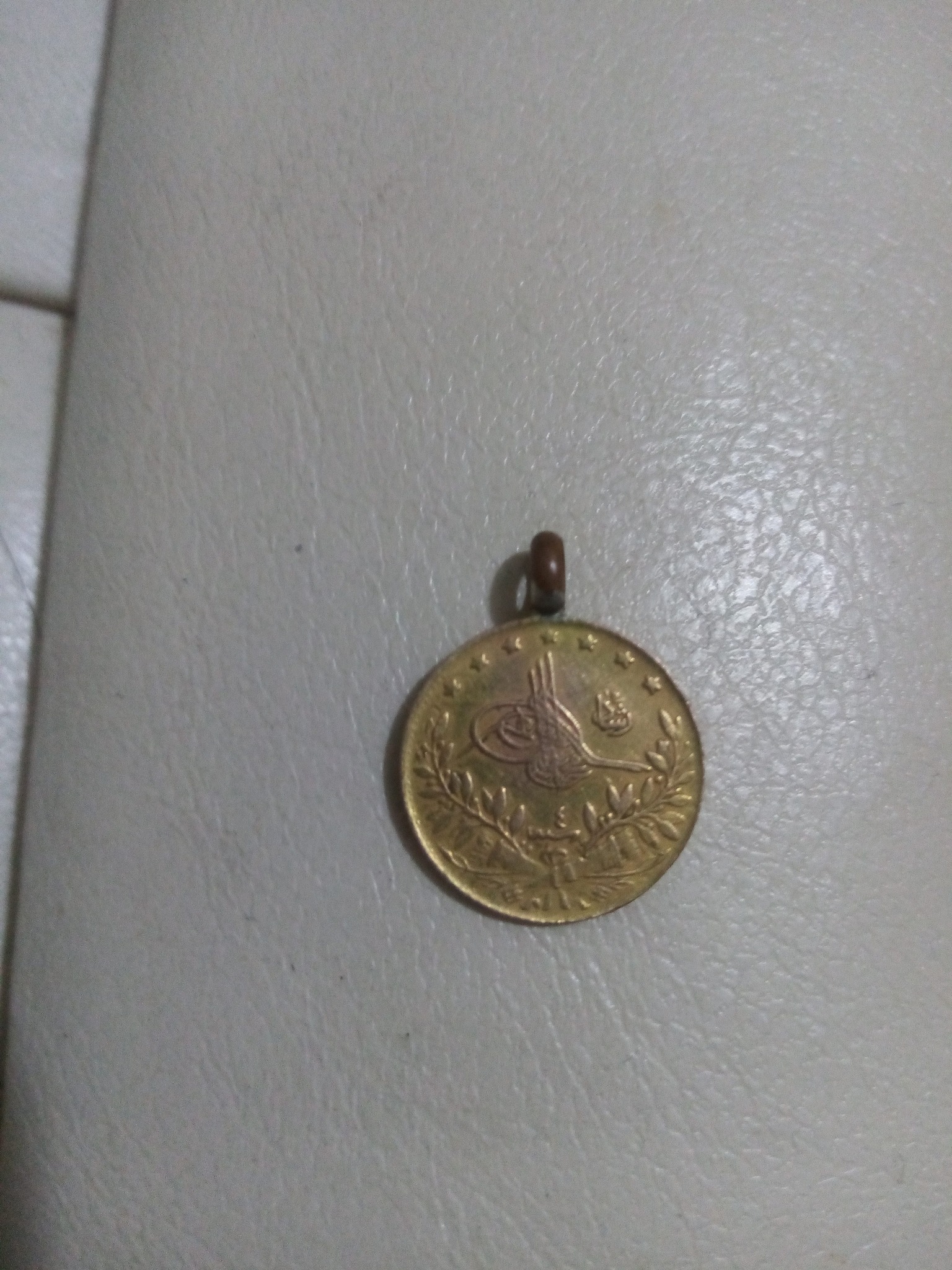
Brief Description
A small gold coin with a pierced loop for jewelry, featuring an intricate calligraphic monogram (Tughra) and laurel wreaths.
Historical Significance
Issued during the reign of Sultan Mehmed V Reshad, the penultimate Sultan of the Ottoman Empire, during the period of the Young Turk Revolution and World War I.
Estimated Value
$150-$250 (primarily based on gold weight due to jewelry damage)
Care Instructions
Avoid removing the soldered loop as it will further damage the coin. Do not clean with chemicals. Store in a soft pouch.
Mint Mark
Qustantiniyah (Constantinople / Istanbul)
Mintage & Rarity
Common; high mintage but many were melted or used in jewelry.
Weight & Diameter
Approx. 1.8g-3.6g and 15mm-18mm depending on exact denomination (25/50 Kurush)
Edge
Reeded (partially obscured by mounting)
Apparent Grade
Very Fine (Details); Damaged (Ex-jewelry/Mounted)
Obverse (Front)
The Tughra (calligraphic monogram) of Sultan Mehmed V, surrounded by a laurel wreath and stars.
Reverse (Back)
Arabic inscription 'Azzé Nasruhū' (May he be victorious), the mint name 'Qustantiniyah', the accession year 1327, and the regnal year 9.
What Drives This Coin's Value
Gold melt value is the primary floor; the mount/solder significantly reduces numismatic premium.
Similar Coins
Often confused with other Ottoman gold denominations like the 100 Kurush or gold Lira varieties from different Sultans.
Authenticity & Counterfeit Red Flags
Check for correct weight and gold fineness. Many brass 'belly dancer' tokens mimic this design but lack sharp detail and weight.
Notable Varieties & Errors
Varies by regnal year (1 through 10) which indicates the specific year of the Sultan's reign.
Created At: 2026-06-04T19:23:00.383526