Chinese Cash Coins (likely Qing Dynasty)
Country of Origin: China
Year of Issue: Likely various dates within the Qing Dynasty (1644-1912). Without clearer images of the characters, a precise year is difficult to determine.
Denomination: Cash (Wen)
Composition: Bronze or Brass alloy
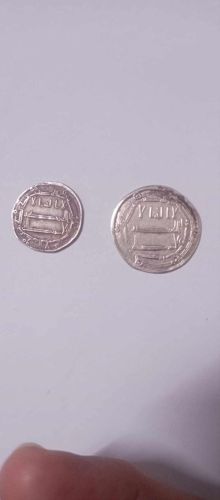
Brief Description
The image shows two circular coins with a square hole in the center, a characteristic feature of Chinese cash coins. The larger coin appears to have four characters on the obverse above and below the hole, and possibly to the left and right. The smaller coin has a similar design. These coins typically feature the reign title of the emperor on the obverse.
Historical Significance
Chinese cash coins were the primary currency in China for over two millennia, from the 4th century BCE until the early 20th century. Coins from the Qing Dynasty reflect the last imperial dynasty of China, a period of significant social, economic, and political change, including increasing Western influence. They were widely circulated and are a tangible link to daily life during that era.
Estimated Value
The estimated value for common Qing Dynasty cash coins like these, in circulated condition, is typically low, ranging from "$1" to "$10" USD each. Rarity, specific Emperor's reign, mint mark, quality of strike, and condition significantly impact value. Without clearer identification, a precise value is difficult.
Care Instructions
Handle coins by the edges to avoid transferring oils from your skin. Store them in a cool, dry place, ideally in inert holders like Mylar flips, PVC-free coin albums, or certified slates. Do not clean these coins, as cleaning can decrease their numismatic value by removing historical patina and potentially damaging the surface.
Created At: 2025-11-23T16:21:14.790961