Buffalo Nickel (Indian Head Nickel)
Country of Origin: United States
Year of Issue: 1936
Denomination: 5 Cents (Nickel)
Composition: 75% Copper, 25% Nickel
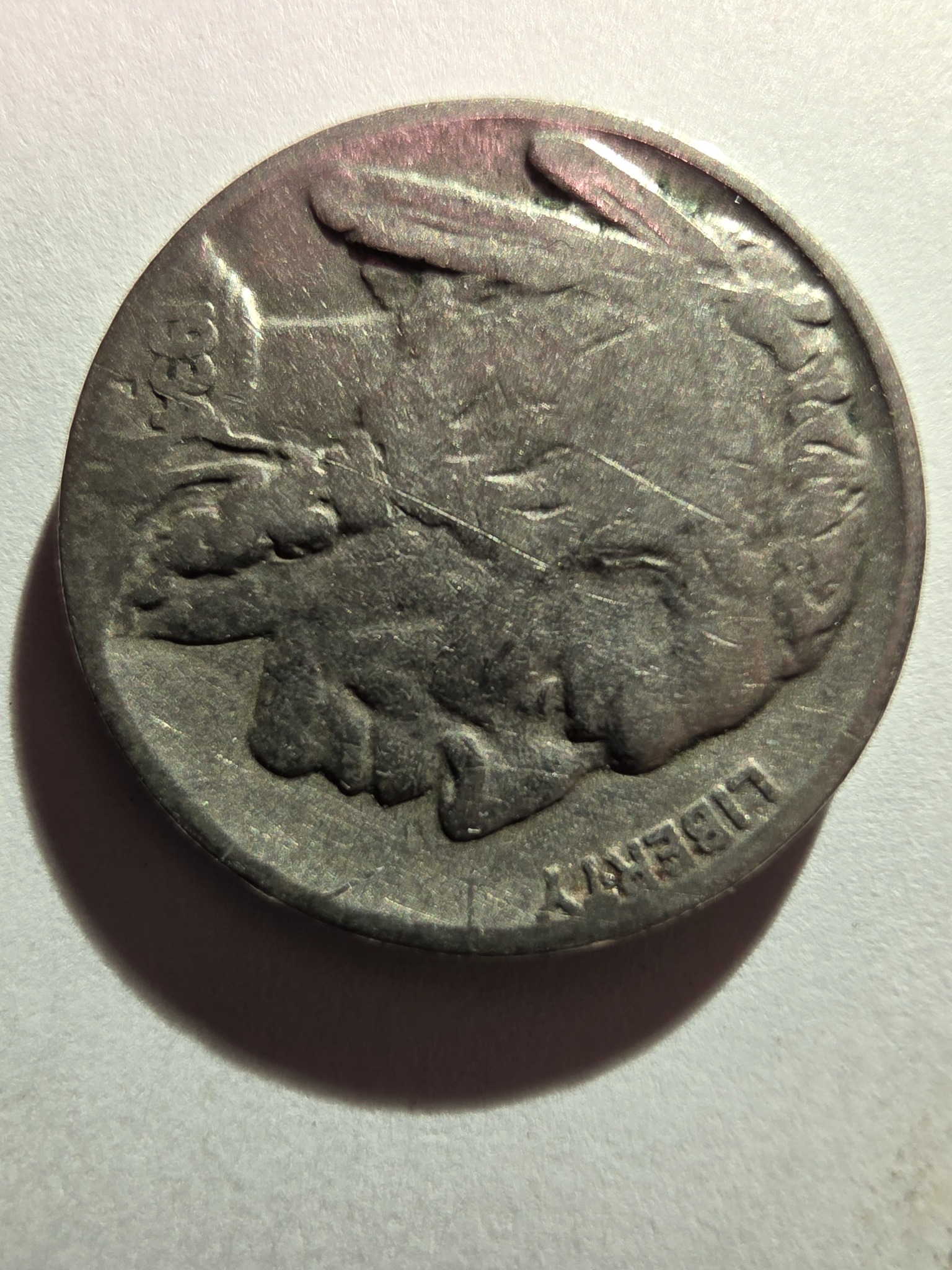
Brief Description
A well-circulated 1936 United States five-cent piece featuring an American Indian profile and an American Bison.
Historical Significance
Designed by James Earle Fraser and minted from 1913 to 1938, this coin is a classic of American numismatics, intended to celebrate the American West. The 1936 issue was one of the final years of the series.
Estimated Value
$0.50-$1.50 in heavily circulated condition, $15-$40 in Mint State (MS-63).
Care Instructions
Do not clean or polish the coin, as this removes original surface patina and significantly reduces collector value. Store in an acid-free holder (2x2 flip or capsule) to prevent further environmental damage.
Mint Mark
None (Philadelphia Mint)
Mintage & Rarity
119,001,420; Common date for the series.
Weight & Diameter
5.0 grams / 21.21 mm
Edge
Plain
Apparent Grade
Good (G) to Very Good (VG). The date is readable but the horn of the bison is nearly flat, and the details of the feathers and hair are worn.
Obverse (Front)
Profile of a Native American man, facing right. Legend 'LIBERTY' at the lower right. Date '1936' on the shoulder. Designer's initial 'F' below the date.
Reverse (Back)
An American Bison (buffalo) standing on a mound. Legend 'UNITED STATES OF AMERICA' and 'E PLURIBUS UNUM' above. 'FIVE CENTS' below the mound.
What Drives This Coin's Value
Condition/Grade is the primary factor for this common date. Key dates in this series include 1913-S Variety 2, 1921-S, and major errors.
Similar Coins
Liberty Head 'V' Nickel (preceded it) and Jefferson Nickel (succeeded it). The designs are very distinct and rarely confused.
Authenticity & Counterfeit Red Flags
Check for the 3.5 leg variety or 3-legged buffalo on the reverse of the 1937-D; counterfeits often involve 'shaving' a leg. Ensure the weight is correct at 5 grams.
Notable Varieties & Errors
The 1936 3-1/2 leg variety (D-mint) and various Doubled Die Obverse (DDO) errors are highly sought after by collectors for this year range, though this specimen appears to be a standard Philadelphia strike.
Created At: 2026-06-11T00:02:14.962182