Roman Follis (possibly Constantine I or a successor)
Country of Origin: Roman Empire
Year of Issue: Circa 310-340 AD (due to the Follis denomination and iconography)
Denomination: Follis
Composition: Bronze (or Billon, an alloy of bronze with a small percentage of silver, often heavily debased over time)
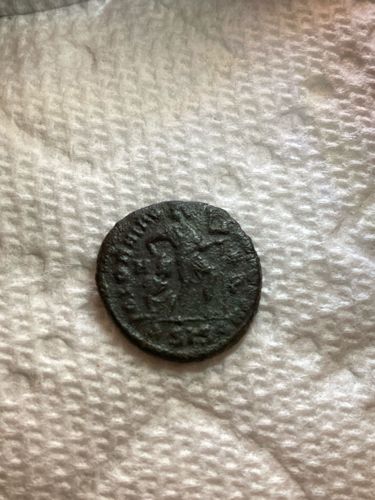
Brief Description
The coin appears to be a late Roman bronze Follis. The obverse likely features a laureate or diademed bust of an emperor (possibly Constantine I or one of his sons) facing right. The reverse typically depicts a military standard, a camp gate, two soldiers, or allegorical figures such as Sol Invictus or Victory. Due to the wear and patination, specific details are hard to discern, but Roman lettering is visible around the edges.
Historical Significance
The Follis was a heavily debased bronze coin introduced during the Tetrarchy and continued into the reign of Constantine the Great and his successors. These coins are historically significant as they represent a period of significant economic and monetary reform within the Roman Empire, attempts to stabilize its economy, and spread propaganda. The iconography often reflects the political climate and religious transitions of the era, such as the rise of Christianity. They provide insight into the daily commerce and military life of the late Roman Empire.
Estimated Value
Due to the heavily worn condition and commonality of late Roman bronzes, the estimated value is likely between "$5 - $50". Better preserved examples or those with rare mint marks or emperors can fetch more. This specific coin, given its condition, would likely be on the lower end of that range, primarily as a historical artifact rather than a high-value collectible.
Care Instructions
Handle the coin by its edges to avoid transferring oils from your skin, which can accelerate corrosion. Store it in a stable, dry environment, preferably in an inert holder such as a Mylar flip or a non-PVC coin slab. Do not attempt to clean the coin; cleaning ancient bronzes can significantly damage their patina and decrease their value. The green/black patina is often stable and part of its historical character. Consult a professional conservator if the coin shows active bronze disease (pale green powdery spots) for stabilization.
Created At: 2025-12-16T17:56:01.570889