Cuba 10 Centavos (Tourist Coinality)
Country of Origin: Cuba - Instituto Nacional de Turismo (INTUR)
Year of Issue: 1981
Denomination: 10 Centavos
Composition: Copper-Nickel
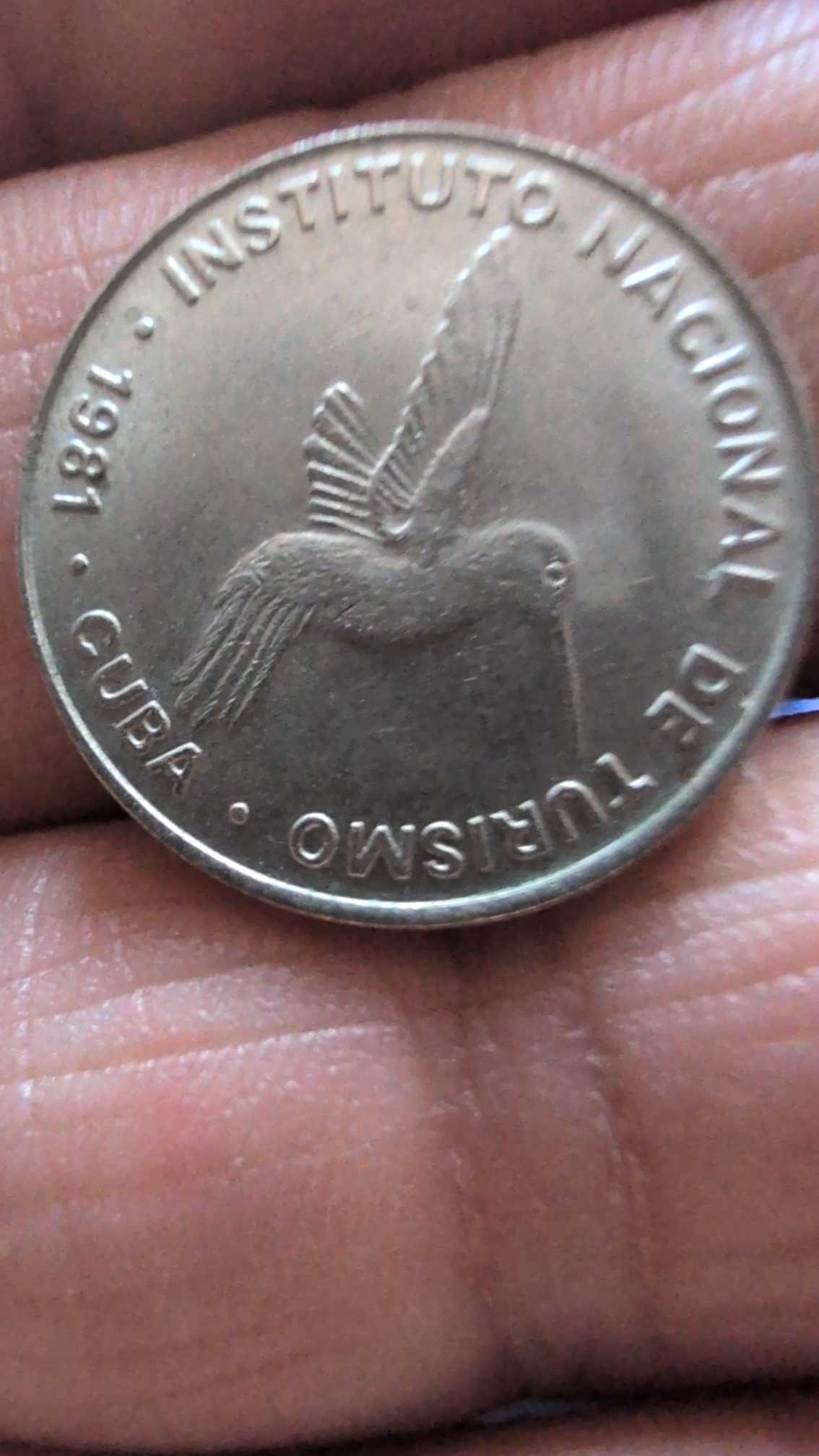
Brief Description
A small CU-NI coin issued for tourists in Cuba, featuring a hummingbird on the obverse and a stylized palm tree with INTUR logo on the reverse.
Historical Significance
These coins were issued by INTUR (the National Institute of Tourism) specifically for use by foreign tourists in hard-currency shops (diplotiendas) during a period when US Dollars were illegal for citizens but necessary for the state economy. They are part of Cuba's unique dual-currency history.
Estimated Value
$1-$3 in circulated condition; $5-$10 in uncirculated condition.
Care Instructions
Store in a PVC-free flip or capsule to prevent oxidation. Do not clean with abrasives or chemicals, as this will destroy the numismatic value.
Mint Mark
None visible (Typically struck at the Havana Mint)
Mintage & Rarity
Common; although production figures for INTUR coinage are often not fully disclosed, they were produced in significant quantities.
Weight & Diameter
Approx. 2.9g in weight and 17.7mm in diameter.
Edge
Reeded
Apparent Grade
Fine to Very Fine; shows significant surface wear, minor scratches, and loss of original luster, but all legends are legible.
Obverse (Front)
Features a hummingbird (Zunzuncito) in flight in the center. Legend 'INSTITUTO NACIONAL DE TURISMO' above and '1981 CUBA' below.
Reverse (Back)
Features the numeral '10' above the INTUR logo (a stylized palm tree and horizons). Legend 'DIEZ CENTAVOS' at the bottom.
What Drives This Coin's Value
Condition is the primary factor. These are relatively common, so high-grade (MS-60+) examples command the most interest from collectors of Cuban or socialist-era coinage.
Similar Coins
Often confused with the standard Cuban Peso circulante (non-tourist money) or later Convertible Peso (CUC) coinage. It is distinguished by the 'INTUR' markings.
Authenticity & Counterfeit Red Flags
Check weight and diameter against standard specs. Counterfeits are rare for this low-denomination coin, but look for mushy details in the bird or lettering as signs of casting.
Notable Varieties & Errors
None widely recognized for this specific date and denomination.
Created At: 2026-04-20T15:15:25.213460