Sacagawea Dollar (Native American Series - 2010 Great Tree of Peace)
Country of Origin: United States
Year of Issue: 2010
Denomination: One Dollar ($1)
Composition: Manganese-Brass Clad Copper: 88.5% Copper, 6% Zinc, 3.5% Manganese, 2% Nickel
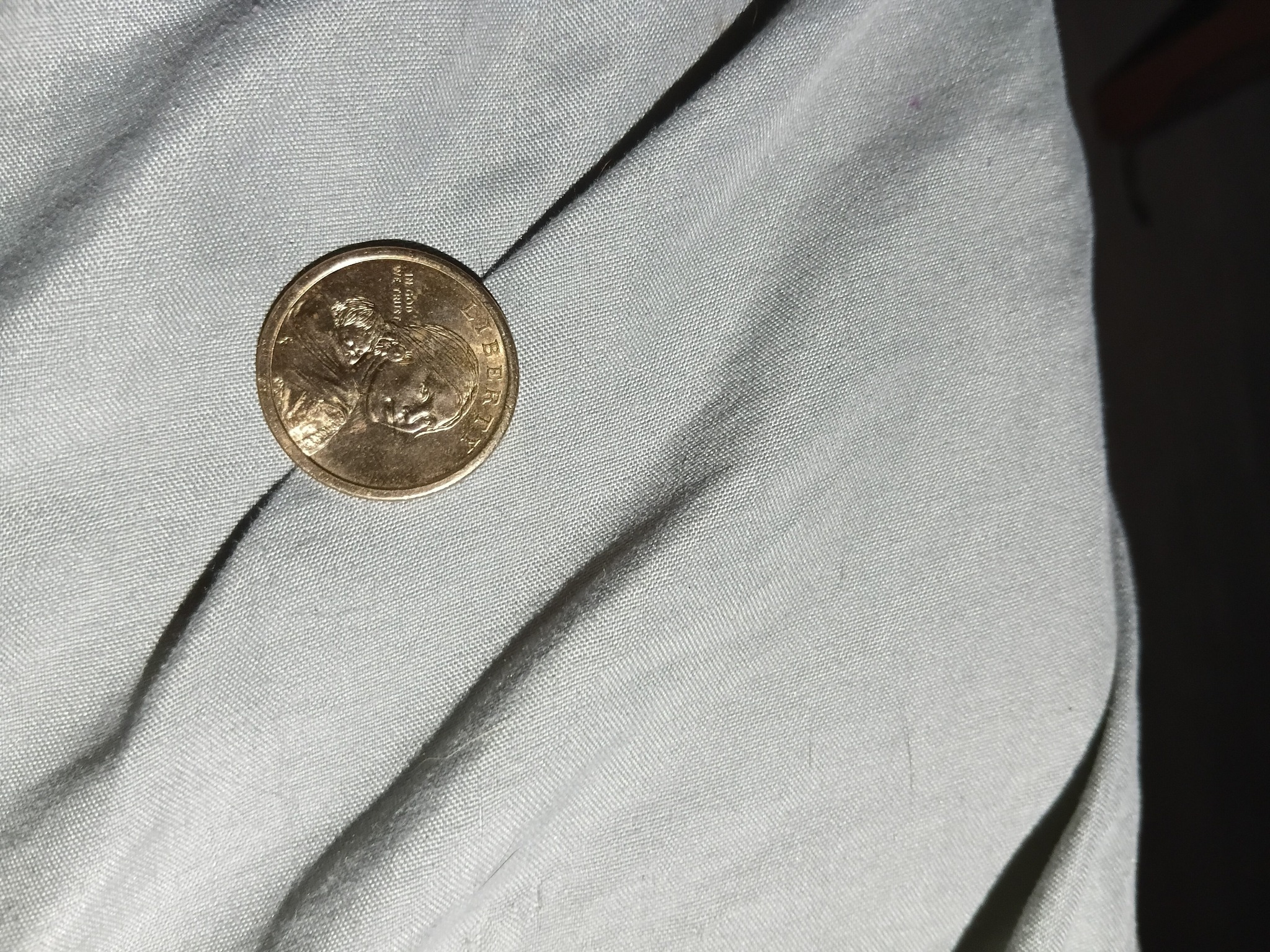
Brief Description
A golden-colored dollar coin featuring Sacagawea on the front and a design celebrating the Haudenosaunee Confederacy on the back.
Historical Significance
Starting in 2009, the Sacagawea dollar reverse design changed annually to commemorate Native American contributions to U.S. history. This 2010 design honors the Great Law of Peace and the Hiawatha Belt of the Haudenosaunee Confederacy.
Estimated Value
$1 in circulated condition; $2-$5 in high uncirculated (MS-65+) grades.
Care Instructions
Avoid cleaning or polishing as it destroys numismatic value. Store in a cool, dry place within PVC-free holders to prevent oxidation of the manganese-brass layer.
Mint Mark
The mint mark (P, D, or S) is located on the edge of the coin for this series.
Mintage & Rarity
Common. Approximately 81 million produced between Philadelphia and Denver mints.
Weight & Diameter
8.1 grams / 26.5 mm
Edge
Lettered (incuse date, mint mark, and 'E PLURIBUS UNUM')
Apparent Grade
Circulated / About Uncirculated. Visible surface marks and slight dulling of the original luster suggest it has been handled.
Obverse (Front)
Portrait of Sacagawea carrying her infant son Jean Baptiste Charbonneau. Legends: LIBERTY, IN GOD WE TRUST. Designed by Glenna Goodacre.
Reverse (Back)
Hiawatha Belt surrounding a bundle of five arrows, representing the Haudenosaunee Confederacy. Legends: UNITED STATES OF AMERICA, $1. Designed by Thomas Cleveland.
What Drives This Coin's Value
Condition and luster are primary. Since these were largely not released into general circulation by 2010, most examples found are from collector rolls and should be in high grade.
Similar Coins
Often confused with the Susan B. Anthony dollar due to size, or other years in the Native American Dollar series which share the same obverse.
Authenticity & Counterfeit Red Flags
Check for edge lettering; modern US dollar coins must have the date and mint mark inscribed on the rim. The 'golden' color comes from the manganese coating; it is not gold.
Notable Varieties & Errors
No major recognized varieties for the 2010 issue, though collectors look for high-grade 'Position A' or 'Position B' edge lettering orientations.
Created At: 2026-06-13T19:37:33.326078