
How to Identify the Vienna Philharmonic
An overview of the Wiener Philharmoniker coin program across gold, silver, and platinum versions, with design details and tips for confirming genuine pieces.
Read the full Vienna Philharmonic encyclopedia entry →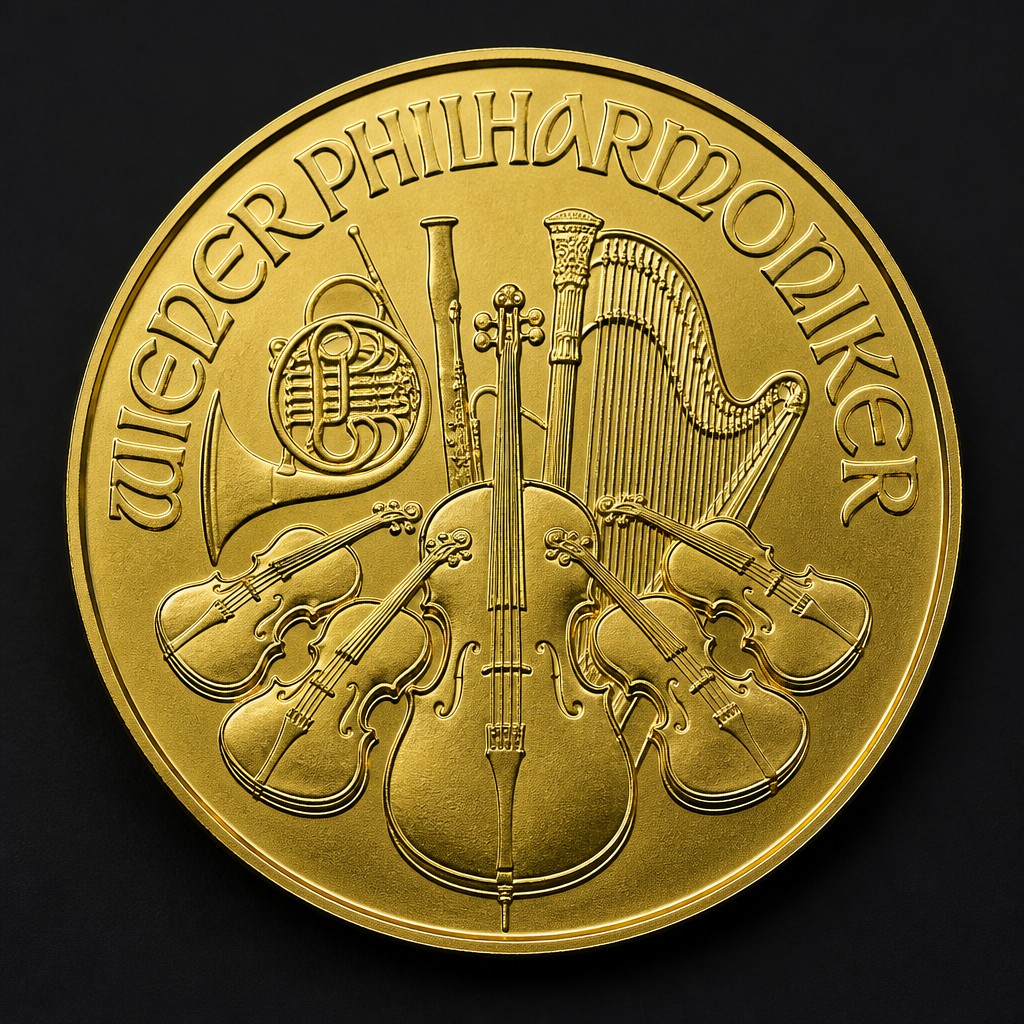
What Is the Coin
"Vienna Philharmonic" (Wiener Philharmoniker) is the official name of the Austrian Mint's bullion coin series, produced in gold since 1989, silver since 2008, and later also in platinum. It is one of the most recognizable European bullion series and is sold worldwide under this name, with "Austrian Philharmonic" used interchangeably.
Shared Design Across Metals
All versions of the series use the same two-sided design. One side shows the great pipe organ from the Golden Hall of Vienna's Musikverein concert hall, with "REPUBLIK OSTERREICH" above and the denomination below. The other side depicts a cluster of orchestral instruments, including a cello, harp, bassoons, and French horns, representing the Vienna Philharmonic Orchestra.
Distinguishing Gold, Silver, and Platinum Issues
The metal composition is the main way to tell the versions apart: gold coins are .9999 fine and issued in 1 oz down to 1/25 oz sizes; the silver coin is issued mainly in a 1 oz .999 fine version with a larger 37 mm diameter and noticeably lighter weight than the gold coin's density would suggest for the same size; a platinum version in .9999 fine metal has also been issued in smaller volumes. Face values also differ: for example, the 1 oz silver coin has a much lower euro face value than the 1 oz gold coin.
Size, Weight & Edge
The 1 oz silver Philharmonic weighs 31.1 g and has a plain edge, matching the gold coin's smooth-edge tradition. Fractional gold sizes scale down proportionally in both diameter and weight.
Dates and Currency of Face Value
Like other Austrian Mint bullion coins, issues from 1989-2001 (gold only, since silver didn't launch until 2008) carry a schilling-denominated face value, while all coins from 2002 onward are denominated in euros, reflecting Austria's currency changeover.
Telling It Apart From Similar Coins
Because the organ-and-instruments design is unique to this series, confusion with other bullion coins is unlikely once the design is recognized. The main practical challenge is distinguishing the silver Philharmonic from other 1 oz silver bullion coins like the Canadian Maple Leaf or American Silver Eagle, which is easily done by checking for the organ and orchestral-instrument imagery.
Grading and Condition at a Glance
As with other modern bullion, look for strong, even luster and minimal contact marks. The organ pipes and instrument strings are fine, low-relief details that show wear or handling marks readily, making them a good area to inspect for condition.
Authenticity Red Flags
Weight and diameter should match official specifications exactly for the claimed metal and size. A reeded edge on a coin claiming to be a genuine Philharmonic is inconsistent with the series' plain-edge design, and blurred or shallow instrument details are common signs of counterfeit or replica pieces.
Frequently asked questions
Is Vienna Philharmonic the same coin as the Austrian Gold Philharmonic?
Yes, both names refer to the same Austrian Mint series; 'Vienna Philharmonic' also covers the silver and platinum versions of the coin.
When did the silver version launch?
The 1 oz silver Philharmonic was introduced in 2008, nearly two decades after the gold version began in 1989.
What edge does the coin have?
A smooth, plain edge across all metals and sizes in the series.
How do I tell the metal type at a glance?
Check the fineness and weight stamped on the coin along with its color and diameter; the silver 1 oz version is 37 mm while gold sizes are smaller and denser for the same face weight.