
How to Identify the Trinidad and Tobago 50 Cents
A collector's checklist for confirming a Trinidad and Tobago 50-cent coin using the coat-of-arms obverse, the value reverse, and its copper-nickel size and edge.
Read the full Trinidad and Tobago 50 Cents encyclopedia entry →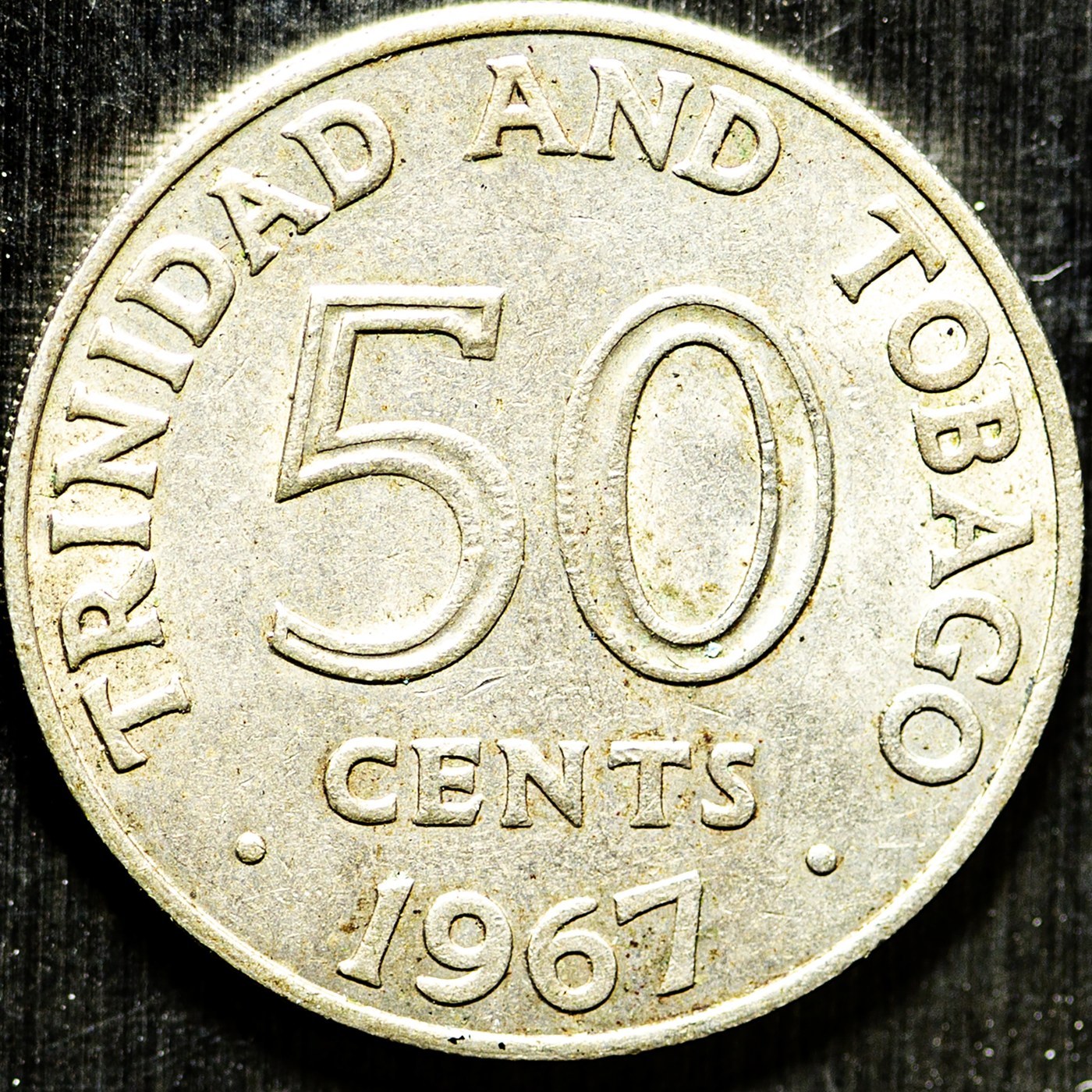
Start with the reverse denomination, which states the value directly. A genuine piece reads 50 CENTS together with a date such as 1967. Reading the value and date straight off the coin is the fastest way to confirm the denomination and to separate it from the smaller cent coins of the same series that share a similar silvery colour.
Next examine the obverse coat of arms and legend. The obverse carries the coat of arms of Trinidad and Tobago — a central shield with supporting birds and a motto scroll — encircled by the legend TRINIDAD AND TOBAGO. Matching this specific heraldry and reading the country name is what distinguishes the coin from other Caribbean and Commonwealth issues that also use coat-of-arms obverses.
Confirm the physical characteristics: the 50 Cents is a round copper-nickel coin with a silvery-grey tone and a reeded edge, and it is among the larger, heavier coins of the series — noticeably bigger than the low-value cent pieces. Copper-nickel tones to a soft grey rather than the brown of copper or bronze, so colour, size and the grooved edge together are useful diagnostics.
Watch for look-alikes and cautions: many Caribbean nations issued similarly sized copper-nickel coins with coat-of-arms obverses, so always read the country name and value rather than judging by shape or colour alone. Because this is a common base-metal circulation coin, sophisticated counterfeiting is unlikely; the more frequent errors are misreading the country, confusing the date, or mistaking a worn coin of another nation for this one. When attributing a specific date, compare against reference images of Trinidad and Tobago coinage.
Frequently asked questions
What is the fastest way to confirm this is a Trinidad and Tobago 50 Cents?
Read the reverse: it states '50 CENTS' with the date. Combined with the coat-of-arms obverse and the legend TRINIDAD AND TOBAGO, that confirms both the denomination and the issuing country.
How do I tell it apart from other Caribbean coins?
Check the country name in the obverse legend and the specific coat of arms. Read the words TRINIDAD AND TOBAGO and match the heraldry rather than relying on size or colour, since several nations used similar copper-nickel coat-of-arms coins.
Does a mint mark help identify it?
Trinidad and Tobago circulation coins are identified mainly by the country name, value, coat of arms and date rather than a prominent mint mark. Focus on those features and compare with reference images for the year in question.