
How to Identify the Trinidad and Tobago 1 Dollar
A collector's guide to recognizing the nickel-plated steel Trinidad and Tobago one-dollar coin by its coat-of-arms obverse and heraldic reverse.
Read the full Trinidad and Tobago 1 Dollar encyclopedia entry →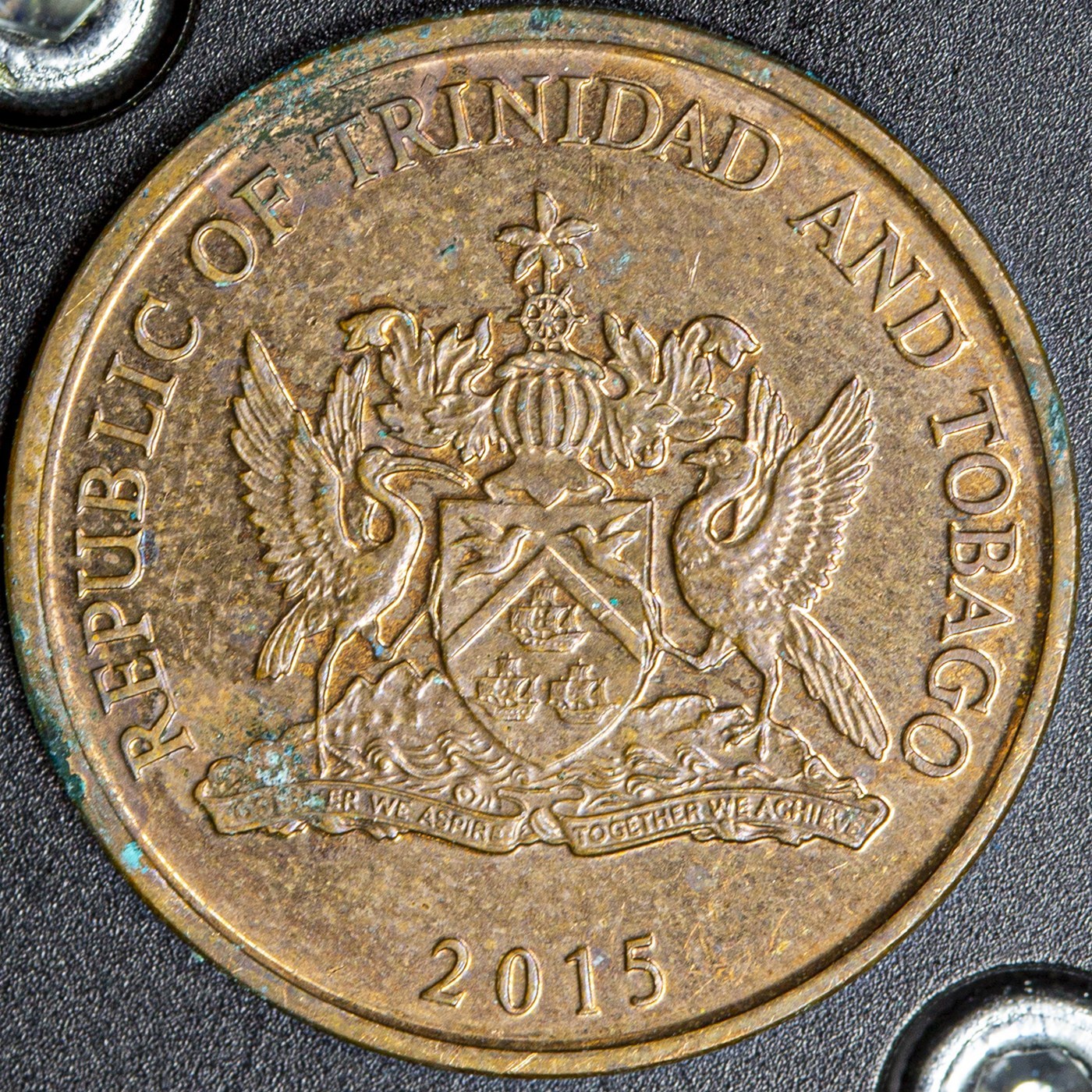
Start with the obverse legend. A genuine Trinidad and Tobago 1 Dollar shows the national coat of arms—a shield with ships and birds, flanked by supporters and topped with heraldic elements—encircled by the country name “TRINIDAD AND TOBAGO.” The date, such as 2015 on this example, appears on this side. Reading the country name is the surest way to separate the coin from similar silvery coins of other Caribbean or world nations that also use heraldic shields.
Turn the coin to confirm the value. The reverse combines national emblems and heraldic design with the one-dollar denomination, so it identifies the coin as a dollar rather than a cent piece. Confirm you are reading a dollar and not a lower-value coin before concluding.
Use metal and physical tests as a cross-check. This dollar is struck in nickel-plated steel, giving a silvery-grey color and a light feel; because of the steel core it will generally respond to a magnet. That magnetic behavior is a useful diagnostic—older solid copper-nickel coins are typically non-magnetic, so a magnet can help confirm the plated-steel composition. Compare weight and diameter against published specifications when matching a specific issue.
Watch for look-alikes. Many countries issue silvery round coins of similar size, and several use coats of arms, so never rely on color or the shield alone. Pair the heraldic devices with the printed country name and the one-dollar reverse to be certain of both origin and denomination.
Authentication is rarely a pressing concern on a modern circulation dollar of this kind, as such coins are seldom counterfeited. Focus instead on correctly reading the country, denomination and date, on confirming the magnetic plated-steel composition, and on judging condition. Be wary of coins that have been polished or artificially toned; original, unaltered surfaces are preferable for a collection.
Frequently asked questions
How do I tell the 1 Dollar from Trinidad's cent coins?
Read the reverse: it carries the one-dollar denomination alongside the heraldic emblems, distinguishing it from the cent-denominated small change of the same coinage.
Will a magnet stick to this coin?
Usually yes. The coin is nickel-plated steel, so its steel core typically responds to a magnet—unlike older solid copper-nickel coins, which are generally non-magnetic.
Does the coat of arms confirm it is from Trinidad and Tobago?
It is a strong clue, but several nations use heraldic shields. Confirm by reading the country name “TRINIDAD AND TOBAGO” around the obverse together with the arms.
Where is the date on this coin?
The date is on the obverse near the coat of arms. On this example it reads 2015, marking its year of issue within the modern coinage.