
How to Identify the Trajan Decius Antoninianus
A guide to identifying Trajan Decius's antoninianus (249-251 AD), including his own coinage and the separate 'Divo' consecration series struck to honor earlier deified emperors.
Read the full Trajan Decius Antoninianus encyclopedia entry →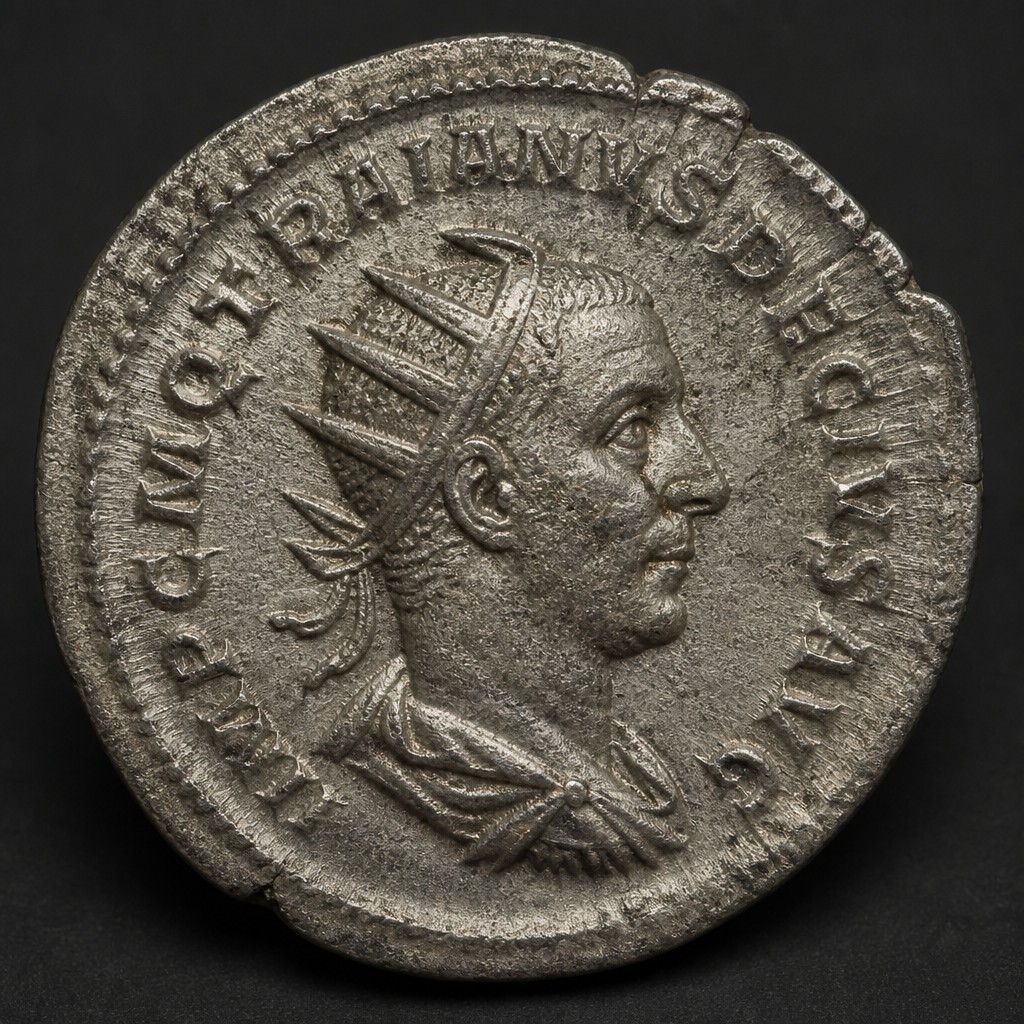
What Is the Trajan Decius Antoninianus?
Trajan Decius ruled briefly from 249 to 251 AD, remembered for ordering an empire-wide sacrifice edict and for issuing a memorable series of commemorative coins honoring past deified emperors, struck alongside his own regular coinage.
Obverse Design and Inscriptions
The obverse shows a radiate, cuirassed bust right with the legend IMP C M Q TRAIANVS DECIVS AVG, or shorter abbreviations of his lengthy full name.
Reverse Design and Inscriptions
His own coinage includes Dacia standing beside a donkey-headed military standard, Pannoniae holding two standards, Genius Exercitus Illyriciani, Abundantia pouring from a cornucopia, and Victoria advancing with wreath and palm. A separate "Divo" consecration series names earlier deified emperors such as Divo Augusto, Divo Vespasiano, or Divo Traiano, typically paired with an altar or eagle reverse; these commemorate the honored emperor rather than showing Trajan Decius's own portrait.
Size, Weight, and Metal
The coin measures roughly 21-23mm and weighs about 3.5-4.5 grams. Silver content had dropped further by this point, to around 20%, giving surviving examples a noticeably grayer tone than earlier antoniniani.
Mint Marks and Where to Find Them
Coins were struck primarily at Rome, and no systematic exergue mint marks appear yet at this date.
Telling It Apart from Similar Coins
His sons Herennius Etruscus and Hostilian, both briefly Caesar or Augustus, carry their own legends (such as Q HER ETR MES DECIVS or C VAL HOS MES QVINTVS) and somewhat younger, beardless portraits, distinguishing them from their father's mature bearded bust. The "Divo" consecration coins are a distinct sub-series and should not be mistaken for coins struck during the honored emperor's own lifetime; the style and fabric are consistent with the mid-third century, not the earlier reign being commemorated.
Judging Condition at a Glance
Wear shows first on the radiate crown's points and the cheek. On Divo-series reverses, check the altar or eagle detail, which wears down quickly given the coin's already modest strike quality.
Authenticity Red Flags
Because the Divo series is popular and occasionally confused with genuine coinage of the original honored emperor, verify that the fabric, style, and lettering match mid-third-century production rather than the earlier period. Standard cast-fake indicators - seams, porosity, incorrect weight - also apply here as with other antoniniani of the era.
Frequently asked questions
What is the 'Divo' series on Trajan Decius's coinage?
It is a special commemorative series naming earlier deified emperors, such as Divo Augusto or Divo Traiano, struck under Trajan Decius rather than during those emperors' own lifetimes.
How can I avoid confusing a Divo coin with an original-reign coin?
Check the style, fabric, and lettering, which should match mid-third-century production standards rather than the earlier emperor's actual era; the coin's overall look should be consistent with Trajan Decius's antoniniani generally.
How do I tell his coins apart from those of his sons?
His sons Herennius Etruscus and Hostilian have their own named legends and slightly younger, beardless portraits, distinct from their father's mature bearded bust.
What is the silver content of this coin?
Roughly 20%, noticeably lower than earlier antoniniani, giving it a grayer appearance than coins from a decade or two earlier.