
How to Identify the Swedish Krona
Sweden's krona coin has featured the reigning monarch's portrait or royal monogram since 1873, with designs updated across the reigns of several Swedish kings.
Read the full Swedish Krona encyclopedia entry →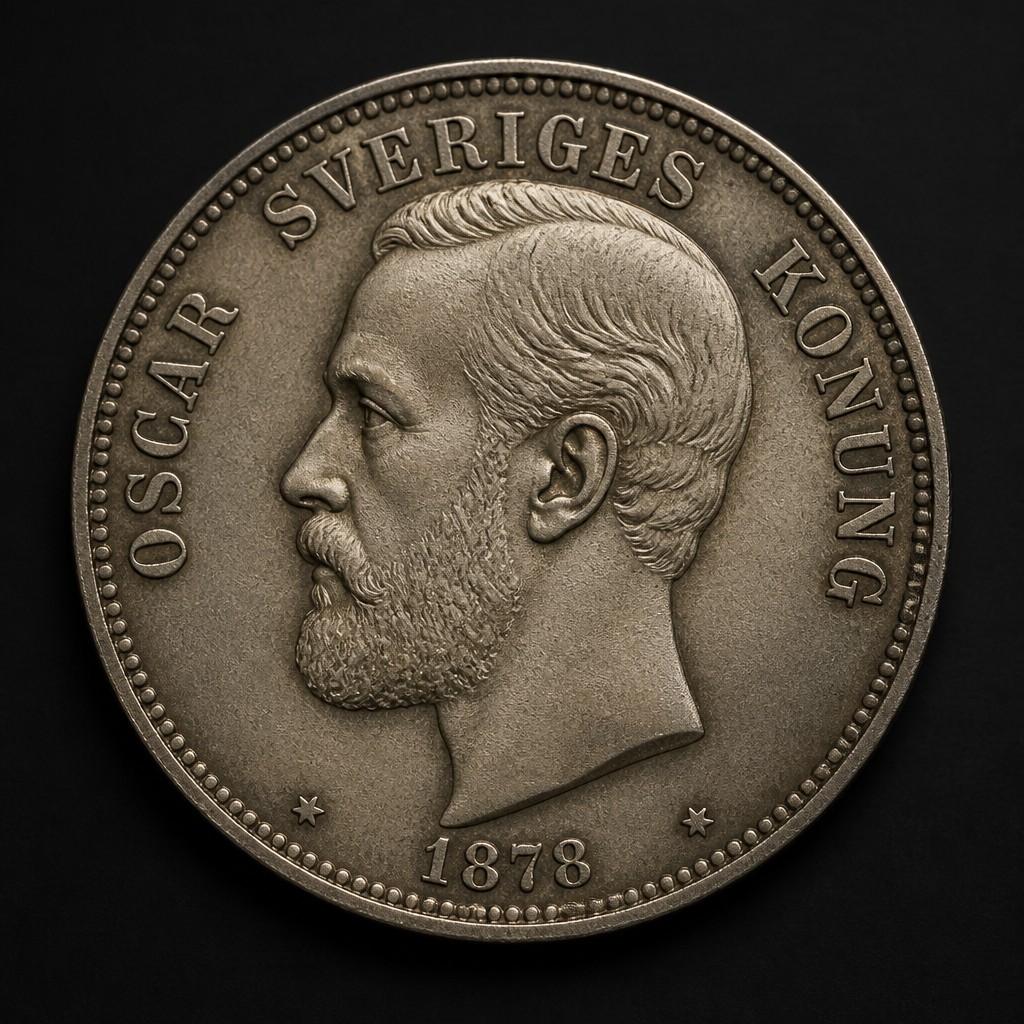
What Is the Swedish Krona
The krona has been the standard currency unit of Sweden since 1873, replacing the earlier riksdaler. Krona and öre coins have been issued under successive Swedish monarchs, including Oscar II, Gustaf V, Gustaf VI Adolf, and Carl XVI Gustaf, each contributing distinct coin designs. Sweden's adoption of the krona was part of the Scandinavian Monetary Union, a period when Sweden, Denmark, and Norway shared a common gold-based currency standard.
Obverse Design and Inscriptions
The obverse typically shows a royal portrait bust in profile or a crowned royal monogram, with a legend naming the king, such as "CARL XVI GUSTAF SVERIGES KONUNG" (Carl XVI Gustaf, King of Sweden).
Reverse Design and Inscriptions
The reverse shows the denomination numeral with the word "KRONA" or "KRONOR," often accompanied by three crowns — a longstanding Swedish national symbol — or other heraldic elements, plus the date.
Size, Weight, Metal, and Edge
Early krona coins used silver for larger denominations, while modern circulating coins use copper-nickel, bronze, or other base-metal alloys. Size and weight scale with denomination, and edges range from plain to reeded depending on the coin.
Mint Marks and Where to Find Them
The Royal Swedish Mint's mark or the mint master's initials appear as small letters near the rim, often close to the date on the reverse. Sweden has centralized coin production for its currency, so mint identification mainly helps confirm the specific mint master's tenure rather than distinguishing between multiple minting cities.
Telling It Apart From Similar Coins
The specific king's name in the legend, along with the style of crown or monogram used, helps pin down the reign and approximate date. The recurring "three crowns" motif is distinctly Swedish, helping distinguish these coins from Danish or Norwegian krone coins, which use different national symbols. Denomination wording also differs slightly between the three countries even though all use "krona" or "krone" as their currency name.
Judging Condition at a Glance
Check the portrait's facial detail or the crown or monogram's fine lines for wear, along with the sharpness of the denomination numeral. Well-preserved coins retain crisp lettering and a clear strike on all raised elements. Since older Swedish coins sometimes carried a center hole on certain denominations, examine that opening for a clean, evenly punched edge as an additional preservation check.
Authenticity Red Flags
Verify that metal color, weight, and diameter match the expected specification for the denomination and era. Blurred lettering, incorrect proportions in the royal portrait, or an inconsistent crown design compared to known issues can indicate a counterfeit.
Frequently asked questions
What does 'three crowns' symbolize on Swedish coins?
It's Sweden's national heraldic motif, the 'Tre Kronor,' used for centuries in Swedish state emblems.
Whose portrait appears on Swedish krona coins?
It depends on the era, cycling through kings such as Oscar II, Gustaf V, Gustaf VI Adolf, and Carl XVI Gustaf.
Was the Swedish krona ever made of silver?
Yes, larger denomination krona coins used silver historically before Sweden transitioned to base-metal alloys for circulating coinage.
How do I distinguish a Swedish krona from a Norwegian or Danish krone?
Check the specific national symbols, such as three crowns for Sweden, and the ruler's name in the legend, since each country's monarchs and heraldry differ.
Where is the date located?
Typically on the reverse near the denomination numeral, alongside any mint marks.