How to Identify the Spirit of ANZAC Commemorative 50 Cents
Confirm the 2015 ANZAC centenary 50c by its soldier obverse, ANZAC inscription, and 1915-2015 reverse; verify metal before assuming silver.
Read the full Spirit of ANZAC Commemorative 50 Cents encyclopedia entry →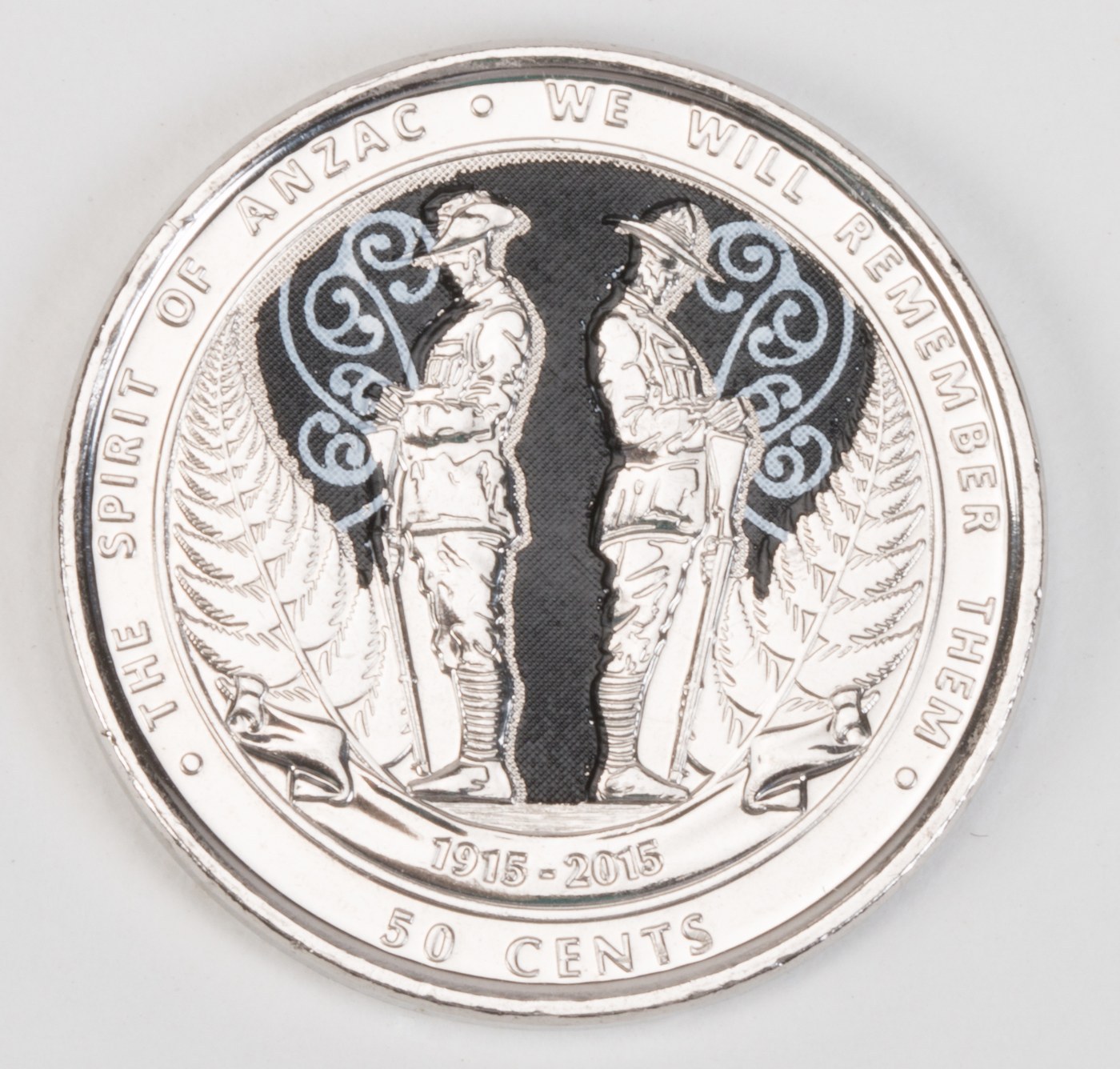
Begin with the two design sides. The obverse of this type shows two soldiers in military dress alongside the ANZAC inscription, and the reverse carries the 1915-2015 centennial text and commemorative design. This soldier-and-centenary pairing, rather than a standard coin design, is the first cue that you are holding a Gallipoli-centenary commemorative.
Read the dates and inscriptions closely. The 1915-2015 span is diagnostic: it anniversary-marks the 1915 Gallipoli landing at the 2015 centenary. Confirm the ANZAC wording on the soldier side and note the 50 Cents denomination. Because 2015 produced many ANZAC-themed pieces with similar soldier imagery, it is the exact combination of inscriptions and layout that pins down this specific fifty-cent type.
Check the physical traits before trusting the color. The surface is silver-toned, but a silvery look does not prove precious-metal content: centenary commemoratives were made as solid-silver, silver-plated, and base-metal medallic pieces. Weigh and measure the piece and look for any stamped fineness (such as a 999 or Ag marking). Absence of a fineness mark, combined with a light weight, points to plating rather than solid silver.
Separate legal-tender coins from medallions. A large share of 2015 ANZAC commemoratives were privately produced medallions or collector tokens rather than issues of the national mint. Look for issuer names, denomination placement, and any legal-tender wording to judge which you have; this affects both classification and value.
Finally, guard against misdescription more than counterfeiting. Given the modest values involved, deliberate fakes are uncommon, but listings that describe plated or medallic centenary pieces as "solid silver" or "rare" are frequent. Compare surfaces and inscriptions against known genuine images, and treat any unverified silver or rarity claim with caution.
Frequently asked questions
How do I tell this from other 2015 ANZAC commemoratives?
Many centenary pieces share soldier imagery and 2015 dating, so rely on the exact design: the ANZAC-titled two-soldier obverse paired with the 1915-2015 reverse and the 50-cent denomination.
How can I check whether it is really silver?
Do not judge by color alone. Weigh and measure the piece and look for a stamped fineness mark. Solid-silver issues carry appropriate weight and often a fineness stamp; plated pieces do not.
Is it a legal-tender coin or a medallion?
Both formats exist among 2015 ANZAC commemoratives. Check for an issuer name and legal-tender wording; many similar pieces are privately produced medallions rather than national-mint coins.
Should I worry about counterfeits?
Rarely, given the modest values. The more common problem is misdescription, such as plated or medallic pieces being sold as solid silver or as rare, so verify metal and issuer independently.
Spirit of ANZAC Commemorative 50 Cents identified by the community
Recent Spirit of ANZAC Commemorative 50 Cents coins identified with Coin Identifier.