
How to Identify the Spanish 20 Pesetas Gold (Alfonso XII)
A small Spanish gold coin bearing King Alfonso XII's portrait, identified by its Latin Monetary Union gold standard and crowned arms reverse.
Read the full Spanish 20 Pesetas Gold (Alfonso XII) encyclopedia entry →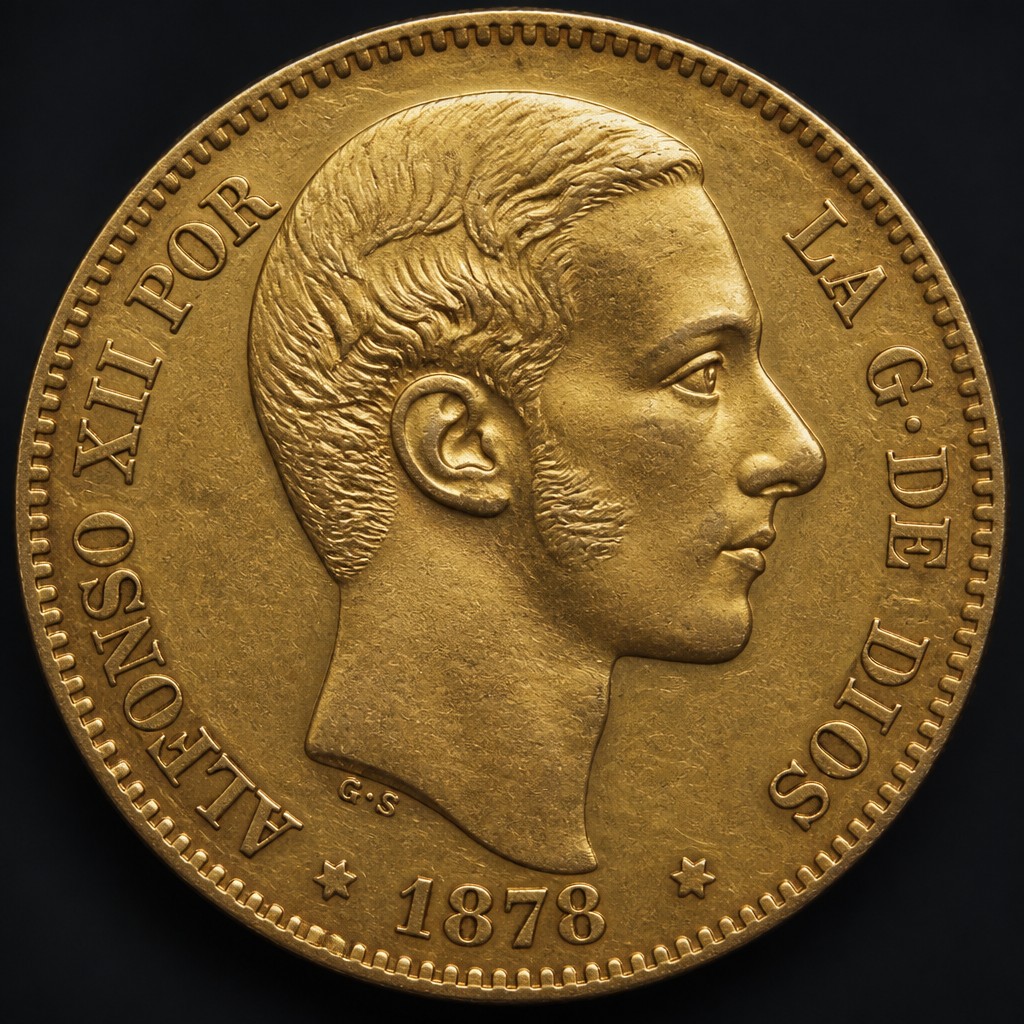
What Is the Spanish 20 Pesetas Gold (Alfonso XII)?
The 20 Pesetas gold coin was issued during the reign of King Alfonso XII of Spain (1874–1885), following Spain's adoption of the peseta as its national currency in 1868 and its participation in the Latin Monetary Union gold standard. It is one of the most commonly encountered Spanish gold coins from the 19th century among collectors today.
Obverse Design
The obverse shows a bare-headed profile portrait of Alfonso XII facing right, with the legend "ALFONSO XII POR LA GRACIA DE DIOS" (Alfonso XII, by the grace of God) curving around the rim, along with his royal title continuing onto the reverse.
Reverse Design
The reverse displays the crowned Spanish coat of arms flanked by the Pillars of Hercules, with the denomination "20 PTAS" (or "PESETAS") and the date below. Small assayer initials and a mint mark also appear near the base of the design.
Size, Weight & Metal
Following the Latin Monetary Union gold standard, the coin is struck in .900 fine gold, weighs approximately 6.45 grams, and measures about 21 millimeters in diameter.
Mint Marks
Spanish 20 Pesetas coins of this reign were struck primarily at the Madrid mint. A distinctive quirk of this series is that many genuine coins carry a date on the obverse combined with small stars on the reverse indicating the true year of striking, since Spanish law of the period allowed continued use of an original design date for several years of actual production — always check both the main date and the small star-enclosed numerals when identifying a specific striking year.
Telling It Apart from Similar Coins
Because Latin Monetary Union gold coins share a common weight and fineness standard, the Spanish 20 Pesetas is close in size to the French 20 Francs and Italian 20 Lire gold coins of the same union. The portrait of Alfonso XII and the Spanish-language legend are the clearest distinguishing features, along with the Pillars of Hercules motif on the reverse, which is unique to Spanish coinage.
Judging Condition at a Glance
Examine the king's hair curls and the fine lines of the crown above the coat of arms. A well-preserved coin shows crisp, separated detail in the hair and sharp lettering, while a circulated example shows a smoothed portrait and softened crown details.
Authenticity Red Flags
This series has historically been a target for counterfeiting due to its popularity and relatively small size, so verify the weight closely against the 6.45-gram standard, check that the small star-enclosed date numerals on the reverse are present and legible, and confirm the assayer initials match known genuine combinations. A coin with a soft or mushy strike, incorrect star placement, or an inconsistent color compared to typical .900 fine gold should be examined more closely.
Frequently asked questions
Who is depicted on the Spanish 20 Pesetas gold coin?
King Alfonso XII of Spain, who reigned from 1874 to 1885, shown in right-facing profile.
What is the significance of the small stars on the reverse?
They enclose numerals indicating the true year of striking, which can differ from the larger date shown on the obverse due to period minting practices.
What is the coin's gold standard?
It follows the Latin Monetary Union standard of .900 fine gold, weighing approximately 6.45 grams.
How do I tell it apart from a French or Italian 20-unit gold coin from the same era?
Check the portrait and legend language, along with the Pillars of Hercules design on the reverse, which is distinctly Spanish.
Why is this coin a common counterfeiting target?
Its popularity, relatively small size, and gold content have made it frequently reproduced, so careful weight and detail verification is important.