
How to Identify the Spanish 2 Reales Pillar
The Spanish 2 Reales Pillar coin, part of the famous colonial 'Pillar Dollar' series, is recognized by its twin globes flanked by the Pillars of Hercules on the reverse.
Read the full Spanish 2 Reales Pillar encyclopedia entry →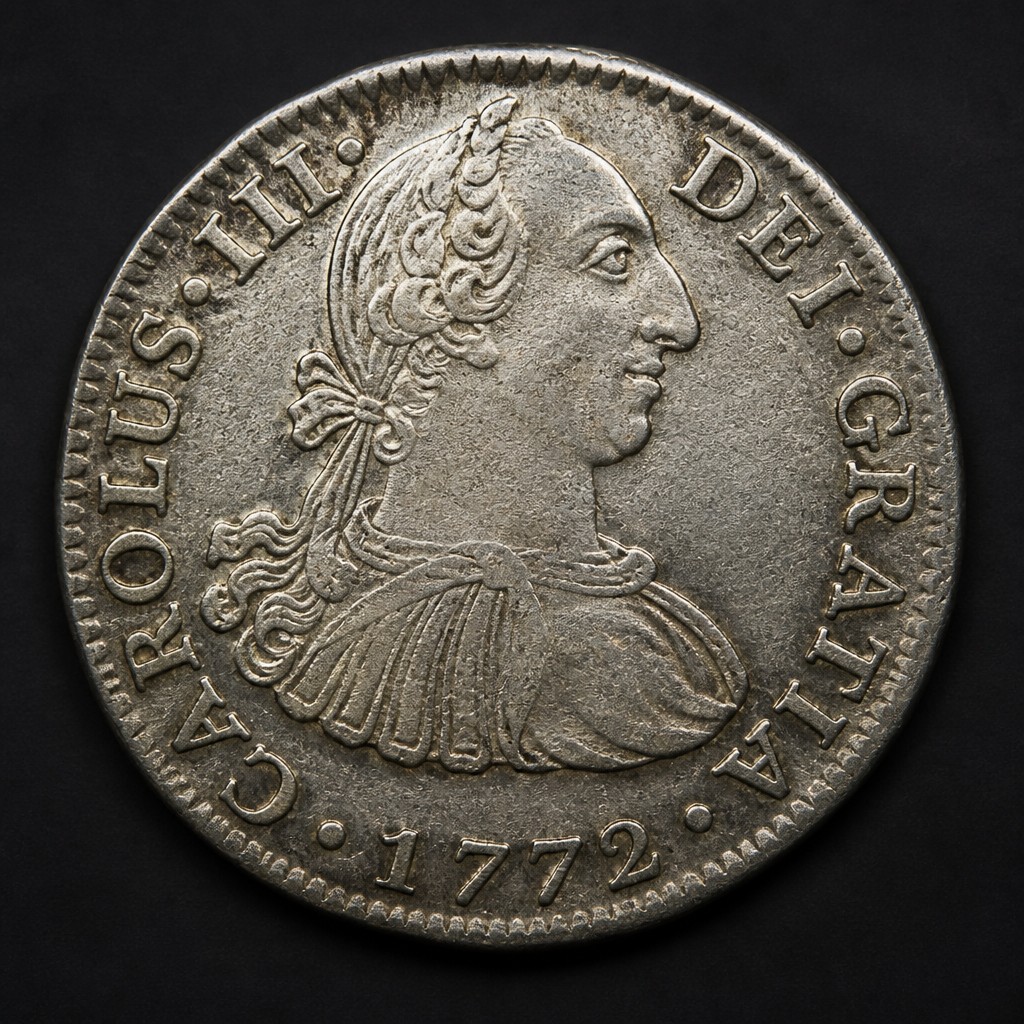
What Is the Spanish 2 Reales Pillar Coin
This silver colonial coin was struck by Spain at its American mints — including Mexico City, Lima, and Potosí — during the 18th century, part of the "Pillars of Hercules" milled coinage series introduced in 1732 to replace crude hand-struck cob coinage. These coins circulated widely throughout the Spanish colonial world and beyond, serving as a recognized trade currency in ports across the Americas, Europe, and Asia during the 1700s.
Obverse Design and Inscriptions
The obverse shows the crowned Spanish royal arms, a quartered shield with castles and lions plus a central shield for the ruling Bourbon family, surrounded by a legend naming the reigning Spanish king, such as "PHILIPPUS V" or "CAROLUS III," followed by "DEI GRATIA."
Reverse Design and Inscriptions
The reverse depicts two crowned hemispheres, representing the Old and New Worlds, flanked by the Pillars of Hercules wrapped with banners reading "PLUS ULTRA." The surrounding legend reads "HISPAN ET IND REX" (King of Spain and the Indies), with the mint mark and assayer initials nearby.
Size, Weight, Metal, and Edge
The coin was struck in silver at roughly the colonial "reales" standard fineness. The 2 Reales denomination is smaller than the famous 8 Reales piece, weighing around 6.8 grams with a diameter near 26mm, and typically shows lettering or a decorative pattern on the edge as a counterfeiting deterrent.
Mint Marks and Where to Find Them
Mint marks appear near the rim at the bottom of either side, using letters like Mo (Mexico City), P or PTS (Potosí), or LM (Lima), followed by assayer initials confirming the silver content was verified.
Telling It Apart From Similar Coins
The globes-and-pillars reverse is unique to this "Pillar" series, distinguishing it clearly from earlier irregular cob coinage and from later portrait-style Spanish colonial coins that show a king's bust instead of the pillars design.
Judging Condition at a Glance
Look at the crown details above the shield and pillars, plus the fine lettering in the legends, for wear. Because these coins saw heavy use in trade, most surviving pieces show moderate to heavy circulation wear, so a sharp, well-centered strike is notable. Weak striking on the highest points of the design, rather than actual wear, is also common on this series due to the screw-press technology of the era, so examine several areas of the coin before judging overall condition.
Authenticity Red Flags
Be cautious of coins with blurry or missing mint and assayer marks, incorrect weight, or a reverse pillar design that looks too crude for its claimed date. Genuine pieces show the consistent milled (machine-struck) edges and lettering typical of production from 1732 onward, unlike the irregular hand-hammered cobs that preceded them.
Frequently asked questions
What does 'Pillar' refer to in this coin's nickname?
It refers to the Pillars of Hercules depicted on the reverse, flanking two globes that represent Spain's dominions in both the Old and New Worlds.
What does 'PLUS ULTRA' mean?
It's Latin for 'further beyond,' a motto reflecting Spain's expanded reach into the Americas.
How is this different from a Spanish milled dollar (8 Reales)?
The 2 Reales is a smaller fractional denomination with the same general pillar design but a smaller diameter and lighter weight than the larger 8 Reales piece.
Where can I find the mint location on the coin?
Check near the rim at the bottom of either side for mint letters such as Mo, P, PTS, or LM.
Why do some Spanish colonial coins look crude while others look precise?
Coins struck before 1732 were hand-hammered 'cobs' with irregular shapes, while the Pillar series introduced mechanized screw-press minting for more uniform, round coins.