
How to Identify the South African Silver Krugerrand
The silver counterpart to South Africa's famous gold Krugerrand, featuring Paul Kruger on the obverse and a leaping springbok on the reverse, struck in one troy ounce of .999 fine silver.
Read the full South African Silver Krugerrand encyclopedia entry →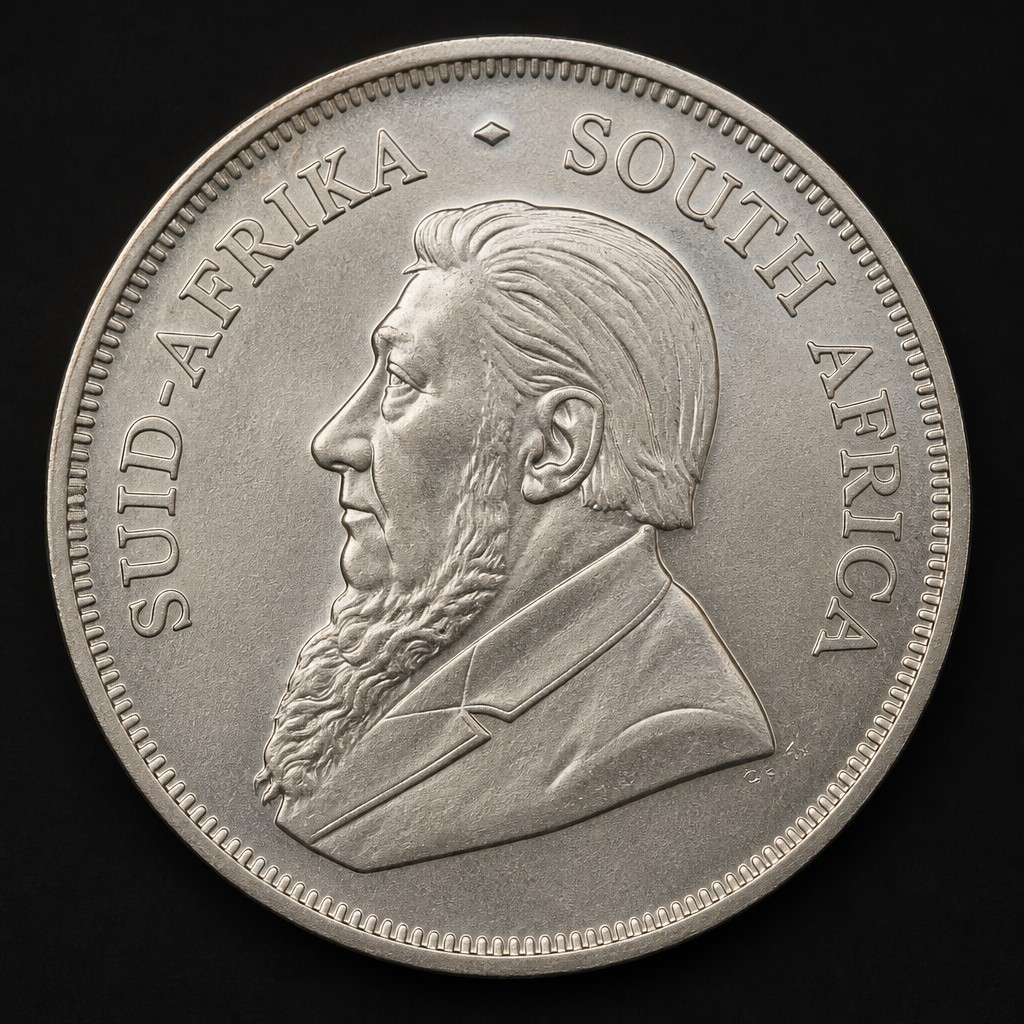
What This Coin Is
The Silver Krugerrand extends South Africa's iconic Krugerrand brand, first known for its gold bullion coin, into a silver bullion product. Produced by the South African Mint, it uses the same historic obverse and reverse imagery as the gold version but is struck in silver, aimed at investors who want the recognizable Krugerrand design at a lower entry cost than gold.
Obverse Design & Inscriptions
The obverse depicts Paul Kruger, former president of the South African Republic, in profile, with "SUID-AFRIKA" and "SOUTH AFRICA" lettered around the rim along with the year of issue. This portrait has remained essentially unchanged from the original 1967 gold Krugerrand design.
Reverse Design & Inscriptions
The reverse shows a springbok antelope in a leaping pose, a design originally created for South African coinage and famously adapted for the gold Krugerrand. The word "KRUGERRAND" appears on the reverse along with the fineness and weight statement, typically "1 OZ FINE SILVER 999."
Size, Weight, Metal & Edge
The standard Silver Krugerrand is struck in one troy ounce of .999 fine silver, with a diameter close to 38–39 mm and a reeded edge, mirroring the gold version's dimensions where practical for a silver strike. Fractional or larger silver sizes are not part of the standard annual release, which focuses on the one-ounce format.
Mint Marks & Where to Find Them
As a single-mint product of the South African Mint, the coin does not use a mint mark system to distinguish multiple facilities. The year date on the obverse is the primary way to identify a specific issue, along with any special privy mark added for anniversary or commemorative releases.
Telling It Apart From Similar Coins
The Silver Krugerrand shares its exact obverse and reverse artwork with the gold Krugerrand, so the key distinguishing factor is color, weight, and the fineness statement on the reverse: silver coins are notably lighter in color and marked "SILVER" rather than gold's fineness marking. Comparing weight is the fastest practical check, since gold and silver Krugerrands differ substantially in mass for the same diameter.
Judging Condition at a Glance
Because this is a widely produced bullion coin, most collector interest is in condition rather than rarity. Sharp definition in Kruger's facial features and the springbok's musculature, combined with clean, unmarked fields, indicates a well-preserved coin. Milky white haze, fingerprints, or scratches reduce eye appeal even though they do not change the silver content.
Authenticity Red Flags
Check that the coin's weight and diameter match official Silver Krugerrand specifications, since underweight coins may have a base-metal core with only a silver coating. Confirm the reverse states silver fineness rather than being a mislabeled gold-style coin, and be cautious of any Krugerrand-branded coin sold well under prevailing silver spot prices or with unusually soft, indistinct design details.
Frequently asked questions
Is the Silver Krugerrand the same design as the gold Krugerrand?
Yes, it uses the same Paul Kruger obverse and springbok reverse, but is struck in silver rather than gold and is marked accordingly.
How much silver does it contain?
The standard issue contains one troy ounce of .999 fine silver.
How do I tell a silver Krugerrand from a gold one at a glance?
Color is the quickest clue — silver is pale white-gray versus gold's yellow tone — and the reverse fineness text will explicitly say silver rather than gold.
Does the Silver Krugerrand have a mint mark?
No, it is produced solely by the South African Mint, so there is no mint mark system; only the year date differentiates issues.