
How to Identify the South African Krugerrand
How to recognize a genuine Krugerrand gold bullion coin by its Paul Kruger portrait, springbok reverse, weight, and telltale signs of counterfeiting.
Read the full South African Krugerrand encyclopedia entry →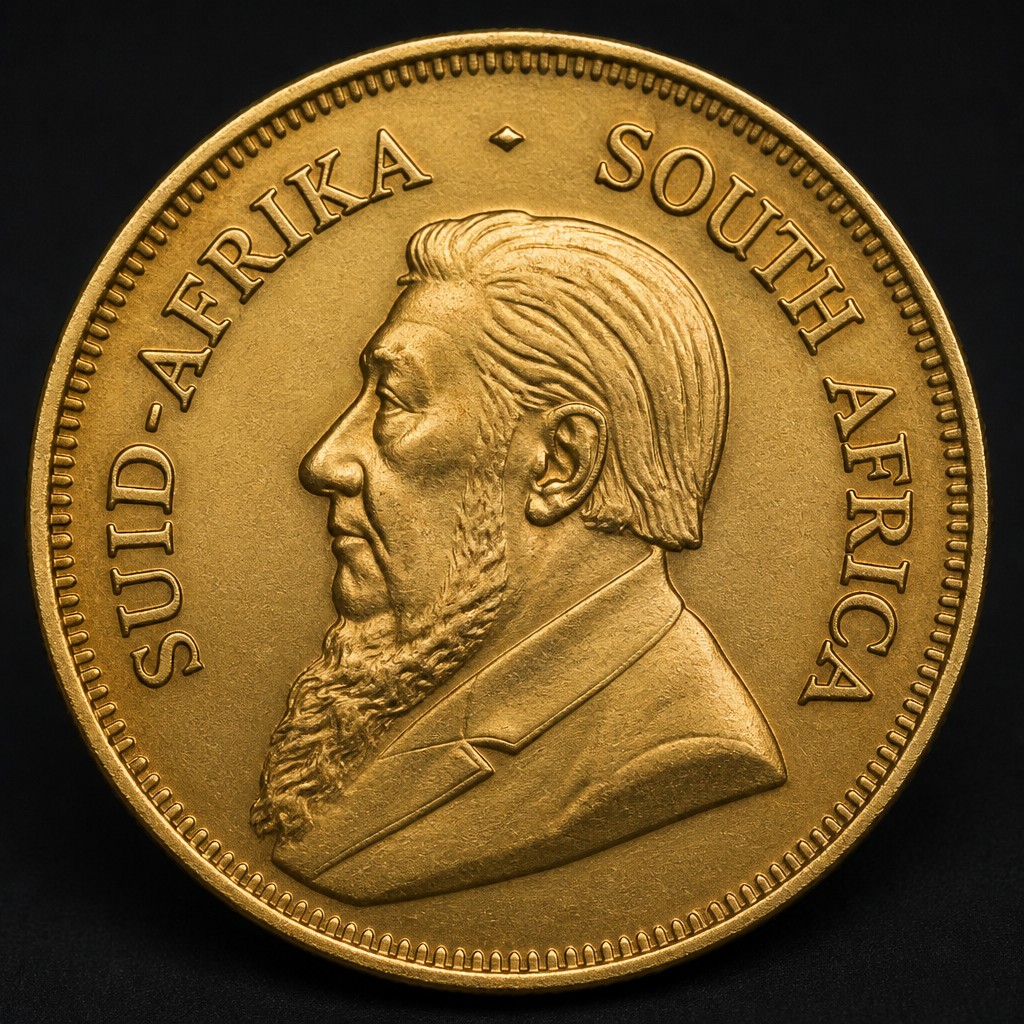
What It Is
The Krugerrand is a gold bullion coin first issued by South Africa in 1967, created to make gold ownership accessible to investors. It was the first modern gold bullion coin widely marketed for private ownership and remains one of the most recognized gold coins in the world, inspiring later national bullion programs such as the American Gold Eagle and Canadian Maple Leaf.
Obverse (Front)
The obverse features a right-facing portrait of Paul Kruger, former president of the South African Republic, with "SUID-AFRIKA" and "SOUTH AFRICA" arranged around the rim in Afrikaans and English, and the date below the portrait.
Reverse (Back)
The reverse shows a springbok antelope standing in profile, a design created by Coert Steynberg, with the coin's weight designation ("1 OZ FYNGOUD 1 OZ FINE GOLD" on standard one-ounce coins) inscribed around the bottom edge.
Size, Weight, Metal, and Edge
The standard one-ounce Krugerrand weighs 33.93 grams (since it contains exactly one troy ounce of pure gold plus copper alloy), measures 32.6 mm in diameter, and is struck in 22-karat gold (91.67% fine), giving it a distinctive warm, slightly reddish-gold color compared to purer gold coins. The edge is reeded. Fractional sizes (1/2, 1/4, and 1/10 ounce) exist at proportionally smaller dimensions and weights.
Mint Marks
Krugerrands do not carry a mint mark, as all have been produced at the South African Mint; authenticity instead relies on the coin's exact weight, diameter, and design details rather than a mint mark.
Telling It Apart From Similar Coins
The combination of Paul Kruger's portrait and the springbok is unique to this coin, so it is not easily confused with other bullion coins like the American Gold Eagle or Canadian Maple Leaf, which use different designs and, in the Maple Leaf's case, much higher gold purity (.9999 fine) and a distinctly brighter yellow color.
Grading at a Glance
Most Krugerrands are bullion-grade rather than collected for fine condition distinctions, but look for sharp definition in Kruger's beard and hair and crisp detail on the springbok's legs and horns; a dull or mushy strike can indicate wear, a low-quality counterfeit, or a worn die on genuine later-date bullion issues.
Authenticity Red Flags
Because of its popularity, the Krugerrand is a common counterfeiting target. Warning signs include incorrect weight or diameter, a color that looks too yellow (suggesting higher, incorrect purity) or too pale, a magnetic response (genuine gold is not magnetic), and reeding on the edge that is uneven, too shallow, or spaced differently from genuine examples. Fakes made from tungsten cores plated in gold can closely match weight, so verifying dimensions and using a proper scale and caliper together is more reliable than weight alone. Blurry or shallow lettering in "SUID-AFRIKA," "SOUTH AFRICA," or the fine gold weight inscription is another common giveaway on lower-quality counterfeits.
Frequently asked questions
What images are on the Krugerrand?
The obverse shows Paul Kruger's portrait, and the reverse shows a springbok antelope, with the weight in fine gold inscribed around the springbok.
Does the Krugerrand have a mint mark?
No, all Krugerrands are produced by the South African Mint and do not carry a mint mark.
Why is the Krugerrand a different color from other gold coins?
It is struck in 22-karat gold alloyed with copper, giving it a warmer, slightly reddish tone compared to .9999 fine gold coins like the Canadian Maple Leaf.
How can I check if a Krugerrand is a fake tungsten-core coin?
Verify both weight and exact diameter and thickness with a caliper, since tungsten can mimic gold's density but rarely matches every dimension precisely, and check that the coin is not magnetic.