
How to Identify the Solidus of Valens
A collector's guide to reading the portrait, legend, weight, and gold fabric that mark a genuine solidus of the emperor Valens.
Read the full Solidus of Valens encyclopedia entry →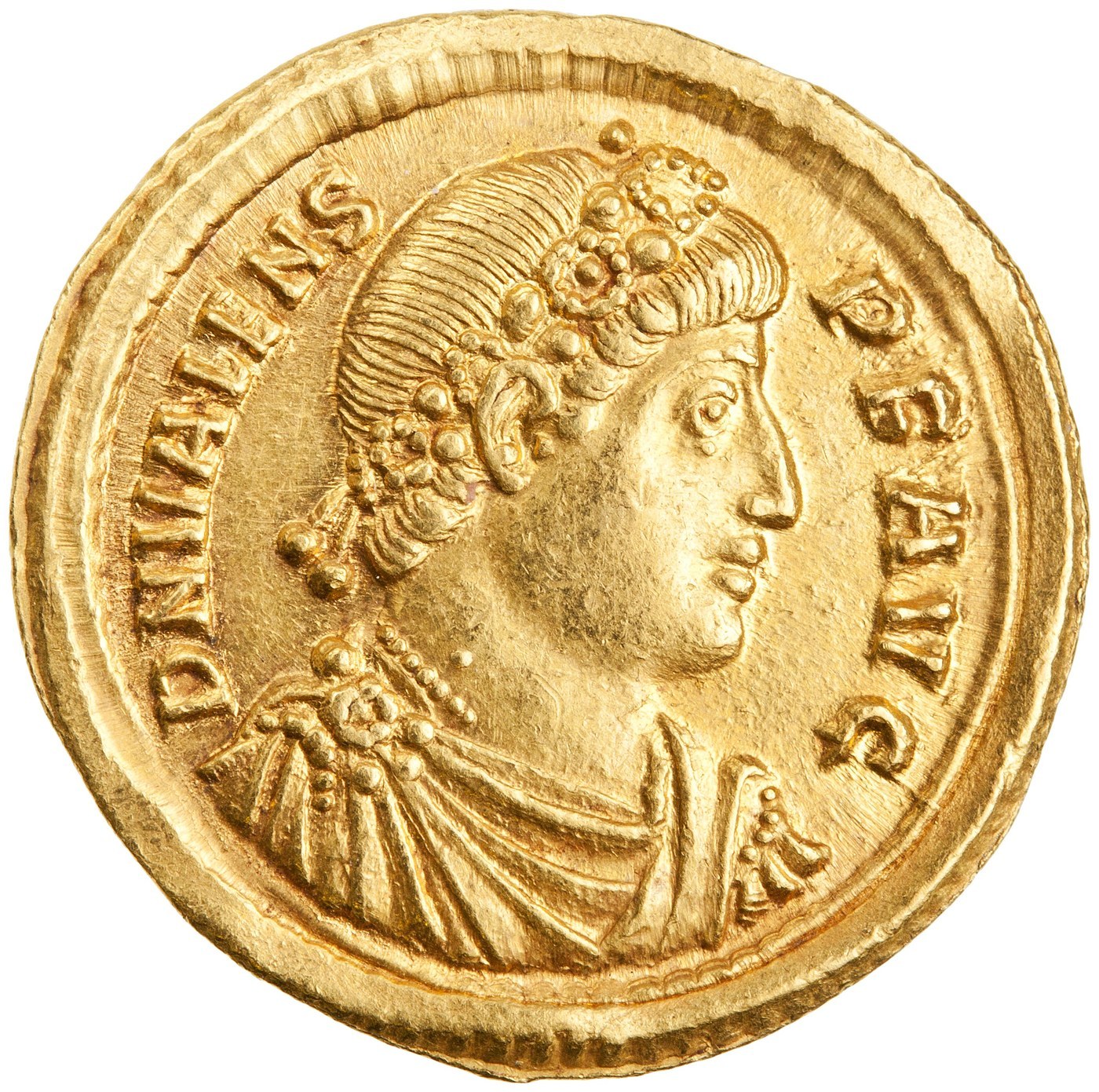
Start with the obverse legend, because the portrait alone will not settle the attribution. A right-facing, pearl-diademed bust in gold is shared by the whole Valentinianic dynasty, so read the Latin around the edge. Valens is named with forms such as D N VALENS P F AVG. Legends naming VALENTINIANVS, GRATIANVS, or VALENTINIANVS IVN point to his brother or nephews rather than to Valens himself, even though their portraits look almost identical.
Assess size, weight, and metal next. A solidus is a small, thin, broad coin, roughly 20-22 mm across and close to 4.5 grams, struck in high-purity gold that stays bright yellow without tarnish. The flan is noticeably flatter and wider than the compact aureus of earlier centuries. Genuine gold of this period has crisp, hand-struck relief and a dense feel for its size; a coin that is markedly under or over this weight deserves scrutiny.
Work the reverse and its mint mark for a full attribution. This example shows a standard solidus reverse, and on Valentinianic gold the reverse type together with the mint mark in the exergue is what ties a coin to a specific issue, mint, and date. Common types include two enthroned emperors with a Victory above (VICTORIA AVGG or AVGGG) and standing-figure types such as RESTITVTOR REIPVBLICAE. Valens's gold was struck at mints including Antioch, Constantinople, Nicomedia, Thessalonica, and Trier, each with its own abbreviation; matching type and mark against a reference such as Roman Imperial Coinage confirms the exact issue.
Be cautious about authenticity, because ancient gold is heavily forged. Warning signs include incorrect weight or diameter, a soft or grainy surface suggesting a cast rather than a struck coin, a visible seam around the edge, lettering or portrait style that does not match published dies, and gold that looks too red or too brassy. Modern replicas exist in both gold and gilt base metal. Given the sums involved, treat any solidus of Valens as needing expert authentication and documented provenance before purchase.
Frequently asked questions
How do I tell Valens from Valentinian I or Gratian on a solidus?
Read the obverse legend. The three rulers share an almost identical diademed portrait, so the bust style will not distinguish them. Only the Latin name in the legend, D N VALENS P F AVG for Valens, reliably identifies the emperor.
What weight and size should a genuine solidus be?
A solidus is struck at 72 to the Roman pound, close to 4.5 grams, and measures roughly 20-22 mm across on a broad, thin flan. A coin far outside these figures should be treated with suspicion pending authentication.
The reverse just shows a standard type. Can I still identify it?
You can confirm the emperor from the obverse legend and portrait, but a full attribution to a specific issue needs the reverse type and the mint mark in the exergue. Without those details only a general identification is possible.
What should make me suspect a forgery?
Watch for wrong weight or diameter, a casting seam or grainy surface, lettering and portrait style that do not match known dies, and gold that looks too red or brassy. Ancient gold is widely faked, so seek expert authentication and provenance.