
How to Identify the Schaummünze 4 Thaler
Identify this piece by its elaborate heraldic and figural design referencing August der Jüngere, the 1666 date, and its heavy 4-Thaler silver module.
Read the full Schaummünze 4 Thaler encyclopedia entry →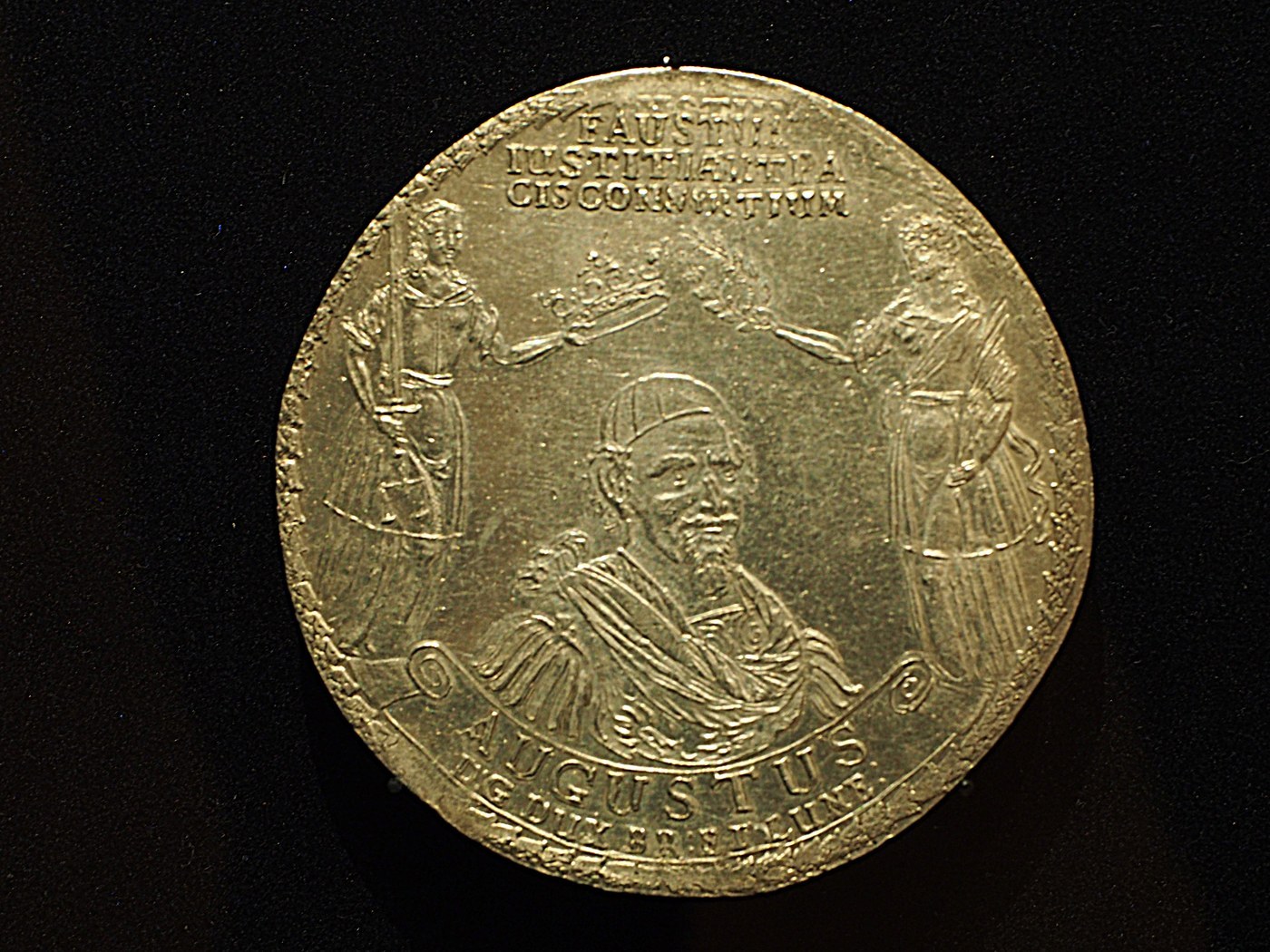
Start with the imagery and the name. The obverse of this piece carries an elaborate heraldic and figural composition with references to August der Jüngere. Read the surrounding Latin or German inscription and look for his name and titles; confirming the ruler in the legend is more reliable than judging the arms or figures alone, since Brunswick-Lüneburg heraldry appears on many related pieces.
Confirm the date and the show-piece character. Look for the 1666 date, which ties the piece to the end of August der Jüngere's reign. The word Schaummünze signals a presentation piece, so expect display-quality relief, crowded engraving, and long dedicatory inscriptions rather than the plainer design of an everyday Thaler.
Check size, metal, and weight. This is a silver piece struck to a 4-Thaler weight, so it should be noticeably heavier and broader than a single Thaler. Weigh and measure it and compare against published specifications for multiple-Thaler pieces of the type; genuine silver is dense, rings clearly, and is non-magnetic. A weight or diameter well off the expected range is a warning sign.
Watch for look-alikes. Many 17th-century German states issued show pieces and multiple Thalers with similar dense heraldry, and single-Thaler coins of the same ruler can resemble the design at a glance. Verify the 4-Thaler weight, the 1666 date, and the August der Jüngere references together before settling on this type, and note that the reverse is not shown here — a full attribution should account for both faces.
Authenticate carefully. Large German silver commemoratives are frequently cast, tooled, restruck, or faked. Inspect the edge for casting seams, judge whether the figures and lettering are crisp rather than soft, and be wary of pieces that feel too light. For any valuable example, seek a specialist opinion or third-party certification and compare recent auction records for matching Brunswick-Lüneburg pieces.
Frequently asked questions
How do I confirm the piece references August der Jüngere?
Read the Latin or German legend around the design for his name and titles as Duke of Brunswick-Lüneburg. Do not rely on the heraldry or figures alone, since related Brunswick-Lüneburg pieces share similar arms and imagery.
How can I tell this from an ordinary single Thaler?
Weigh and measure it. A 4-Thaler show piece is markedly heavier and broader than a single Thaler and usually shows denser, display-quality engraving. Compare the weight and diameter against published specifications for the type.
The reverse isn't shown — does that matter for identification?
Yes. A full attribution should account for both faces. Reverses of these pieces often carry additional heraldry, allegory, or a dedicatory inscription, so examine and document the reverse before finalizing an identification.
What are the main authentication risks?
Casts, tooled surfaces, restrikes, and outright fakes are common for large German silver commemoratives. Check the edge for seams, look for crisp figures and lettering, verify the weight, and have valuable examples professionally authenticated.