
How to Identify the Presidential Dollar - Abraham Lincoln
A later entry in the Presidential $1 Coin Program honoring the 16th president, released in 2010 with an updated reverse and obverse motto placement.
Read the full Presidential Dollar - Abraham Lincoln encyclopedia entry →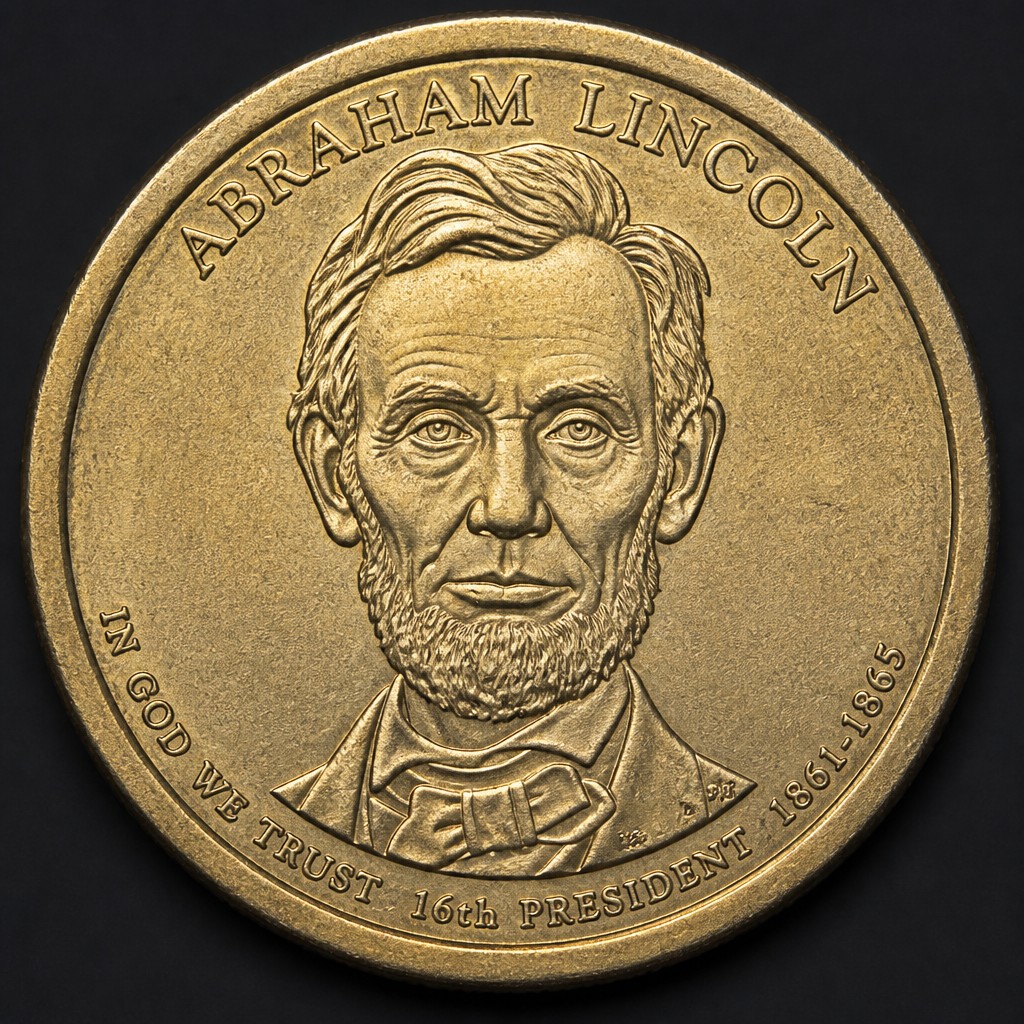
What It Is
The Abraham Lincoln Presidential Dollar was released in 2010, honoring the 16th president of the United States as part of the ongoing Presidential $1 Coin Program. By this point in the series, the Mint had updated the coin's design layout in response to concerns that IN GOD WE TRUST was too easy to remove when it was edge-lettered only.
Obverse Design
The obverse shows a portrait of Abraham Lincoln facing forward-left, with "ABRAHAM LINCOLN," his years in office "1861-1865," and "16TH PRESIDENT" inscribed around the design. Starting in 2009, IN GOD WE TRUST was moved onto the obverse face itself, appearing near Lincoln's portrait, rather than being limited to the edge lettering used in 2007 and 2008.
Reverse Design
Beginning in 2009, the series moved away from the shared Statue of Liberty reverse and introduced a new reverse design each year depicting a stylized rendering of Lady Liberty; the Lincoln dollar's reverse reflects this updated series-wide design used for coins issued from 2009 onward.
Size, Weight, Metal, and Edge Lettering
The coin measures 26.5 mm in diameter, weighs 8.1 grams, and is struck in manganese-brass clad over a copper core, retaining the same golden color as earlier issues. The mint mark and date remain on the edge as incused lettering, along with E PLURIBUS UNUM, while IN GOD WE TRUST appears on the obverse face for this and later issues.
Mint Marks
Look for a small "P," "D," or "S" incused into the edge alongside the date.
Telling It Apart From Similar Coins
The portrait and inscribed name identify this coin immediately: any example reading "ABRAHAM LINCOLN" and "16TH PRESIDENT" belongs to this issue. Compared to earlier Presidential dollars from 2007-2008, the presence of IN GOD WE TRUST on the obverse face itself, rather than only on the edge, is a useful visual cue that a coin belongs to the 2009 or later design update.
Judging Condition at a Glance
Check Lincoln's hair, beard, and coat lapel details for wear, and examine the fine lines of the reverse Liberty design for smoothing. Because part of the coin's text sits on the edge, verify that it remains legible, since heavy wear or damage there can obscure the mint mark and date.
Authenticity Red Flags
Watch for edge lettering that looks unusually crude, misaligned, or inconsistently spaced compared to genuine examples, and confirm the coin's weight and diameter match specifications. A coin missing IN GOD WE TRUST from the obverse face despite claiming a 2009 or later date would be inconsistent with genuine coins of that period, and any example with a non-golden surface or incorrect heft should be examined closely before assuming it is authentic.
Frequently asked questions
How do I identify an Abraham Lincoln Presidential Dollar?
Look for his portrait on the obverse with 'ABRAHAM LINCOLN,' '1861-1865,' and '16TH PRESIDENT' inscribed around it.
Why does this coin have IN GOD WE TRUST on the front instead of the edge?
Starting in 2009, the Mint moved that motto to the obverse face because edge-only lettering was seen as too easy to remove or overlook.
Where is the mint mark located?
Incused into the coin's edge along with the date, the same placement used since the series began in 2007.
Is the reverse design the same as the 2007 Washington dollar?
No. Coins from 2009 onward, including the Lincoln dollar, use an updated Liberty-themed reverse rather than the Statue of Liberty design used in 2007 and 2008.
What year was the Lincoln Presidential Dollar released?
2010, honoring the 16th president in the series' chronological order.