
How to Identify the Pilgrim Tercentenary Half Dollar
A collector's guide to confirming a 1920 or 1921 Pilgrim half dollar by its Pilgrim and Mayflower designs, size, silver content, and date.
Read the full Pilgrim Tercentenary Half Dollar encyclopedia entry →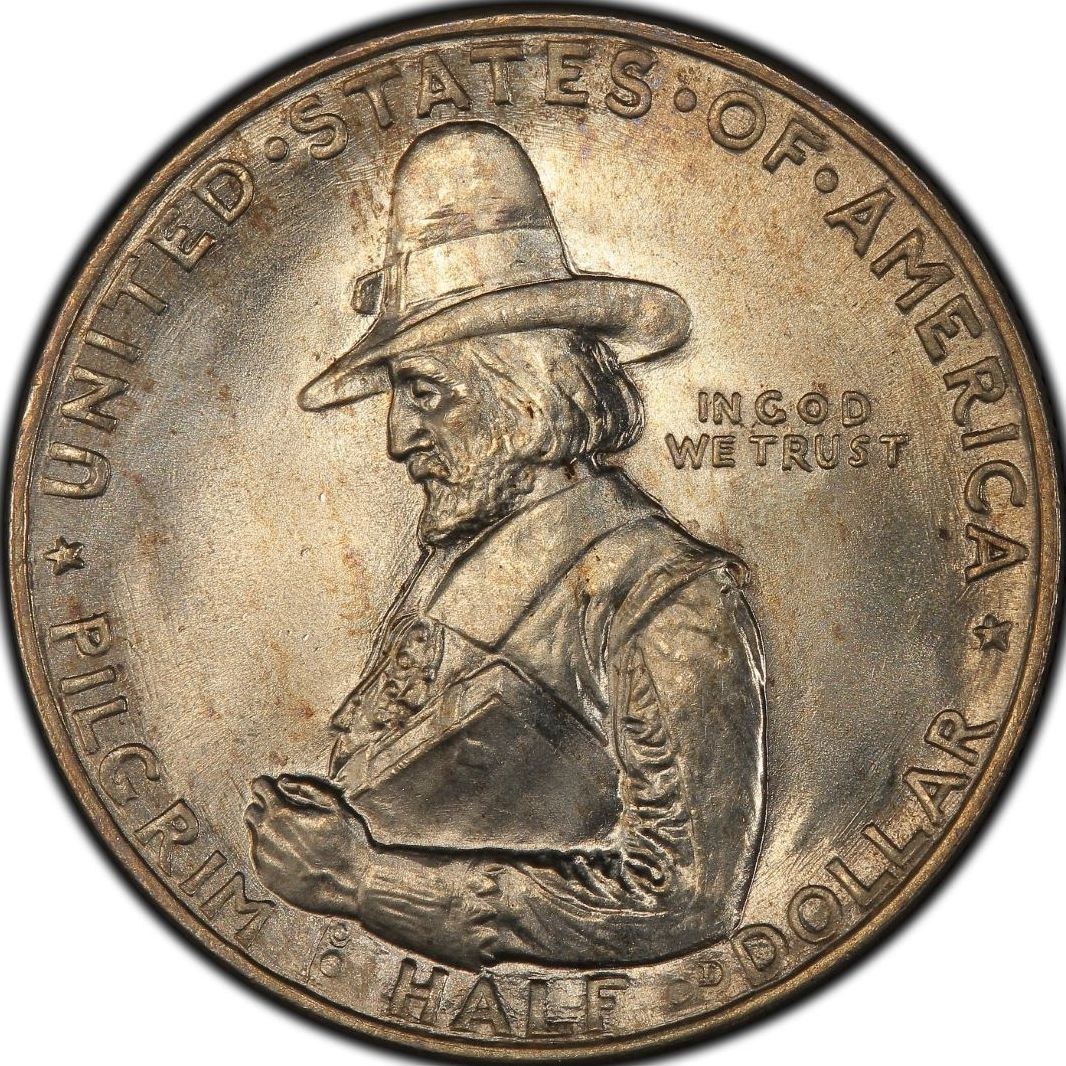
Begin with the two subjects that define the coin. The obverse shows a Pilgrim in profile wearing a broad Pilgrim hat and long coat, holding a staff and pressing a book to his chest; the reverse shows the Mayflower under full sail. If either side is missing these motifs, it is not a Pilgrim Tercentenary half. Read the legends: PILGRIM HALF DOLLAR and UNITED STATES OF AMERICA on the obverse, and PILGRIM TERCENTENARY CELEBRATION with the dates 1620-1920 on the reverse.
Use the date to separate the two issues. A coin with no year in the obverse field is the 1920; a coin with 1921 added beside the figure is the second-year striking. This single detail is the fastest way to tell them apart and matters for value, since the 1921 is much scarcer.
Confirm the physical specifications. A genuine coin is about 30.6 mm across, weighs roughly 12.5 g, is struck in 90% silver, and has a reeded edge. A scale and caliper are the most reliable first screen: pieces that are underweight, undersized, non-silver, or plain-edged should be treated with suspicion. Because all genuine examples came from Philadelphia, expect no mint mark.
Watch for look-alikes and altered pieces. Other 1920s silver commemoratives share the same size and silver color but show entirely different designs, so match the Pilgrim and Mayflower specifically. Be cautious of added or re-engraved dates meant to pass a 1920 off as the scarcer 1921, of polished or cleaned surfaces, and of cast copies with mushy detail. For any higher-value or Mint State example, favor coins certified by PCGS or NGC in sealed holders.
Frequently asked questions
How do I tell a 1920 Pilgrim from a 1921?
Look in the obverse field: the 1921 has "1921" added next to the Pilgrim figure, while the 1920 has no year there. The reverse dates read 1620-1920 on both.
What size and weight should it be?
About 30.6 mm in diameter and roughly 12.5 grams, struck in 90% silver with a reeded edge. Verifying these with a scale and caliper helps screen out fakes.
Should there be a mint mark?
No. Every genuine Pilgrim half was struck at Philadelphia with no mint mark, so a coin bearing a D or S mark would be suspect.
How can I spot an altered date?
Examine the area near the Pilgrim figure under magnification for tooling or re-engraving. Since the 1921 is scarcer, added 1921 dates are the main concern; certification resolves doubt.