
How to Identify the Ottoman Rashidi Kurus
A kurus-denominated coin associated with the reign of Sultan Mehmed V (often transliterated Resad, Reshad, or Rashidi), identified by his tughra and standard Ottoman dating conventions.
Read the full Ottoman Rashidi Kurus encyclopedia entry →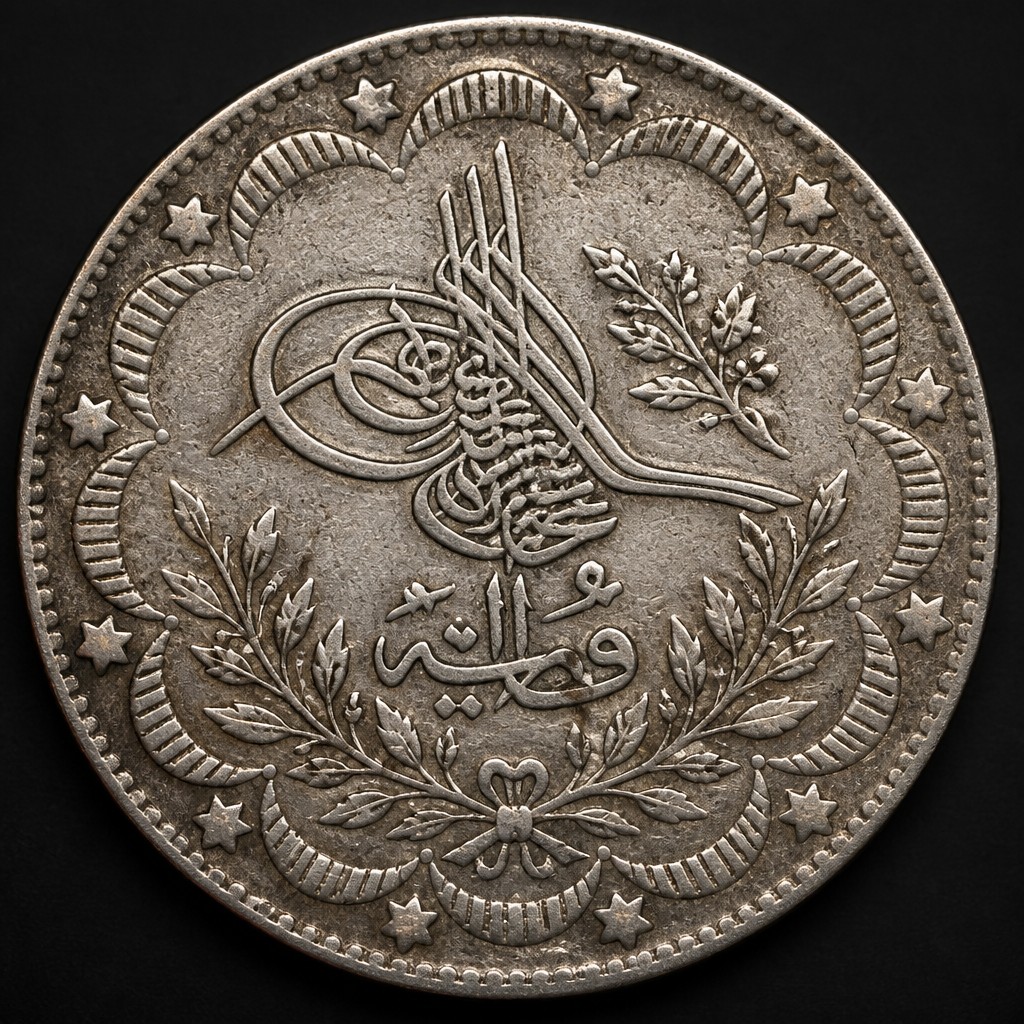
What Is the Rashidi Kurus?
This name refers to kurus-denominated Ottoman coinage struck during the reign of Sultan Mehmed V, whose regnal name is variously transliterated as "Resad," "Reshad," or "Rashidi" in different collector and trade contexts. Coins from this reign (1909-1918) followed the same general Ottoman coinage conventions as earlier sultans but carry his distinct tughra. This reign fell in the empire's final years before the establishment of the Turkish Republic, so its coinage represents some of the last regular Ottoman issues produced before the monetary system was eventually replaced.
Obverse Design
The obverse displays Sultan Mehmed V's ornate tughra, his unique calligraphic cipher, distinguishing coins of his reign from those of his predecessors and successors even though the overall coin format remains consistent with earlier Ottoman issues.
Reverse Design
The reverse shows the mint name in Arabic script, the kurus denomination, and the Ottoman dual-dating system: the sultan's accession year plus a regnal year showing how far into his reign the coin was struck.
Size, Weight, and Metal
Specifications depend on the specific denomination and metal (silver or a debased alloy) used for a given kurus issue during this reign; compare diameter, weight, and metal color to reference examples for the specific denomination rather than assuming a single standard applies across all kurus values. Ottoman silver coinage generally trended toward lower fineness in the empire's final decades, so a duller gray tone compared to earlier, higher-fineness issues is not unusual for coins from this period.
Mint Marks
As with other late Ottoman coinage, the mint name is spelled out in Arabic script on the reverse; Constantinople remained a primary mint, though other regional mints may appear on certain issues. Reading the full mint inscription, rather than assuming Constantinople by default, is worthwhile since provincial strikes can carry different collector interest than the more commonly seen capital-mint pieces.
Telling It Apart from Similar Coins
The clearest way to confirm a coin belongs to Mehmed V's reign rather than that of Abdulhamid II or Mehmed VI is to compare the tughra's calligraphic form directly against reference examples, since each sultan's monogram is visually distinct even when the rest of the coin's format looks nearly identical.
Condition and Grading at a Glance
Look for sharpness in the tughra's flowing strokes and legibility of the mint and date inscriptions on the reverse; well-preserved examples retain crisp, separated calligraphic lines, while worn coins show a smoothed, less distinct monogram.
Authenticity Red Flags
Compare weight and diameter to known genuine specifications for the specific denomination, and examine the tughra's calligraphy closely for fluid, correctly proportioned strokes. Stiff, uneven, or poorly formed calligraphy is a common sign of a later reproduction rather than a period strike. Also check that the regnal-year figure is consistent with the length of Mehmed V's reign, since a date that doesn't fit within his roughly nine-year rule signals a misattributed or altered coin.
Frequently asked questions
Who was Sultan Mehmed V?
He was the Ottoman sultan who reigned from 1909 to 1918; his regnal name is sometimes rendered as Resad, Reshad, or Rashidi in different sources.
How do I confirm which sultan's reign a kurus belongs to?
Compare the tughra, or calligraphic monogram, on the obverse to reference examples, since each sultan's tughra is visually unique.
What is the standard Ottoman dating format?
Coins show the sultan's Hijri accession year plus a smaller regnal year indicating how many years into the reign the coin was struck.
Is the coin silver?
Many kurus issues from this era were struck in silver or a debased silver alloy, but exact fineness varies by specific denomination and date.