
How to Identify the New Zealand Waitangi Crown (1935)
Struck in 1935 to commemorate the 1840 Treaty of Waitangi, this silver crown depicts a Maori chief and a British naval officer and is one of New Zealand's most celebrated coin designs.
Read the full New Zealand Waitangi Crown (1935) encyclopedia entry →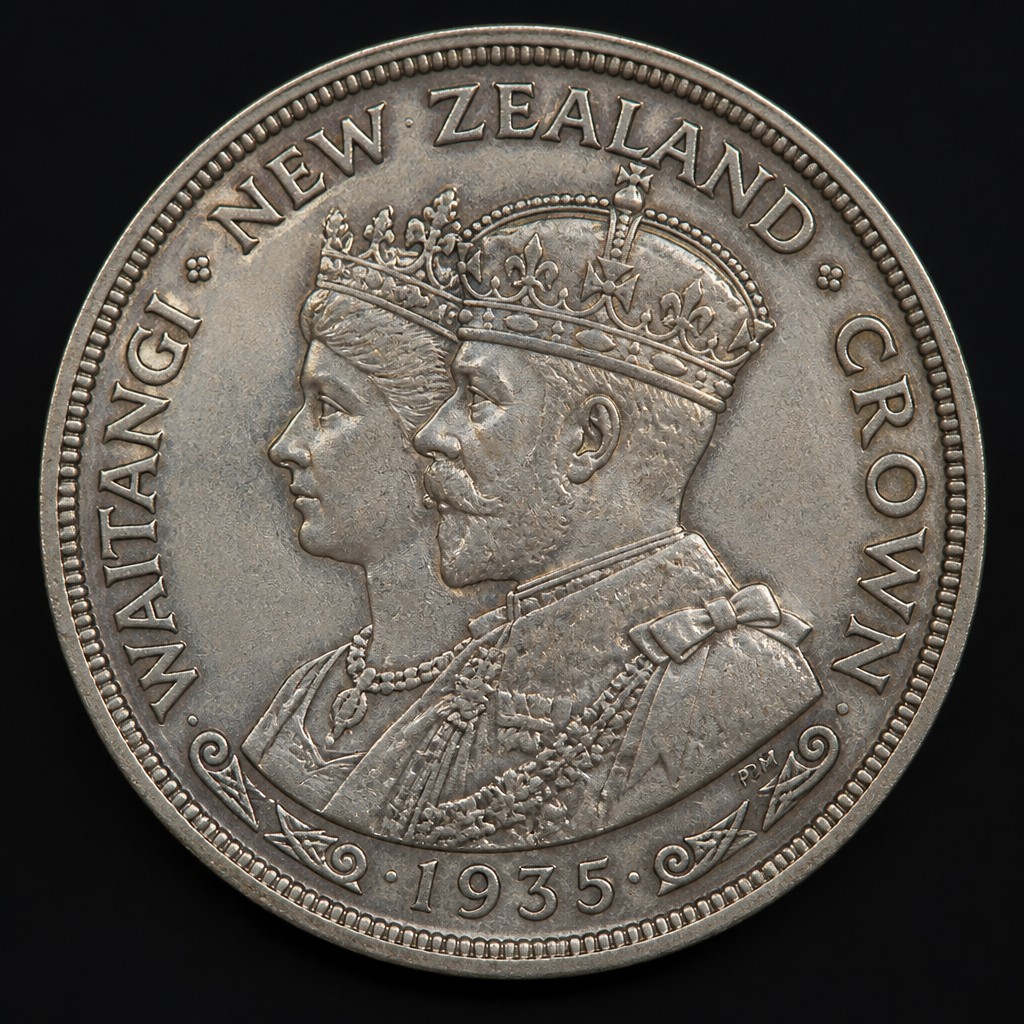
What This coin Is
The Waitangi Crown was issued in 1935 to commemorate the signing of the Treaty of Waitangi, the founding agreement between Maori chiefs and the British Crown in 1840. It was struck as New Zealand's first and, for decades, only commemorative crown, and it remains one of the most admired designs in New Zealand's pre-decimal coinage.
Obverse Design & Inscriptions
The obverse carries the portrait of King George V, along with his name and title in Latin abbreviation and the date 1935.
Reverse Design & Inscriptions
The reverse depicts a scene commemorating the Treaty of Waitangi, showing a Maori chief and a European figure (representing the Treaty negotiations) with a Maori meeting house (whare) and other symbolic elements in the background, along with "ONE CROWN" and "NEW ZEALAND" in the design. The specific artistic rendering of the two figures and setting is unique to this issue and not repeated on other New Zealand coins.
Size, Weight, Metal & Edge
The Waitangi Crown is a large silver coin, following the traditional British crown format at roughly 38–39 mm in diameter, struck in .500 silver, with a reeded edge typical of large commemorative and circulation crowns of the period.
Mint Marks & Where to Find Them
As with other New Zealand coinage of the era struck under Royal Mint arrangements, the Waitangi Crown does not carry a distinguishing branch mint mark on its face; identification relies on the date (1935) and its unique Treaty commemoration design, which is unmistakable compared to any other New Zealand coin.
Telling It Apart From Similar Coins
Because the design is unique to this single issue and year, there is little risk of confusing a genuine Waitangi Crown with any other coin type; the main identification task is distinguishing an original strike from later official or unofficial restrikes, medals, or replicas that have imitated the design for souvenir purposes over the years.
Judging Condition at a Glance
Examine the fine detail in the two figures' clothing and faces and the meeting house carvings in the background, since these raised elements wear down first with circulation or handling. Because the coin was popular with collectors even at the time of issue, a meaningful proportion of surviving examples are in better-than-average condition compared to typical circulating coinage of the 1930s, though cleaned or polished surfaces should be watched for.
Authenticity Red Flags
Given the coin's strong collector demand, watch for cast copies (which typically show a grainy surface texture, seam lines, or softer design details compared to a genuine struck coin), as well as souvenir medals that borrow the Treaty imagery but lack the coin's correct denomination wording or specifications. Comparing a suspect example's weight, diameter, and edge reeding against documented genuine specimens is a useful first check, and professional authentication is advisable for higher-value examples.
Frequently asked questions
What event does the Waitangi Crown commemorate?
It marks the 1840 signing of the Treaty of Waitangi between Maori chiefs and the British Crown.
What is the coin made of?
It is a large silver crown, struck in .500 fine silver.
Is the Waitangi Crown a common find?
It is a specifically sought-after collector coin; while not exceedingly rare in absolute terms, well-preserved examples command strong collector interest.
How can I tell a genuine crown from a cast copy?
Genuine struck coins have crisp, sharp design details, while cast copies often show a grainy surface, seam lines, or softer, blurred details.