
How to Identify the Netherlands 10 Gulden Gold (Wilhelmina)
The Dutch 10 Gulden gold coin featuring Queen Wilhelmina was a standard gold circulation and trade coin of the Netherlands, recognized by her portrait and the national crowned arms.
Read the full Netherlands 10 Gulden Gold (Wilhelmina) encyclopedia entry →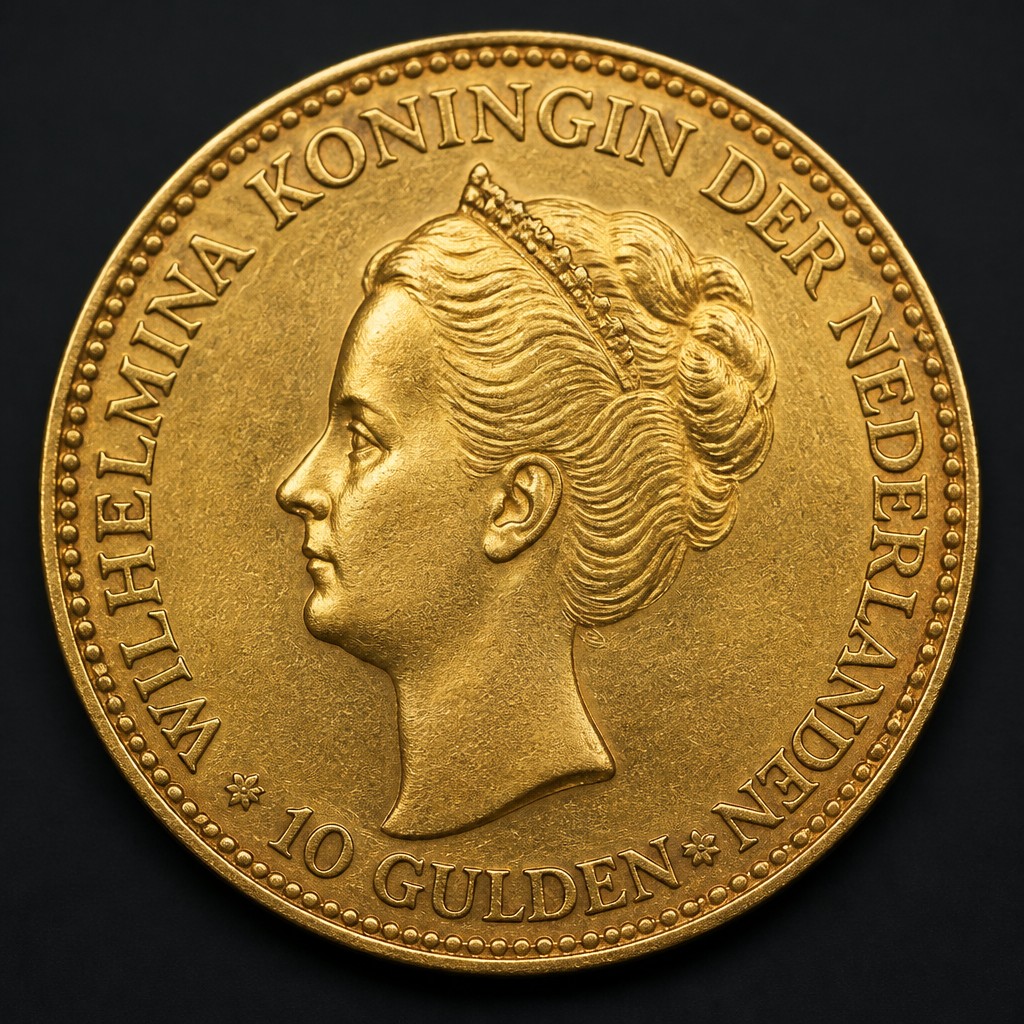
What Is the Netherlands 10 Gulden Gold Coin
This gold coin of the Kingdom of the Netherlands was struck primarily during the long reign of Queen Wilhelmina (1890-1948), continuing a gold 10 Gulden series that had earlier been issued under King Willem III. It served both for circulation and later as a recognized gold trade piece, and its manageable size made it a practical everyday gold coin in an era when many nations still used gold coinage for higher-value transactions.
Obverse Design and Inscriptions
The obverse shows a profile portrait of Queen Wilhelmina, whose likeness was updated across the series as she aged, with the legend "WILHELMINA KONINGIN DER NEDERLANDEN" (Wilhelmina, Queen of the Netherlands).
Reverse Design and Inscriptions
The reverse shows the crowned Dutch coat of arms — a lion holding a sword and arrows — at center, flanked by the date, with the denomination understood from the coin's established gold weight rather than a large printed numeral.
Size, Weight, Metal, and Edge
The coin was struck in .900 fine gold, weighing approximately 6.72 grams with a diameter near 22mm, and has a reeded edge.
Mint Marks and Where to Find Them
A small mint mark, typically a symbol for the Utrecht mint, appears near the date on the reverse alongside the mint master's privy mark. This privy mark tradition, inherited from earlier centuries of Dutch coinage, helped identify accountability for a given production run's quality and metal content.
Telling It Apart From Similar Coins
Compare the queen's portrait style to date ranges, since Wilhelmina's image changed noticeably over her long reign. Also compare it to the earlier Willem III 10 Gulden coins, which show a king's portrait instead of a queen's, though size, weight, and reverse arms design remain similar across rulers. The consistent gold weight and diameter across these different portraits make the denomination easy to confirm even when the ruler's identity is uncertain at first glance.
Judging Condition at a Glance
Examine the fine engraving in the queen's hair and the lion's mane and sword details for wear. Because gold is soft, even light circulation can dull the sharpest details, so strong original luster and crisp hair strands indicate better preservation. Small surface marks from contact with other coins are common and generally considered less significant than actual wear on the raised design elements.
Authenticity Red Flags
Check exact weight (6.72 grams) and diameter (22mm) against known standards. Gold-plated base-metal fakes will fail a weight test and may respond to a magnet if they use a steel core, while genuine gold is non-magnetic. A precise scale is one of the most effective and non-destructive tools for screening out counterfeits of this coin.
Frequently asked questions
How much gold is in a 10 Gulden Wilhelmina coin?
It contains approximately 6.05 grams of pure gold, based on its .900 fineness and 6.72 gram total weight.
Why does Wilhelmina's portrait look different on various coins?
Her portrait was updated periodically over her nearly six-decade reign to reflect her age, so earlier and later coins show noticeably different likenesses.
What is on the reverse of this coin?
The crowned Dutch coat of arms, featuring a lion holding a sword and a bundle of arrows.
Was this coin used for everyday spending or as bullion?
It originally circulated as a gold coin but has since become primarily recognized and traded as a historical gold bullion piece.
Where is the mint mark found?
Near the date on the reverse side, typically a small symbol representing the Utrecht mint.