
How to Identify the Mexican Gold Libertad
A guide to identifying the Mexican Gold Libertad by its Angel of Independence obverse, coat-of-arms reverse ringed with historic Mexican emblems, and .999 gold purity.
Read the full Mexican Gold Libertad encyclopedia entry →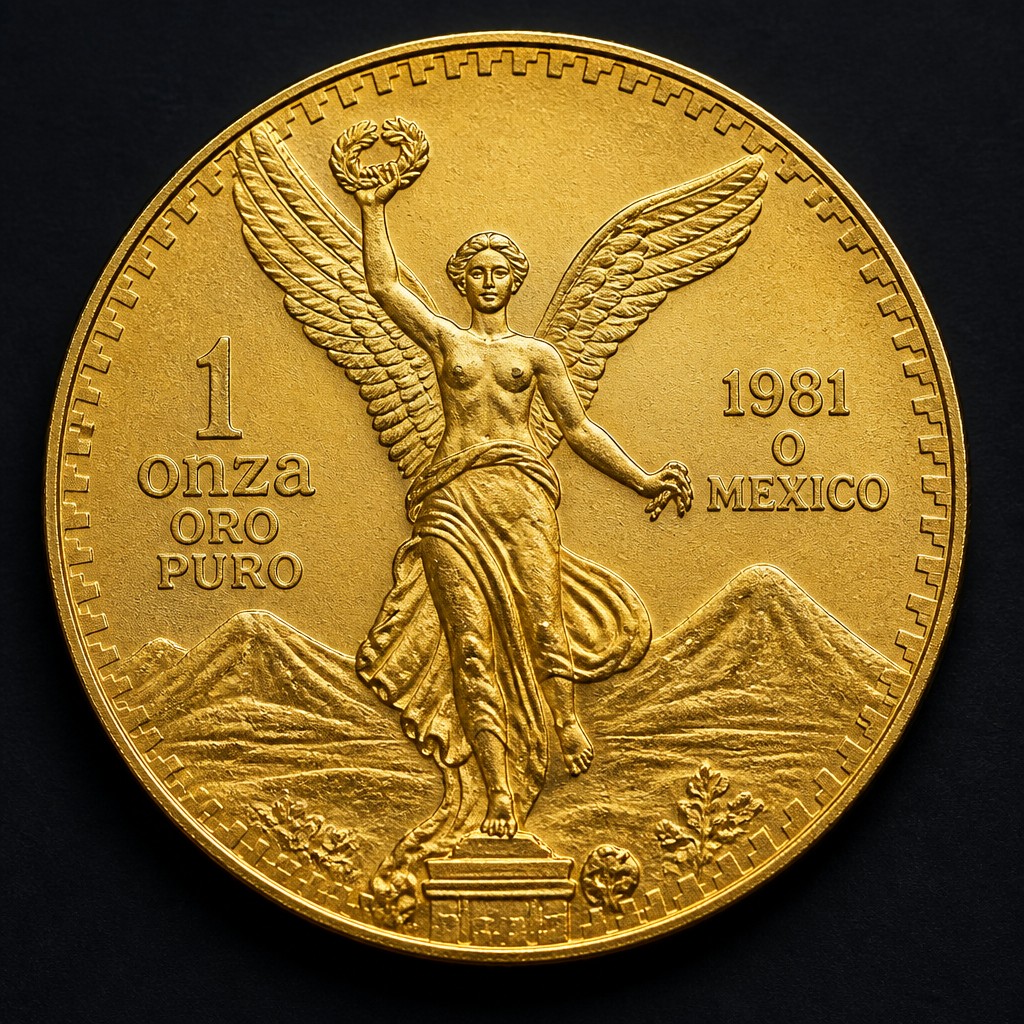
What It Is
The Gold Libertad is Mexico's national gold bullion coin, first struck in 1981 by the Casa de Moneda de México (Mexican Mint). Unlike many bullion coins, it carries no currency face value - it is denominated purely by its weight in troy ounces. It is one of the world's purest gold bullion coins and is widely recognized for its detailed, symbol-rich artwork drawing on Mexican history and iconography.
Obverse Design
The obverse features the Winged Victory statue, commonly known as the Angel of Independence, which stands atop a column in Mexico City. In the background are Mexico's two great volcanoes, Popocatépetl and Iztaccíhuatl. "ESTADOS UNIDOS MEXICANOS" (United Mexican States) and the year appear around the design.
Reverse Design
The reverse shows Mexico's national coat of arms - an eagle perched on a nopal cactus, devouring a snake - surrounded by a ring of ten smaller historic Mexican coats of arms representing different periods of the nation's history.
Size, Weight, and Metal
Gold Libertads are struck in .999 fine gold, in sizes of 1/20, 1/10, 1/4, 1/2, and 1 troy ounce.
Mint Marks and Where to Find Them
Gold Libertads carry no separate mint mark, since they are produced only by the Casa de Moneda de México. Identification instead relies on matching the design, weight, and diameter to official specifications.
Telling It Apart From Similar Coins
The Gold Libertad's Angel obverse and ringed coat-of-arms reverse are distinctive and not shared with other countries' bullion coins. The main point of confusion is with the Silver Libertad, which uses the same designs - the two are told apart by color, weight, and diameter, since silver coins of equivalent face design are physically larger and lighter than their gold counterparts of the same nominal size category.
Judging Condition at a Glance
Gold does not tone, so condition is judged by strike sharpness and surface marks. Examine the fine relief in the Angel statue and the small coats of arms on the reverse border for wear, bag marks, or a soft, indistinct strike. A coin kept in its original mint packaging typically shows even, undisturbed luster, while a coin that has been handled loose often develops small rim dings and light scuffing across the open background field.
Authenticity Red Flags
Check that weight and diameter match the stated ounce fraction, confirm the coin is not magnetic, and look closely at the ring of historic coats of arms on the reverse - a blurred or incomplete rendering of these small emblems is a sign of a poor-quality copy.
Frequently asked questions
Does the Gold Libertad have a face value?
No, it is denominated only by its weight in troy ounces rather than a currency amount.
What is shown on the reverse of the Gold Libertad?
Mexico's national coat of arms - an eagle on a cactus devouring a snake - surrounded by ten smaller historic Mexican coats of arms.
How do I tell a Gold Libertad from a Silver Libertad?
Both share the same Angel and coat-of-arms designs, but they differ in color, weight, and diameter since silver coins are larger and lighter than gold coins of the corresponding size category.
What purity is the Gold Libertad?
.999 fine gold.