
How to Identify the Mexican Balanza Silver Peso (1957-1967)
A mid-century low-silver Mexican peso known for its reverse featuring a set of scales, issued as silver prices forced a reduction in the coin's precious metal content.
Read the full Mexican Balanza Silver Peso (1957-1967) encyclopedia entry →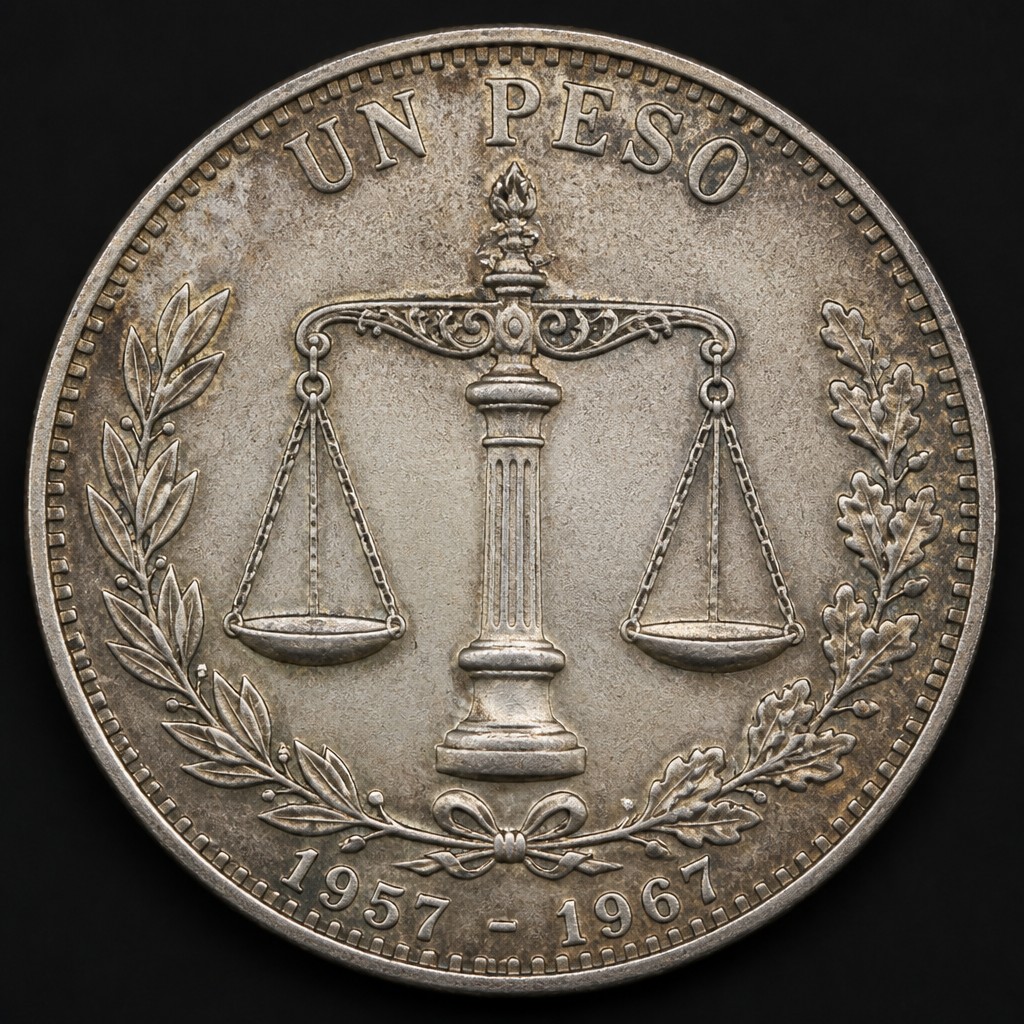
What It Is
This peso was issued from the late 1950s through the 1960s as Mexico reduced the silver content of its circulating coinage in response to rising silver prices, replacing the earlier higher-silver peso designs with a lighter, less valuable alloy coin for everyday commerce.
Obverse Design
The obverse displays Mexico's national emblem, the eagle standing on a nopal cactus grasping a serpent, with "ESTADOS UNIDOS MEXICANOS" around the border and the date below.
Reverse Design
The reverse is where this coin gets its popular nickname: it features a pair of balance scales as a decorative design element above the "UN PESO" denomination, with the date typically repeated or placed nearby. This scale motif is the single easiest way to identify the coin at a glance.
Size, Weight, and Metal
Unlike earlier, heavier silver pesos, this issue carries a much lower silver content, reflecting the era's cost-driven debasement of circulating coinage, and it is noticeably lighter and often smaller in diameter than the older full-silver peso types.
Mint Marks
As with most modern Mexican coinage, a small "Mo" mint mark for Mexico City appears on the design, since this was the primary mint producing circulating coinage during this period.
Telling It Apart from Similar Coins
The balance-scale reverse design clearly separates this coin from both the earlier cap-and-rays peso and the Morelos portrait peso, neither of which carries this motif. If you see scales on the reverse rather than a portrait or a liberty cap, you are looking at this specific low-silver series.
Judging Condition
Because this coin saw heavy everyday circulation as a workhorse denomination, well-preserved, lightly worn examples with a crisp scale design and clear eagle feather detail are more desirable than the commonly found, heavily worn circulated pieces. Wear typically shows first on the eagle's breast and the raised edges of the scale motif.
Authenticity Red Flags
Because this coin has a lower, and thus less commercially incentivized, silver content compared to earlier pesos, outright counterfeiting is less common, but check for correct weight and diameter and a clean, well-defined strike. A coin that looks unusually crude, has blurred lettering, or has an inconsistent finish compared to genuine circulated examples should be examined more closely.
Historical Background
This peso marks a turning point where Mexico moved decisively away from full-silver circulating coinage toward the token, low-silver, and eventually silverless coins that would follow in subsequent decades. For collectors tracing the decline of silver in Mexican pocket change, this issue is a key milestone between the earlier heavier-silver pesos and the base-metal coinage that came afterward.
Frequently asked questions
Why is this coin called the 'Balanza' peso?
It gets its nickname from the pair of balance scales featured prominently on the reverse design.
Why does this peso have less silver than earlier Mexican pesos?
Rising silver prices during this period made it too costly to keep striking pesos with the older, higher silver content, so Mexico reduced the metal content for everyday circulating coinage.
How do I tell this coin apart from the Morelos peso?
This coin's reverse features a balance-scale design, while the Morelos peso instead has a portrait bust on the obverse and no scale motif.
What does the mint mark on this coin mean?
The small 'Mo' mark indicates it was produced at the Mexico City mint.