
How to Identify the Macao Silver Coin (1974)
A collector's checklist for the 1974 Macau silver coin: the bridge-and-junk scene, the REPUBLICA PORTUGUESA and PONTE MACAU-TAIPA legends, size, metal, and fake cautions.
Read the full Macao Silver Coin (1974) encyclopedia entry →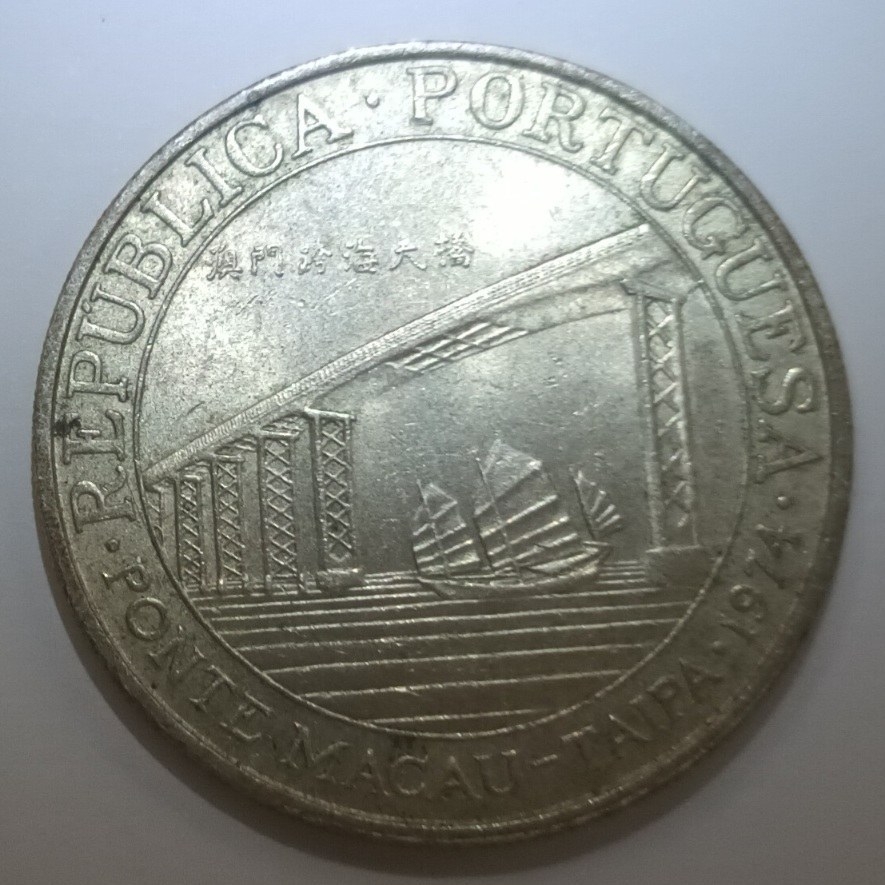
Begin with the pictorial face, because it is unmistakable. Look for a long, slim bridge sweeping across the coin with a traditional Chinese junk under sail passing beneath it, and small Chinese characters set into the upper part of the design. This bridge-and-junk pairing is the single quickest way to recognize the type, since no other common silver coin uses it.
Confirm with the rim inscriptions. The upper rim reads REPUBLICA PORTUGUESA, which tells you the coin belongs to Portuguese-administered Macau, and the lower rim reads PONTE MACAU-TAIPA followed by 1974, naming the Macau-Taipa Bridge and giving the date. The mix of Portuguese lettering with Chinese characters on the same coin is itself a reliable Macau indicator; a piece with only one script or a different place name is not this type.
Check the physical traits. This is a large silver coin of crown size that should feel heavy for its diameter, show the bright, slightly warm tone of silver, and give a clear ring rather than a dull thud. Weigh and measure it against published specifications for the 1974 Macau silver issue; a coin that is light, undersized, or dull-sounding warrants caution. Because the denomination and Portuguese arms are on the reverse (not shown in the pictured face), read the value from that side and confirm both faces match references for the type.
Separate it from look-alikes. Other Portuguese and Portuguese-colonial silver of the era shares the REPUBLICA PORTUGUESA legend and a similar size and metal, so do not rely on the wording alone. The specific combination of the Macau-Taipa bridge scene, the junk, the PONTE MACAU-TAIPA legend, and the 1974 date is what pins the coin to this Macau commemorative rather than a Portugal, Angola, or Mozambique issue.
Finally, watch for authenticity problems common to popular silver commemoratives. Inspect the bridge deck, the sails, and the junk's hull for the crisp, sharp relief of a struck coin rather than the soft, grainy surfaces of a cast copy, and examine the fields and edge for tooling, filed seams, or a re-cut date. For any valuable example, favor coins authenticated by a reputable grading service and compare weight and diameter to trusted references before buying.
Frequently asked questions
What is the fastest way to recognize this coin?
Look for the bridge-and-junk scene: a long bridge with a Chinese junk sailing beneath it. Paired with the legends REPUBLICA PORTUGUESA and PONTE MACAU-TAIPA and the date 1974, that image identifies the Macau silver bridge coin.
Where do I read the date and denomination?
The date 1974 sits on the pictured bridge face, along the lower rim with PONTE MACAU-TAIPA. The denomination in the pataca system is on the opposite face, alongside the Portuguese arms, so the value is read from that reverse side.
How do I tell it from other Portuguese silver coins?
Many Portuguese and colonial silver coins share the REPUBLICA PORTUGUESA legend and a similar size. Rely on the imagery: only the Macau issue combines the Macau-Taipa bridge, the junk, the PONTE MACAU-TAIPA legend, and the 1974 date.
What should I check to guard against fakes?
Confirm weight and diameter against published figures, listen for a true silver ring, and inspect the bridge, sails, and junk for sharp struck detail rather than soft cast surfaces. Check the date and edge for alteration, and for valuable pieces buy coins authenticated by a reputable grading service.