How to Identify the Lincoln Bicentennial Cent
A quick collector's guide to spotting a 2009 Lincoln Bicentennial cent, reading its four reverse designs, and separating it from other Lincoln pennies.
Read the full Lincoln Bicentennial Cent encyclopedia entry →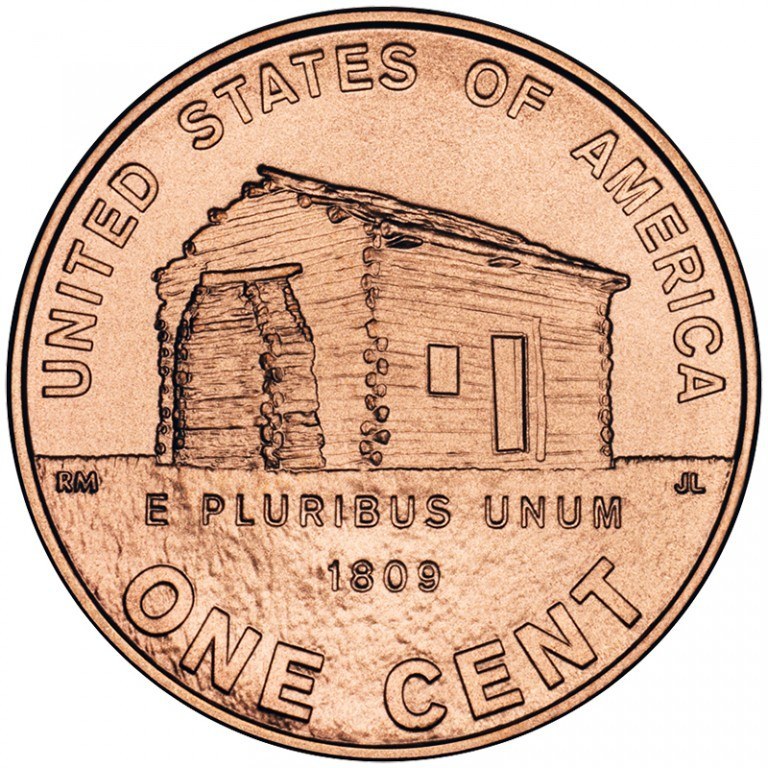
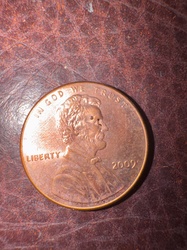
Begin with the date. Every Lincoln Bicentennial cent is dated 2009 and no other year, so the 2009 under the obverse legends is the first and most decisive clue. The obverse itself is the standard Lincoln portrait facing right, with LIBERTY at the left, IN GOD WE TRUST across the top, and the date at the right, exactly as pictured.
Identify which of the four coins you have by the reverse. The Birthplace design shows a log cabin; the Formative Years design shows a young Lincoln seated and reading on a log; the Professional Life design shows Lincoln standing before the Illinois State Capitol; and the Presidency design shows the half-finished U.S. Capitol dome. All four carry UNITED STATES OF AMERICA, E PLURIBUS UNUM, and ONE CENT. A 2009 cent with a log cabin, as here, is the Birthplace variety.
Confirm the physical coin. It is a small cent about 19 mm across. Ordinary circulation strikes are copper-plated zinc and weigh about 2.5 grams, so they look coppery but are light; the special 95% copper collector-set coins weigh about 3.1 grams. Check under the date for a mint mark: D means Denver, and no letter means Philadelphia. There is no S mint mark on business strikes, though proof versions from San Francisco exist in collector sets.
Watch for look-alikes and alterations. Do not confuse the bicentennial cents with the 1959–2008 Lincoln Memorial reverse or the 2010-and-later Union Shield reverse; only 2009 uses the four life-scene designs. Because the coins are common, deliberate fakes are unusual, but altered dates and artificially toned or 'colorized' novelty pieces do circulate. Colorized or plated coins sold as special are altered after minting and are not official varieties.
For authentication, weight is your simplest tool: a genuine circulation coin is close to 2.5 grams, and a copper collector coin close to 3.1 grams. Any piece claimed to be a valuable error or top-grade rarity should be verified by a recognized third-party grading service, since nearly all ordinary 2009 cents are worth little more than face value.
Frequently asked questions
How do I tell which of the four 2009 designs I have?
Look at the reverse: a log cabin is the Birthplace, a young man reading on a log is Formative Years, a man before a statehouse is Professional Life, and a domed Capitol under construction is the Presidency.
Where is the mint mark on a 2009 Lincoln cent?
Under the date on the obverse. A D indicates the Denver Mint and no letter indicates Philadelphia; S-mint coins appear only as proofs in collector sets.
How can I tell a circulation coin from the special copper version?
Weigh it. Circulation strikes are copper-plated zinc at about 2.5 grams, while the 95% copper collector-set coins weigh about 3.1 grams.
Are colorized or gold-plated 2009 cents official?
No. Those are novelty pieces altered after minting by private sellers and are not part of the official U.S. Mint series.
Lincoln Bicentennial Cent identified by the community
Recent Lincoln Bicentennial Cent coins identified with Coin Identifier.