
How to Identify the Library of Congress Bicentennial Silver Dollar
A collector's checklist for confirming a 2000 Library of Congress silver dollar — the quill 'We the People' obverse, Library facade reverse, silver specs, and cautions.
Read the full Library of Congress Bicentennial Silver Dollar encyclopedia entry →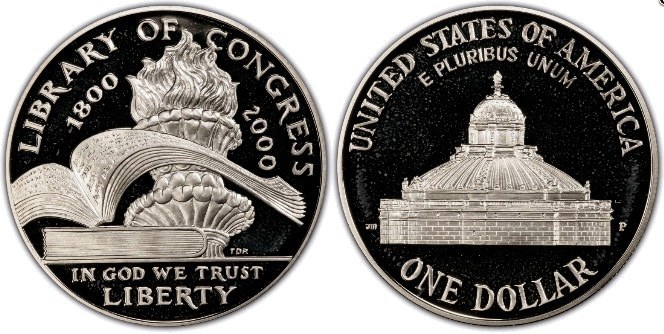
Start with the obverse design and wording. A genuine Library of Congress Bicentennial Silver Dollar shows a feather-quill and scroll motif together with the phrase 'We the People,' the word Liberty, and the date 2000. This documentary, literary device — not a Liberty figure or a president's portrait — is the quickest way to recognize the type and to separate it from ordinary dollar coins.
Turn the coin over to confirm the reverse. It should depict the columned facade of the Library of Congress building, with lettering naming the Library of Congress and stating the one-dollar denomination. The pairing of the quill-and-scroll obverse with the Library building reverse is specific to this issue and is the strongest single identifier.
Verify the physical specifications. The coin is a standard commemorative silver dollar: roughly 38.1 mm in diameter, about 26.7 grams, struck in 90% silver with a reeded edge. A calibrated scale and calipers are the best check; a piece that is off in weight, diameter, or edge reeding for a silver dollar is a warning sign. Expect a 'P' mint mark, as the coins were struck at Philadelphia and dated only 2000 — any other date should be treated as suspect.
Distinguish it from the other 2000 Library of Congress coin. The commemorative program also included a bimetallic ten-dollar coin combining gold and platinum; that piece is smaller, two-toned, and denominated ten dollars, so its metal color and denomination separate it clearly from the all-silver dollar described here.
Be cautious with authentication and condition. As a modern commemorative, this coin is usually available in proof or uncirculated finish, often in original Mint packaging; mismatched or missing certificates, incorrect weight, or a color that does not match 90% silver are reasons for caution. For any higher-value or high-grade purchase, rely on reputable dealers and third-party grading (PCGS, NGC) rather than appearance alone.
Frequently asked questions
How do I recognize this coin at a glance?
Look for the 'We the People' inscription with a feather-quill and scroll on one side and the facade of the Library of Congress building on the other, both dated 2000. That combination is unique to this issue.
How can I tell it from the other 2000 Library of Congress coin?
The other issue is a bimetallic ten-dollar coin made of gold and platinum — smaller and two-toned, with a $10 denomination. This one is an all-silver dollar, so metal color and denomination set them apart.
What should a genuine example weigh and measure?
About 26.7 grams and roughly 38.1 mm in diameter, in 90% silver with a reeded edge. Figures that don't match a standard silver commemorative dollar are a counterfeit warning sign.
Should the coin have a mint mark?
Yes. Genuine examples were struck at Philadelphia and carry a 'P' mint mark, dated only 2000. A different date or missing expected features warrants closer scrutiny.