
How to Identify the Kenya 10 Shillings
A collector's guide to identifying the bimetallic Kenya 10 shillings by its Kenyatta portrait, lions-and-shield coat of arms, two-tone construction, and look-alikes.
Read the full Kenya 10 Shillings encyclopedia entry →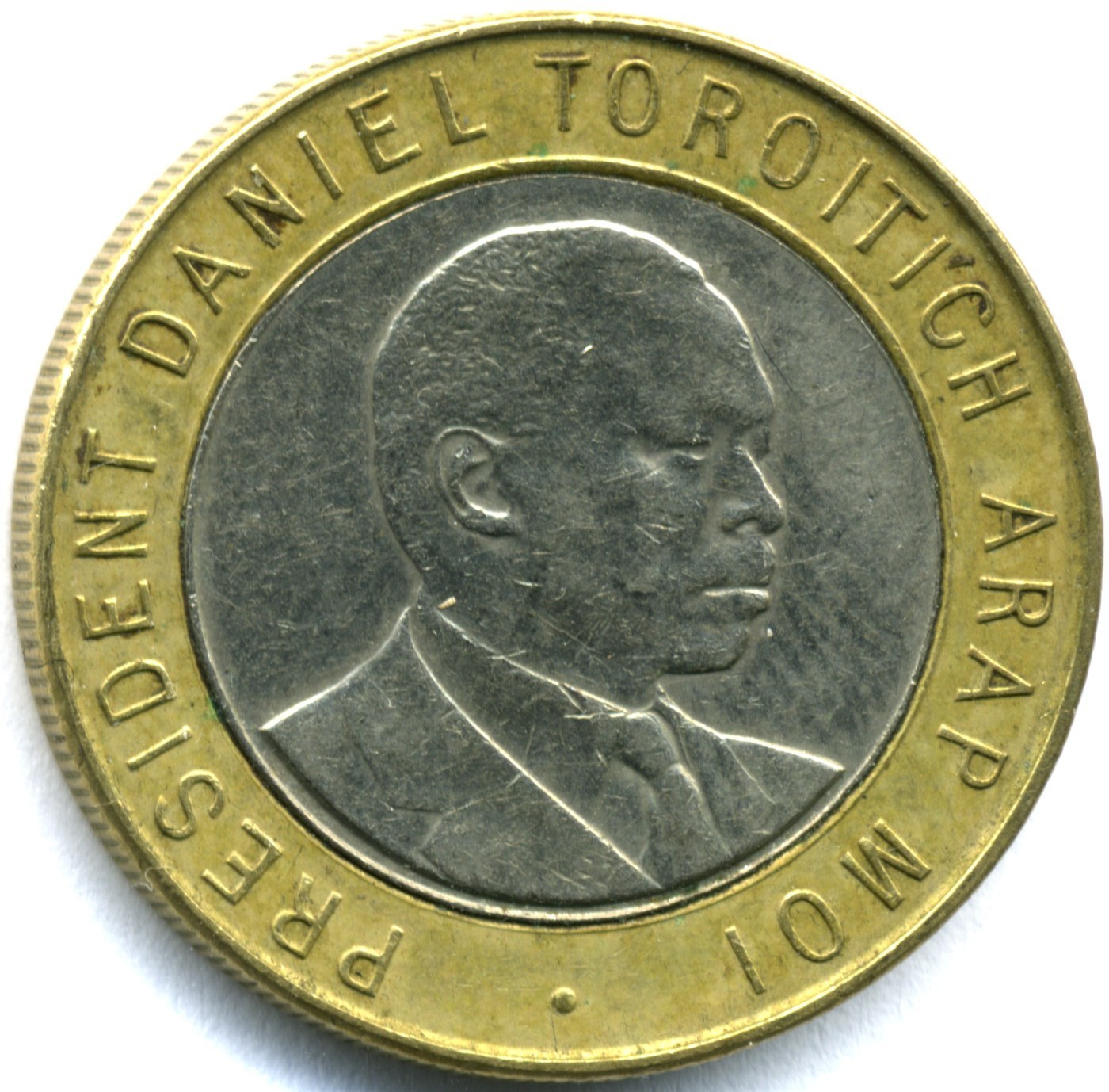
What This Coin Is
The Kenya 10 shillings is a modern bimetallic circulating coin of the Republic of Kenya. Identifying one starts with recognizing its two-tone construction — an outer ring of one color around an inner disc of a contrasting color — paired with a portrait of President Jomo Kenyatta and the Kenyan coat of arms. That combination separates it from Kenya's smaller single-metal shilling and cent coins.
Reading the Obverse
The obverse centers on the portrait of Jomo Kenyatta, ringed by legends naming the Republic of Kenya. Read the legend and confirm the name rather than judging by the bust alone, because Kenya issued 10 shillings coins with more than one presidential portrait over the years. Confirming the Kenyatta likeness together with the wording helps pin down which type you have.
Reading the Reverse
The reverse shows the Kenyan coat of arms: a central heraldic shield supported by two standing lions, accompanied by the denomination and the date. Confirm that the value reads as 10 shillings and that the supporters are lions flanking a shield; this armorial reverse, paired with the Kenyatta obverse, is the core attribution clue. The date, where legible, should be checked against a catalog to place the coin within the bimetallic series.
Size, Metal, and Construction
This is a round bimetallic base-metal coin, not a precious-metal piece, so expect the look of a modern circulation coin rather than bright silver or gold. The defining physical feature is the clear boundary between the outer ring and the inner center, each in a different alloy color. Weigh and measure any candidate and compare against published specifications for the type; a coin that is a single uniform metal, or markedly off in size or weight, is a different denomination or issue.
Look-Alikes and Authentication Cautions
Kenya's other bimetallic and single-metal coins share design elements such as the coat of arms, so always read the denomination and confirm the two-tone construction. The presence of a different portrait, or a value other than 10 shillings, points to a separate type. Because these are common modern coins, outright forgery is uncommon, but watch for worn or corroded pieces, cleaned surfaces, and coins where the ring and center have separated or discolored. For any unusual example, match the coin to a standard world-coin reference to confirm the date and variety before drawing conclusions about scarcity.
Frequently asked questions
How do I tell the 10 shillings from Kenya's other coins?
Check the stated value and the construction: the 10 shillings is a two-tone bimetallic coin with a contrasting ring and center, unlike the smaller single-metal cent and shilling coins.
How can I confirm the portrait is Jomo Kenyatta?
Read the obverse legend naming the Republic of Kenya alongside the bust; because Kenya used more than one presidential portrait on its coins, confirming the name with the likeness is the reliable check.
What does the reverse design tell me?
The Kenyan coat of arms — two lions supporting a central shield — together with the 10 shillings value and the date identifies the type; verify the date against a catalog to place it in the series.
Are fakes of this coin a concern?
Outright forgery of a common modern coin is unusual; the more likely issues are wear, corrosion, cleaning, or a separated or discolored bimetallic joint, all of which affect condition and value.