
How to Identify the Jalisco 5 Centavos
A collector's walkthrough for confirming an 1915 Jalisco 5 centavos by its numeral, eagle, copper metal and size, and separating it from look-alikes.
Read the full Jalisco 5 Centavos encyclopedia entry →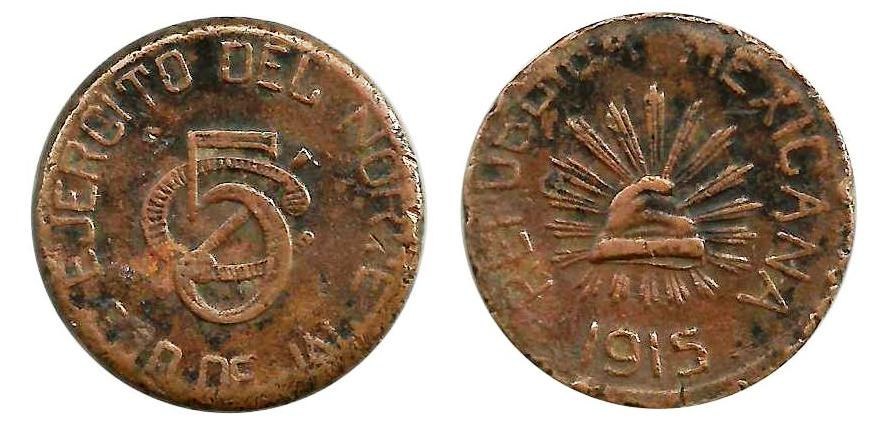
Start with the two faces. The Jalisco 5 centavos pairs a large numeral 5 on the obverse with the Mexican national eagle on the reverse, and both should tie back to the date 1915. This numeral-and-eagle layout, with no portrait, is the core diagnostic and marks it as an emergency minor coin rather than a standard federal issue.
Confirm the metal and size. This is a copper piece, so it should show a brown, red-brown or dark patinated surface, not the bright white of silver, and it should feel light and small in keeping with a 5-centavos denomination. A silver-white color, large diameter, or heavy weight points to a different coin.
Read the legends for the state attribution. Look for wording identifying Jalisco (the issuing state) around the eagle, together with the denomination and year. Because these were provisional, locally made coins, expect uneven strikes, variable centering and softness in the details; that roughness is normal for the type, not automatically a red flag.
Separate the look-alikes. Several Mexican states and factions issued their own 1915 base-metal coins with similar numeral-and-eagle designs, so check the state legend carefully to be sure a piece is Jalisco and not, for example, another regional issue. Do not confuse it with standard federal Mexican centavos of the era, which carry different, more finished designs.
Authenticate with care. Revolutionary state coinage attracts reproductions and altered pieces, and worn provisional coins can be hard to read. Verify that the metal, size and weight are consistent with a small copper coin, be wary of suspiciously sharp "too perfect" examples or added detail, and for a valuable or uncertain piece seek an opinion from a specialist in Mexican revolutionary coinage.
Frequently asked questions
How do I know a coin is a Jalisco issue and not another state's?
Read the legend around the eagle: it should name Jalisco as the issuing state. Many states struck similar 1915 numeral-and-eagle copper coins, so the state name is what distinguishes them.
The strike looks crude and uneven. Is my coin fake?
Not necessarily. These were hastily produced emergency issues, so soft detail, off-center strikes and rough surfaces are common and normal for the type. Judge authenticity by metal, size, weight and design rather than strike quality alone.
How can I tell it apart from a regular Mexican centavos coin?
Standard federal centavos of the period have more finished, standardized designs. The Jalisco piece is a plain provisional issue with a large numeral 5, the eagle, the 1915 date and a state legend.
What should I check before buying one?
Confirm it is copper and correctly sized and weighted for a small coin, read the Jalisco legend and 1915 date, and inspect for corrosion, cleaning or edge damage. For anything valuable, get a specialist or third-party opinion.