
How to Identify the Israel 10 Sheqalim Hanukka Commemorative
A collector's guide to recognizing the 1983 Israeli Hanukka silver coin by its lamp design, Sheqalim denomination, dual dating, size, and mint mark.
Read the full Israel 10 Sheqalim Hanukka Commemorative encyclopedia entry →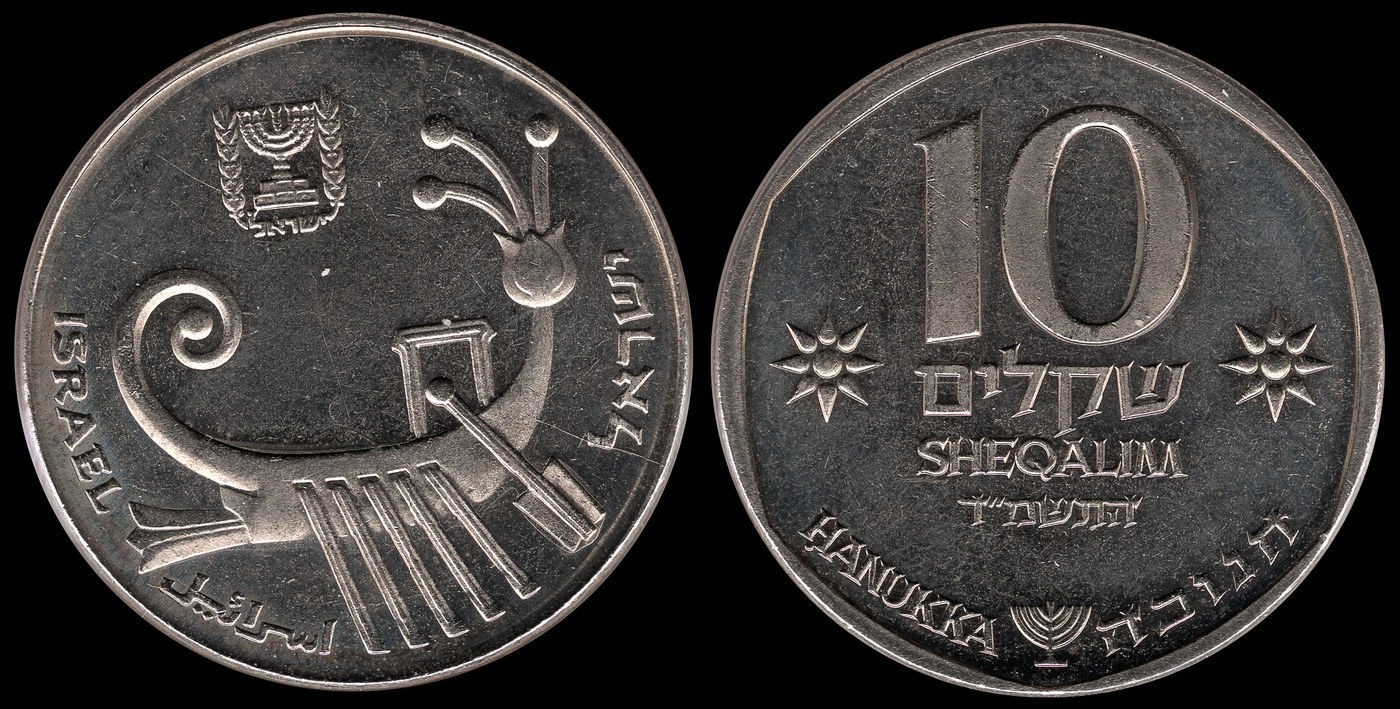
Begin with the lamp. The signature feature of this coin is a Hanukka lamp, or hanukkiah, shown as a decorative ceremonial object with star motifs on the design face. Israeli Hanukka commemoratives are built around this lamp theme, so a silver Israeli coin featuring an ornate branched lamp is a strong first indicator that you are looking at a Hanukka issue rather than a general circulation coin.
Turn the coin to the value face and confirm the denomination. You should see a large numeral 10 with the word SHEQALIM and Hebrew script, alongside the State of Israel emblem. Check the date carefully: this issue reads 1983 in the Gregorian calendar and 5744 in the Hebrew calendar, and both should be present. The presence of Sheqalim (not new shekels, and not lirot) places the coin firmly in Israel's early-1980s old-sheqel period.
Measure and weigh it. Expect a mid-sized silver commemorative, commonly around 30 mm in diameter and roughly 14 to 15 grams, though you should verify against the specific version you hold since the series included more than one format. The metal should read as silver, with the surfaces either a frosted-device proof or a brilliant uncirculated (prooflike) finish. Look for a small mint mark, often a Star of David, near the design as a sign of an official Bank of Israel striking.
Separate it from look-alikes. Other years in the Hanukka series use the same overall layout but depict different lamps and carry different dates, so use the 1983 / 5744 dating and the specific lamp to pin down this exact issue. Do not confuse the old-sheqel Sheqalim coins with later New Sheqalim commemoratives, which belong to the post-1985 currency and read differently. Privately made medals and tourist pieces can borrow Hanukka imagery without being legal-tender coins; a genuine coin shows the denomination, the state emblem, and the multilingual legends.
Authenticate with care. Weigh the coin and test the silver where possible, examine the fine lamp detail under magnification for the crisp strike expected of a proof or prooflike piece, and treat original Bank of Israel packaging and the matching certificate as supporting evidence. When a coin has been cleaned, is off-weight, or shows casting seams and bubbles instead of struck detail, be cautious and seek a specialist opinion before assigning value.
Frequently asked questions
How do I know it is the 1983 issue and not another year?
Check the dual date. This coin reads 1983 in the Gregorian calendar and 5744 in the Hebrew calendar. Other Hanukka coins share the layout but show different years and different lamp designs, so the date and the specific lamp identify the exact issue.
What is the difference between Sheqalim and New Sheqalim on Israeli coins?
Sheqalim refers to the old sheqel used in the early 1980s, as on this coin. After the 1985 reform Israel used the New Sheqel, and later commemoratives are denominated in New Sheqalim. Reading the exact wording prevents confusing the two currencies.
Where should I look for a mint mark?
Israeli commemoratives often carry a small mint mark, frequently a Star of David, placed near the design. Its presence supports an official Bank of Israel striking, though you should still confirm weight, size, and metal.
How can I tell a genuine coin from a commemorative medal?
A genuine coin shows a stated denomination (10 SHEQALIM), the State of Israel emblem, and multilingual legends. Privately issued Hanukka medals may use similar lamp imagery but lack a legal-tender face value and official inscriptions.