
How to Identify the Isle of Man Noble
A collector's guide to recognizing the platinum Isle of Man Noble by its crowned QEII obverse, Viking longship reverse, size, and metal.
Read the full Isle of Man Noble encyclopedia entry →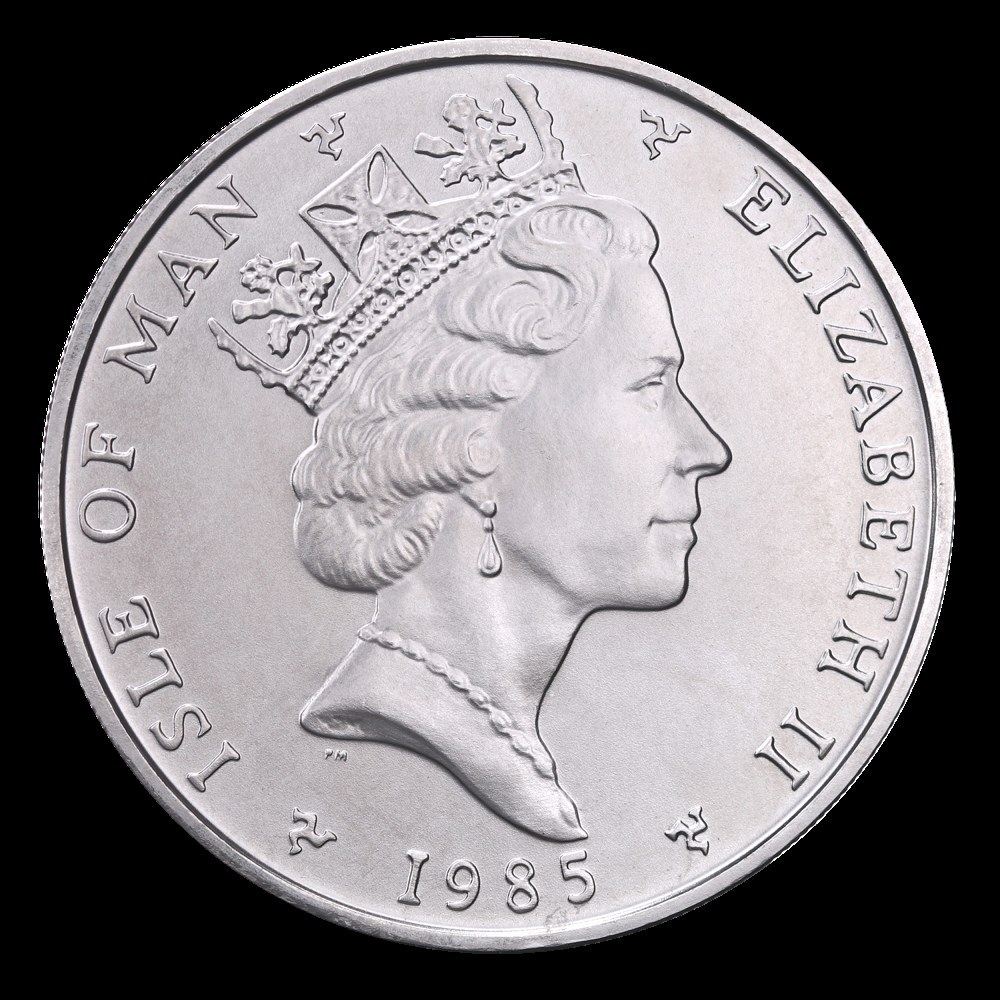
Start with the reverse, which gives the series its identity. The Isle of Man Noble shows a Viking longship under sail — a single-masted Norse vessel that reflects the island's Viking heritage. If the coin in front of you pairs that longship with a crowned Queen Elizabeth II obverse, you are almost certainly looking at a Noble rather than a generic bullion round.
Read the obverse inscriptions. The obverse carries a crowned bust of Queen Elizabeth II facing right, encircled by legends that name the monarch and the Isle of Man. Note the crown specifically: this is a crowned effigy rather than the bare-headed or laureate portraits used on many other Commonwealth coins, and it helps distinguish the Noble from look-alike issues. The date, such as the 1985 shown here, appears among the inscriptions.
Check the metal and size. The Noble is struck in high-purity platinum, which reads as a cool greyish-white — not the warm yellow of gold, and denser and heavier for its size than silver. The one-ounce coin is crown-sized at roughly 32 to 33 mm. Because the series was issued in fractional sizes too, use the stated weight and diameter to tell the one-ounce coin from smaller pieces that share the same designs.
Watch for look-alikes and finishes. Do not confuse the platinum Noble with gold or silver bullion coins that carry ship or monarch designs, and be aware the series appeared in both bullion and proof finishes. Pobjoy Mint issues sometimes carry small mint identifiers in the design; noting these can help confirm the maker.
For authentication, rely on precise measurement. Genuine one-ounce Nobles match published platinum weight and dimensions closely, and platinum's density makes wrong-metal fakes feel and measure differently. Weigh the coin, check the diameter, and for anything of significant value, use professional authentication or third-party grading rather than eye appeal alone.
Frequently asked questions
How do I know my coin is the platinum Noble and not a gold coin?
Look at the color and weight. Platinum reads as a cool greyish-white rather than warm yellow gold, and it is dense and heavy for its size. Combined with the longship reverse and crowned QEII obverse, that points to the platinum Noble.
What distinguishes the one-ounce Noble from the fractional sizes?
The designs are shared across sizes, so use the stated weight and diameter. The one-ounce coin is crown-sized at roughly 32 to 33 mm; fractional pieces are smaller and lighter, and their inscriptions state a smaller weight.
Are there different finishes to watch for?
Yes. Nobles were struck in ordinary bullion finish and in collector proof finish. A mirror-field, frosted-device proof look suggests a collector issue, which can carry a premium over the plain bullion strike.
How can I confirm a Noble is authentic?
Measure it. Genuine one-ounce Nobles match published platinum weight and dimensions closely, and platinum's high density makes wrong-metal copies measure incorrectly. For valuable pieces, use professional authentication or third-party grading.