
How to Identify the Isle of Man Gold Angel
A visual guide to the Pobjoy Mint's Angel gold bullion coin, covering the Saint Michael reverse, monarch obverse, weights, and authenticity checks.
Read the full Isle of Man Gold Angel encyclopedia entry →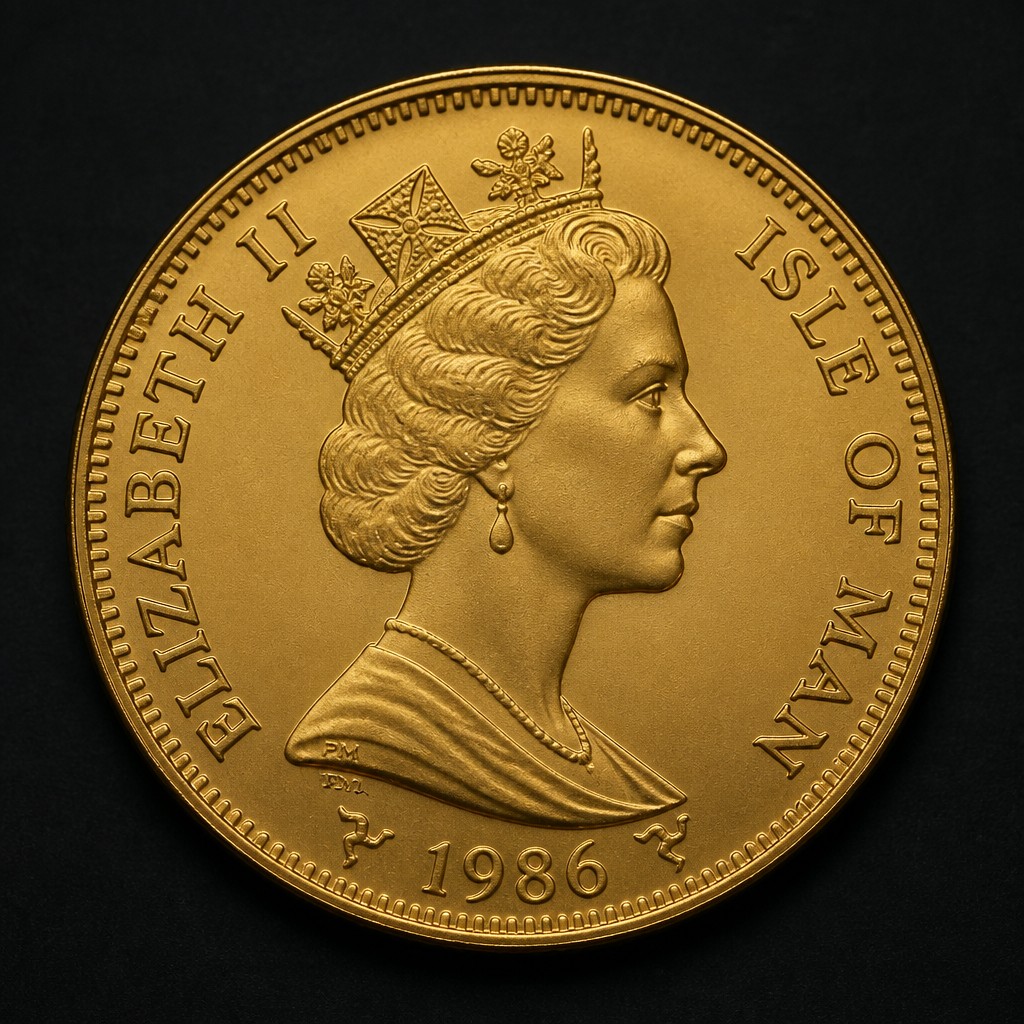
What This Coin Is
The Isle of Man Gold Angel is a bullion coin first issued in 1984 by the Pobjoy Mint, drawing inspiration from England's historic medieval Angel coin. It has been produced in multiple weights and, in later years, updated annually with new artistic interpretations of its central religious motif, making it a long-running series among world gold bullion coins.
Obverse Design
The obverse features the reigning British monarch's portrait, Queen Elizabeth II for issues through the early 2020s and King Charles III for coins from 2023 onward, along with the legend naming the Isle of Man and the denomination in pounds.
Reverse Design
The reverse depicts Saint Michael the Archangel slaying a dragon, a design descended from the original English gold Angel of the late medieval period. Over the decades, Pobjoy Mint has commissioned different artists to reinterpret this scene, so the exact pose, dragon shape, and background details vary from year to year while the core theme remains constant.
Size, Weight, and Metal
The Angel has been struck in fractional and full-ounce gold weights, including 1 oz, 1/2 oz, 1/4 oz, and 1/10 oz, typically in .9999 fine gold. Diameters scale with weight, and the edge is usually plain or reeded depending on the specific denomination and year.
Mint Marks and Inscriptions
Look for the weight and fineness inscription, such as "1 OZ FINE GOLD 9999," along with the date and the Isle of Man designation. Pobjoy Mint issues often include a small mint identifier or privy mark, and proof versions may carry additional finish indicators distinguishing them from bullion strikes.
Telling It Apart From Similar Coins
The Angel's Saint Michael and dragon theme is distinctive, but it can be confused with other religious or mythological gold bullion coins. The Isle of Man country name and pound denomination on the obverse are the clearest confirmation, since coins from other jurisdictions use different legends even if a dragon-slaying motif appears elsewhere.
Judging Condition at a Glance
Gold bullion coins resist tarnish, so condition assessment focuses on strike sharpness and surface marks rather than corrosion. Well-preserved Angels show crisp linework in Saint Michael's wings and the dragon's scales; heavily circulated or mishandled examples show flattened relief on the highest design points and scattered light scratches.
Authenticity Red Flags
Verify weight and diameter precisely, since gold's high value makes it a frequent counterfeit target, often using tungsten cores or gold-plated base metal to mimic the correct weight and appearance. Soft or mushy detail in the dragon and Saint Michael figures, incorrect diameter-to-weight ratio, and a coin that fails a simple specific-gravity or magnet test are all warning signs worth investigating further.
Frequently asked questions
What is the historical inspiration for the Angel design?
It is based on the medieval English gold Angel coin, which historically depicted Saint Michael slaying a dragon.
Does the reverse design change every year?
Yes, many years feature a fresh artistic interpretation of the Saint Michael and dragon scene while keeping the same overall theme.
What weights were issued?
The Angel has been struck in several gold weights, including one ounce and various fractional sizes such as half, quarter, and tenth ounce.
Who strikes the Isle of Man Angel?
It is produced by the Pobjoy Mint on behalf of the Isle of Man government.
How pure is the gold?
Standard issues are typically .9999 fine gold, among the higher purity levels used in world bullion coinage.