
How to Identify the Hong Kong 20 Cents
A collector's checklist for the British Hong Kong 20 Cents: reading the Edward VII portrait, dragon reverse, size, silver, and authentication cautions.
Read the full Hong Kong 20 Cents encyclopedia entry →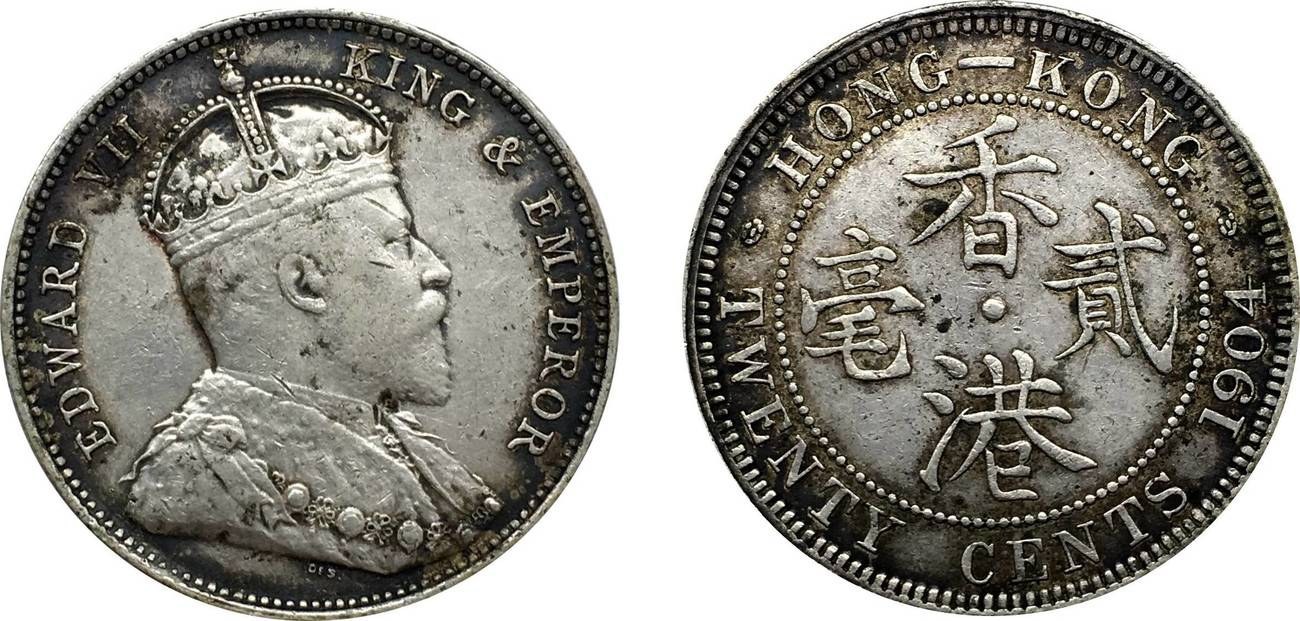
Start with the two design sides. A genuine Hong Kong 20 Cents of this type pairs an obverse portrait of a British monarch with a reverse Chinese dragon and the value. On the Edward VII issue pictured, read the Latin legend EDWARDVS REX around a crowned right-facing profile; the reverse shows the coiled dragon, surrounding Chinese characters, the English 20 CENTS, and the date (1904 here). Confirming both the ruler's name and the denomination in writing is the surest first step.
Check the denomination and size together. The 20 Cents is a small silver coin, larger than the 10 cent but smaller than the half-dollar and dollar of the same series. Beware of confusing it with the neighboring 10 Cents, which shares the same dragon-and-portrait layout at a smaller diameter; always read the numeral in 20 CENTS rather than judging by size alone, since worn coins can be hard to gauge by eye.
Use the inscriptions to place the coin in the right series. The combination of Latin royal titles, an English value, and Chinese script marks it specifically as a British Hong Kong colonial issue. This distinguishes it from mainland Chinese provincial dragon coins, from Straits Settlements and other British-Asian silver, and from later Hong Kong types bearing a different monarch (for example George V) or a redesigned reverse.
Assess the metal and surfaces. Expect the look and heft of a small silver piece; genuine coins show even wear on the high points of the portrait and dragon, with legends worn but legible. Watch for signs of a cast or altered fake: mushy or doubled lettering, seams on the edge, wrong weight or diameter, or a dragon that lacks the crisp scales and claws of a struck original.
Apply normal authentication caution with better examples. Cleaning, polishing, mounting marks, or a solder trace from jewelry use all lower value and can hide problems. For scarce dates or high grades, compare the coin against documented references for the Hong Kong dragon series and consider professional grading, which confirms authenticity, date, and condition.
Frequently asked questions
How do I tell the 20 Cents from the 10 Cents?
Both share the same portrait-and-dragon layout, so read the written value: the coin should say 20 CENTS. The 20 Cents is also the larger of the two. Because wear can make size hard to judge, rely on the denomination text rather than diameter alone.
How do I know it is Hong Kong and not a Chinese coin?
Look for the combination of a British royal portrait with Latin titles (EDWARDVS REX), the English denomination 20 CENTS, and Chinese characters together. This bilingual, colonial format identifies a British Hong Kong issue rather than a mainland Chinese provincial dragon coin.
What confirms the date and ruler?
The obverse legend names the monarch (EDWARDVS REX for Edward VII), and the date appears with the reverse dragon design; on the pictured coin it reads 1904. Reading both the ruler's name and the date pins down the exact type within the series.
How can I spot a fake?
Check that the weight, diameter, and silvery appearance match a small silver coin, and inspect the lettering and dragon for crisp, struck detail. Mushy or doubled text, edge seams, wrong weight, or a soft dragon suggest a cast or altered piece; professional grading gives the most reliable confirmation for valuable examples.