
How to Identify the Gold Britannia
A visual guide to the Royal Mint's Gold Britannia bullion coin, identified by its standing Britannia reverse, monarch's portrait obverse, and high gold fineness.
Read the full Gold Britannia encyclopedia entry →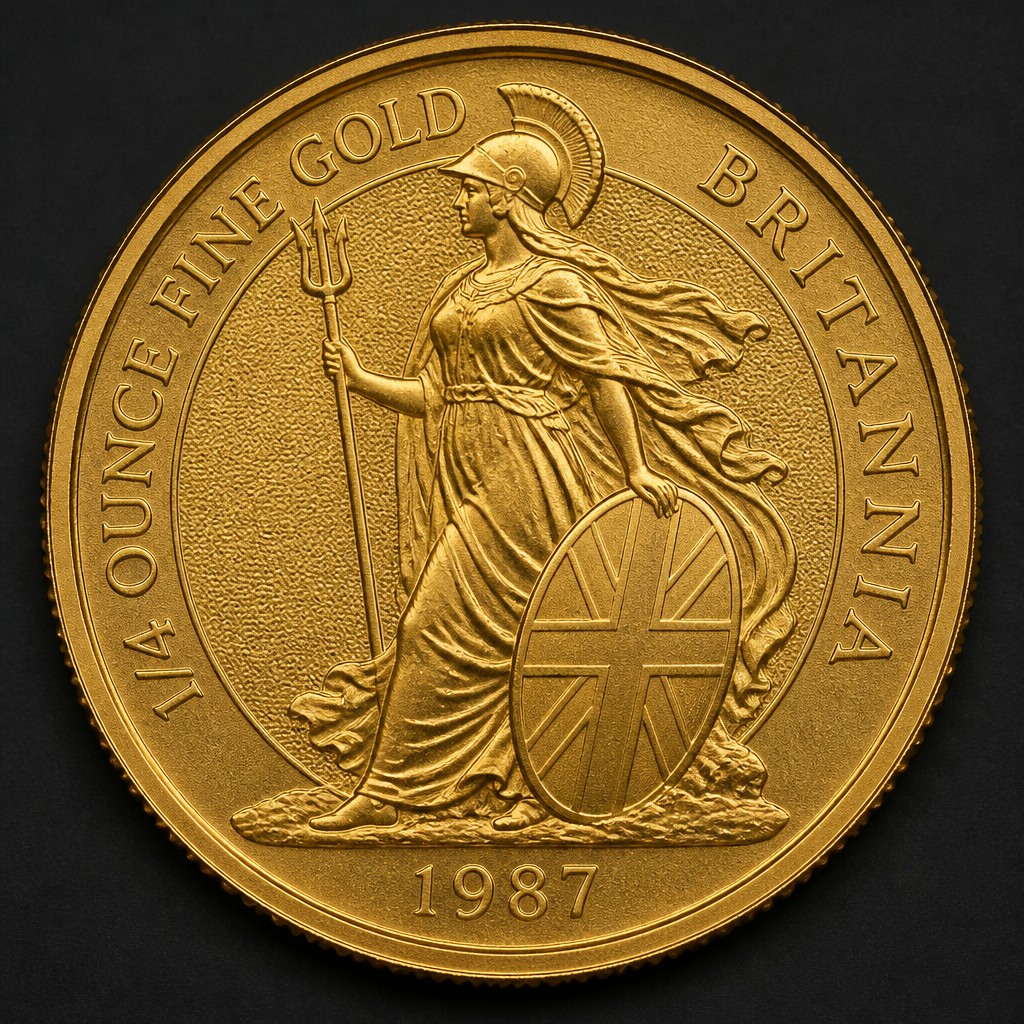
What It Is
The Gold Britannia is the Royal Mint's flagship gold bullion coin, first issued in 1987. Like its silver counterpart, it is intended primarily for investment and collecting, produced in a range of weights from one-tenth of an ounce up to a full troy ounce, with the one-ounce coin's larger denominations also available in some years.
Obverse Design and Inscriptions
The obverse displays the reigning monarch's portrait, the coin's face value (such as "ONE HUNDRED POUNDS" for the standard one-ounce coin), and the year of issue. Portrait style changes over time correspond to the ruling monarch at the date of striking.
Reverse Design and Inscriptions
The reverse shows a standing figure of Britannia, generally holding a trident and shield, inscribed "BRITANNIA." The specific artistic rendering has been updated periodically by the Royal Mint, so subtle stylistic differences exist between older and newer issues, though the standing-figure motif has remained the coin's signature design.
Size, Weight, Metal, and Edge
The standard one-ounce Gold Britannia weighs 31.21 grams (one troy ounce) and measures about 32.69 mm in diameter. From 1987 to 2012, coins were struck in 22-carat (.9167 fine) gold; from 2013 onward, the Royal Mint moved to .9999 fine (24-carat) gold. Fractional weights (one-half, one-quarter, and one-tenth ounce) are also produced with proportionally smaller diameters. The edge is reeded.
Mint Marks and Where to Find Them
All Gold Britannias are struck at the Royal Mint in Llantrisant and do not carry a separate historic-style mint mark. Modern issues include security features such as micro-lettering or a latent image that can be verified against official Royal Mint reference images for the relevant year.
Telling It Apart From Similar Coins
The Gold Britannia's rich yellow color and its stated weight and fineness distinguish it from the silver Britannia and from other national gold bullion coins like the South African Krugerrand or American Gold Eagle, which use different reverse designs entirely. Comparing the exact diameter and weight against official specifications for the claimed year confirms the specific denomination.
Judging Condition at a Glance
As with the silver version, bullion-grade Gold Britannias are judged mainly on whether they remain free of scratches, fingerprints, or handling marks, since investment-grade coins are expected to retain full original luster and sharp strike detail.
Authenticity Red Flags
Precisely verify diameter, weight, and thickness against official specifications, since these are the most reliable indicators of a counterfeit. Because gold is very dense, a coin that feels too light for its size, shows a magnetic response, or has a color that looks too pale or too orange compared to genuine 22-carat or 24-carat gold should be treated with suspicion. Purchasing from established dealers and retaining any original Royal Mint packaging or certification also helps establish a coin's provenance.
Frequently asked questions
What is the fineness of the Gold Britannia?
Coins from 1987 to 2012 are 22-carat (.9167 fine) gold; from 2013 onward, they are struck in .9999 fine gold.
How much does a standard Gold Britannia weigh?
The standard one-ounce coin weighs 31.21 grams, with smaller fractional weights of one-half, one-quarter, and one-tenth ounce also produced.
When was the Gold Britannia first issued?
It was first struck by the Royal Mint in 1987.
How do I tell the difference between a gold and silver Britannia?
Beyond color, the two differ in weight for the same diameter class and are marked with different face values and metal content, so checking the coin's stated denomination and comparing its heft is the most reliable approach.