
How to Identify the Germany 2 Euro Berlin 2018 Commemorative
A collector's guide to recognising Germany's 2018 Berlin 2 euro by its architectural Berlin motif, mint marks, bi-metallic format and shared European reverse.
Read the full Germany 2 Euro Berlin 2018 Commemorative encyclopedia entry →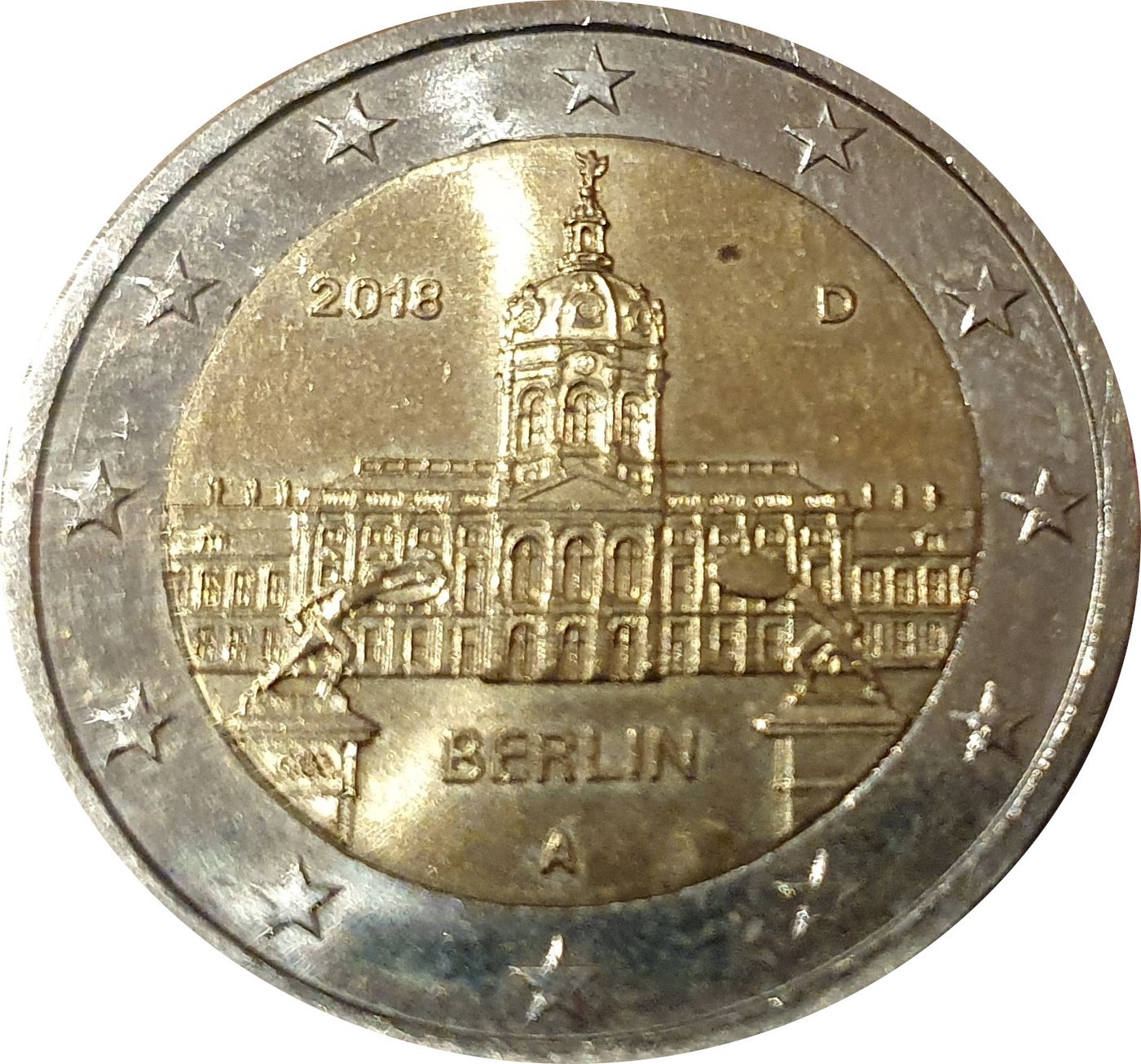
Begin with the national side and the Berlin architecture. A genuine 2018 Berlin coin shows an architectural design of a grand Berlin building and cityscape as its central image, the motif for Berlin in Germany's Federal States series (the Charlottenburg Palace in the official design). Confirm the German markings around it, including the 2018 date, and read any inscription naming the theme, which together pin the coin to this specific issue.
Locate the mint mark. German 2 euro coins carry a single letter — A (Berlin), D (Munich), F (Stuttgart), G (Karlsruhe) or J (Hamburg) — identifying which mint struck the piece. The 2018 Berlin coin was made at all five, so the letter does not affect the type but does distinguish individual coins; check the twelve small stars and the country identifier are present too.
Check the format to confirm it is a 2 euro coin. It must be bi-metallic — a pale nickel-brass outer ring surrounding a darker copper-nickel centre — in the standard 2 euro diameter and weight, with lettering around the edge. A single-colour coin, a coin of markedly different size, or one lacking the two-metal construction is not this type.
Turn to the European side to confirm the denomination. All 2 euro coins share a common reverse showing the large numeral 2 with EURO, a map of Europe and a ring of twelve stars. This side is the same across the eurozone, so it verifies the denomination but not the theme; identification of the Berlin issue relies on the architectural motif and 2018 date on the national side.
Rule out look-alikes and other German commemoratives. The Federal States series runs one coin per state per year, so many German 2 euro coins share the bi-metallic shape and general layout but show different buildings and dates — do not identify by shape alone. As a modern legal-tender coin it is struck to consistent standards, so for higher-grade or packaged pieces compare against reference images of a confirmed 2018 Berlin coin and watch for correct bi-metallic build, sharp detail and the proper edge inscription.
Frequently asked questions
What is the fastest way to identify this coin?
Look for the architectural Berlin motif and the 2018 date on the national side, combined with the bi-metallic 2 euro shape and the twelve-star common European reverse.
How can I be sure it is a 2 euro and not another denomination?
It must be bi-metallic with a pale outer ring and darker centre, in the standard 2 euro size, and its European side shows the numeral 2 with EURO, the map of Europe and twelve stars.
What do the letters A, D, F, G and J mean?
They are German mint marks for the five mints (Berlin, Munich, Stuttgart, Karlsruhe and Hamburg). The 2018 Berlin coin was struck at all five, so the letter marks the mint, not a different coin type.
How do I tell it from Germany's other Federal States 2 euro coins?
By the national side. Only the Berlin issue shows the Berlin architectural landmark with the 2018 date; other years and states in the series use different buildings and dates.