
How to Identify the George V Five Cents (silver)
Canada's last small silver five-cent coins, struck 1911-1921 under King George V, including the famous 1911 'Godless' variety that omitted the usual religious reference from its legend.
Read the full George V Five Cents (silver) encyclopedia entry →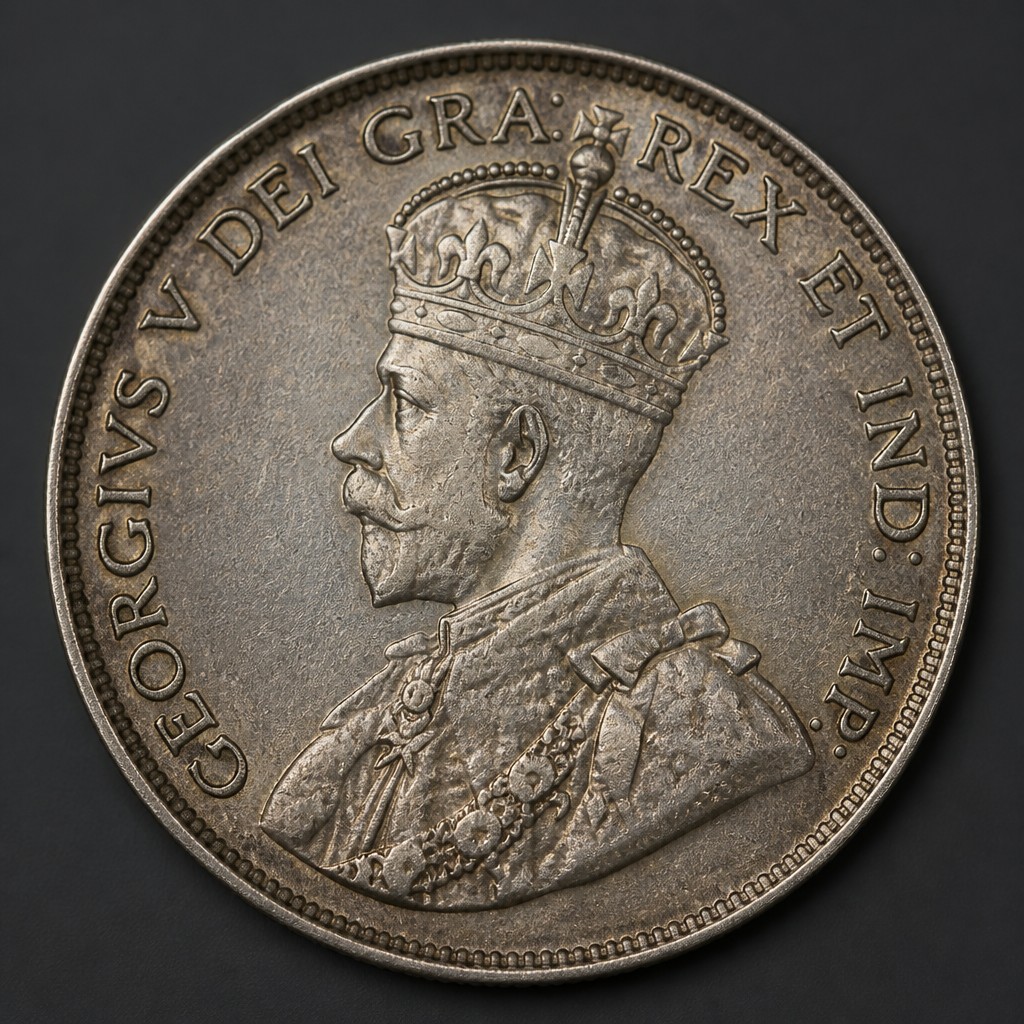
What It Is
This coin represents the final chapter of Canada's tiny silver five-cent piece, struck from 1911 through 1921 before the denomination switched permanently to nickel metal in 1922. It carries King George V's portrait and continues the small "fish scale" format used since 1858.
Obverse Design
The obverse shows George V facing left. The 1911 issue is well known among collectors as the "Godless" type: the legend reads GEORGIUS V REX ET IND IMP, omitting the usual "DEI GRATIA" (by the grace of God) phrase, apparently by design decision that drew public criticism. Beginning in 1912, the legend was corrected to include "DEI GRA," and this wording continued for the rest of the series.
Reverse Design
The reverse continues the long-running wreath of maple leaves surrounding "5 CENTS" and the date.
Size, Weight, Metal & Edge
The coin remains sterling silver at .925 fine through 1919. Starting in 1920, Canada reduced silver coinage fineness to .800 fine as a cost-saving measure, a change that applies to this and other silver denominations from that year forward. Physical size stays the same throughout the series: about 15.5mm in diameter and roughly 1.16 grams in weight, with a reeded edge.
Mint Marks
By this period, Canadian coinage was produced domestically at the Royal Canadian Mint in Ottawa, and these coins carry no mintmark.
Telling It Apart From Similar Coins
The easiest identification check is the legend: an 1911 coin missing "DEI GRATIA" is the Godless variety, while 1912 and later coins include it. This coin should also not be confused with the larger, thicker nickel five-cent piece introduced in 1922, which is a completely different size and pale grey metal rather than tiny and silver-white. It can also be mistaken for the earlier Victoria or Edward VII five-cent pieces of the same tiny format, so comparing the obverse portrait style is essential for confirming this is the George V issue specifically.
Judging Condition
Because of the coin's small size and low relief, check Victoria-style wear points adapted to George V: his hair and laurel details, plus the wreath's leaf veins on the reverse, for flattening. As with other coins in this tiny silver format, even modest circulation can noticeably soften these details, so examples with crisp definition throughout are relatively scarce.
Authenticity Red Flags
Given the fineness change in 1920, be aware that coins from 1920-21 contain slightly less silver than earlier dates, though this cannot be determined by eye alone. Watch for cleaned or artificially brightened surfaces, and examine the legend area on any claimed 1911 Godless variety for signs that letters have been altered or removed after striking, since the variety's fame makes it a target for tampering.
Frequently asked questions
What is the 1911 'Godless' five-cent coin?
It is the 1911-dated issue whose legend omits 'DEI GRATIA,' reading only GEORGIUS V REX ET IND IMP, a wording later corrected starting in 1912.
How do I check for the Godless variety?
Read the legend around George V's portrait; if 'DEI GRA' or 'DEI GRATIA' is missing and the date is 1911, it matches the variety.
Did the silver content change during this series?
Yes, fineness dropped from .925 to .800 silver starting with 1920-dated coins, though this is not visible without testing.
How is this different from the later nickel five-cent coin?
This coin is tiny and silver-white in color, while the nickel five-cent piece introduced in 1922 is noticeably larger and made of grey nickel metal.
Does it have a mintmark?
No, it was struck at the Royal Canadian Mint in Ottawa without any mintmark.